What it is
IB is caused by infectious bronchitis virus (IBV), an avian coronavirus. It is a different virus from the one that causes COVID-19 in people, and it infects chickens, not humans. The virus enters through the nose and eyes and multiplies in the lining of the windpipe (trachea). It destroys the tiny hair-like cells (cilia) that normally sweep dust and germs out of the airway. Mucus then builds up, causing the rattling sounds called 'rales', and bacteria such as E. coli and Mycoplasma can move in. These bacteria cause secondary infections of the air sacs and lungs, and they cause most of the deaths. Some strains, called nephropathogenic strains, travel to the kidneys and cause swelling, white urate deposits and death, especially in young birds. In laying hens the virus attacks the oviduct, the tube where the egg white and shell are formed. This is why eggs come out thin-shelled, soft, misshapen, pale or with watery whites. If chicks are infected in their first two weeks of life, the oviduct can be permanently damaged. Those birds may grow up looking like normal hens but never lay properly. Farmers call them 'false layers'. IBV has many types (serotypes and variants), and a vaccine against one type does not always protect well against another.
Which animals are most at risk
All chickens can catch IB, but the effects depend on age and use. Chicks under about six weeks suffer the worst breathing problems and deaths, and those infected in the first two weeks risk lifelong egg-laying damage. Broilers often get air sac infections as a complication, which slows growth and raises deaths and condemnations. Laying hens show the egg drop and poor shell and egg-white quality. Commercial layer and broiler units with many birds close together see fast spread. Kienyeji (indigenous) and improved kienyeji flocks are also at risk, especially when birds mix at markets or roam freely with neighbours' flocks, and they are often unvaccinated. Flocks are more at risk in cold, damp weather during the rains, in poorly ventilated or overcrowded houses, and on farms that keep several ages together or skip vaccination.
Signs to look for
Early signs
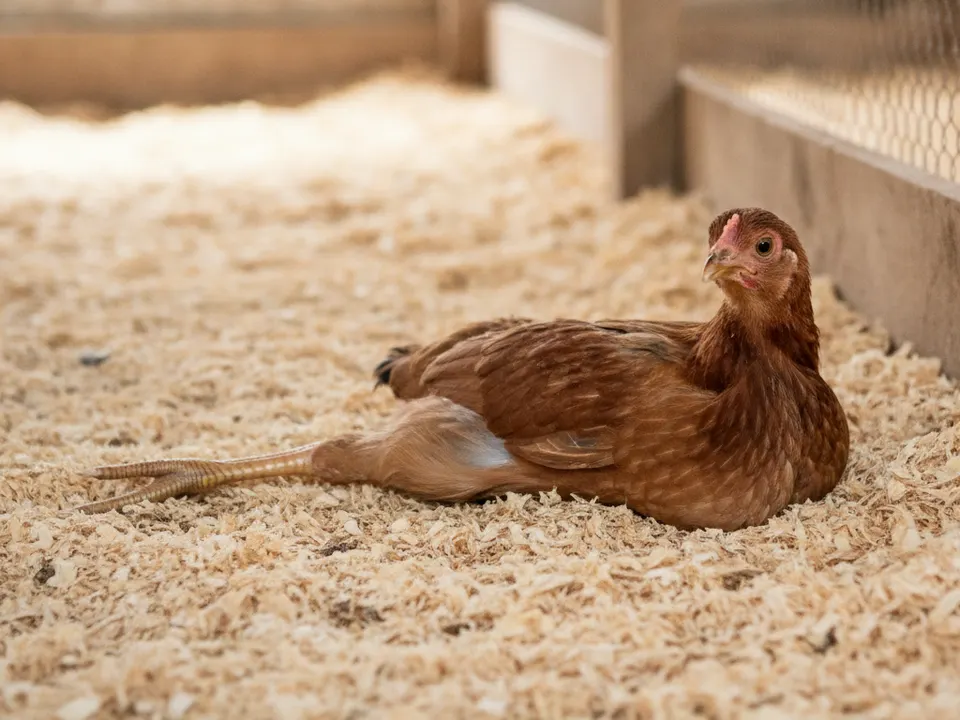
- Chicks gasp with open beaks and stretched necks, and you hear wet rattling or gurgling sounds (rales) from the chest, clearest at night when the house is quiet.
- Birds sneeze, cough and shake their heads, and you may see a watery discharge from the nostrils or watery, slightly swollen eyes.
- Chicks crowd together under the heat source, look dull with ruffled feathers, and eat and drink less than usual.
- Many birds show signs within a day or two of each other, because the virus spreads very fast.
- In layers there is a sudden drop in daily egg collection, often with mild breathing sounds, or sometimes almost no breathing signs at all.
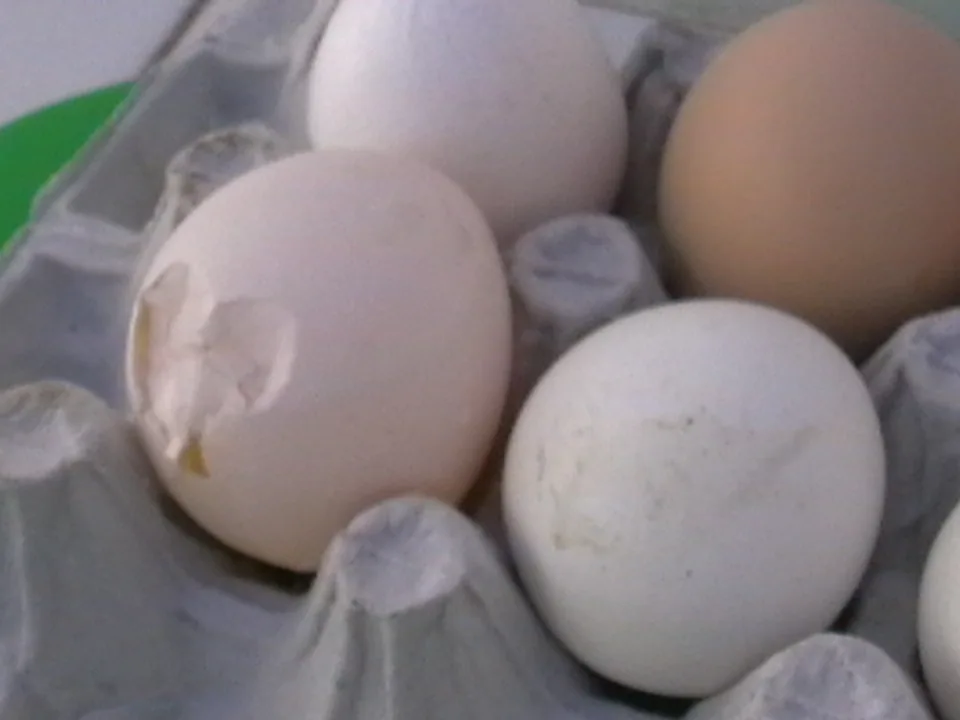
- Eggs begin to show thin, rough or wrinkled shells, and brown eggs look pale or washed out.
As it gets worse
- Breathing becomes very laboured in young birds, and some die, especially where E. coli or Mycoplasma infections follow.
- With kidney strains, birds drink more, droppings become wet and white with urates, litter gets soaked, and young birds may die without obvious breathing signs.
- Broilers grow unevenly, feed conversion worsens, and at slaughter the air sacs may be cloudy or filled with yellow cheesy material.
- Layers produce misshapen, soft-shelled or shell-less eggs. When you crack them, the white is thin and watery instead of firm, and it spreads widely on a plate.
- Egg numbers may take weeks to recover, and in some flocks they never fully return to the expected level.
- Months later, hens that were infected as chicks may look healthy, with red combs and a good body, but lay few or no eggs (false layers).
What to do right now
- Move visibly sick birds to a separate, warm, draught-free pen. Keep the rest of the flock in its house and stop all buying, selling and moving of birds until the vet has seen them.
- Keep chicks warm at the correct brooding temperature and watch their behaviour. Huddling under the heat means they are cold; spreading away and panting means they are too hot.
- Improve ventilation without creating cold draughts. Remove wet, ammonia-smelling litter and add fresh dry litter, because ammonia further damages already injured airways.
- Give plenty of clean, fresh drinking water at all times and make sure every bird can easily reach drinkers and feeders. Sick birds eat little, and kidney strains make them very thirsty.
- Do not give antibiotics or other drugs from the agrovet on your own. Antibiotics do not kill the virus, and the wrong drug wastes money, leaves residues in eggs and meat, and builds antibiotic resistance.
- Tighten biosecurity: one person cares for the sick birds last, change or disinfect footwear at the door, keep visitors and other farmers' birds away, and do not lend crates or egg trays.
- Record daily deaths, number of sick birds, egg numbers and egg quality. Remove dead birds quickly and bury them deeply or burn them, away from water sources.
- Call your vet or County Veterinary Officer the same day. Call immediately if many birds die suddenly or you see twisted necks or paralysis, which could mean Newcastle disease or bird flu.
How it spreads
- Breathing in virus-laden droplets and dust: sick birds cough and sneeze the virus into the air, and it moves quickly through a poultry house.
- Droppings from infected birds carry the virus. It can contaminate litter, feeders and drinkers, and recovered birds may keep shedding virus for weeks.
- People, shoes, clothes, egg trays, crates, sacks, bicycles and vehicles moving between farms or markets carry the virus on dirty surfaces.
- Buying in birds from markets, neighbours or unknown sources, or bringing back unsold birds from the market, brings infection into a clean flock.
- Keeping chickens of different ages on one farm, or restocking without cleaning out, lets the virus pass from older birds to new chicks.
- Stress makes outbreaks worse. This includes cold brooders, poor ventilation, strong ammonia from wet litter, overcrowding and sudden weather changes during the long and short rains.
- Badly handled vaccines can fail. Vaccine left in the sun, mixed with chlorinated water or used after expiry leaves birds unprotected.
Could it be something else?
Newcastle disease
Newcastle disease (kideri) also causes breathing signs and egg drop, but it usually brings many more deaths. It also causes nervous signs such as a twisted neck, circling or paralysis, and green watery diarrhoea. IB rarely causes nervous signs. Newcastle is a notifiable disease. If you see nervous signs or sudden heavy deaths, call the County Veterinary Officer immediately. Only lab tests can reliably separate the two.
Infectious coryza
Coryza is a bacterial disease. It causes a swollen face and wattles, a sticky nasal discharge with a bad smell, and eyes that may stick shut. It mostly affects growing and adult birds. IB spreads faster, usually does not cause marked face swelling, and in layers is strongly linked to poor egg shells and watery whites.
Chronic respiratory disease (Mycoplasma gallisepticum)
Mycoplasma spreads slowly through a flock over weeks. It causes long-lasting snicking, swollen sinuses under the eyes and frothy eyes. IB comes on suddenly and spreads within days. The two often occur together, which makes the disease much worse, so a vet may test for both.
Egg drop syndrome
Egg drop syndrome is caused by an adenovirus. It causes thin-shelled, soft or shell-less eggs in apparently healthy layers, usually without breathing signs. The inside of the egg is usually normal. IB more often brings breathing signs, wrinkled shells and watery egg whites, and can affect young birds too.
How it is diagnosed
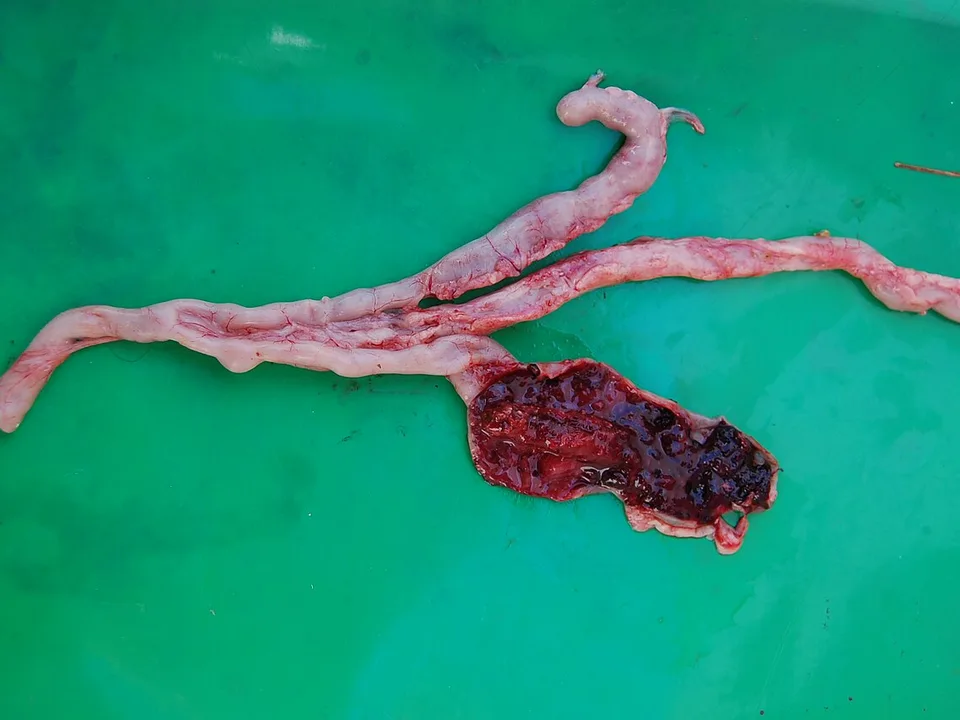
A vet will look at the flock's age, vaccination history, how fast the signs spread and egg production records, then examine live birds. A post-mortem (opening dead or sick birds) may show mucus in the windpipe, cloudy or cheesy air sacs, swollen pale kidneys with white urates, or a fluid-filled or under-developed oviduct in false layers. Because IB looks like Newcastle disease, coryza, Mycoplasma and others, lab tests are needed to confirm it. These include PCR tests on throat or cloacal swabs to detect the virus and identify its type, virus isolation in fertile eggs, and blood tests (ELISA or HI) on samples taken a few weeks apart to show rising antibodies. In Kenya samples can go through your vet or County Veterinary Officer to county labs, the Central Veterinary Laboratories at Kabete, or university diagnostic labs. You can help by writing down when signs started, how many birds are sick and dead each day, daily egg counts and egg appearance, feed and water changes, and every vaccine given, with dates, brand and method. Keep a few freshly dead birds cool, but not frozen, in a sealed bag, or keep a few sick live birds separate for the vet.
Treatment
There is no drug that cures infectious bronchitis. Antibiotics do not kill the virus. Treatment aims to keep birds comfortable, reduce secondary infections and protect the rest of the flock. A vet may prescribe an antibiotic, such as a tetracycline, a macrolide like tylosin, or another suitable drug, only if there is evidence of secondary bacterial infection such as E. coli or Mycoplasma. Ideally the choice is guided by lab results. Use antibiotics only as prescribed and for the full course, because careless use breeds resistant bacteria that are harder to treat in animals and people. Every antibiotic has a withdrawal period, the time after the last dose during which eggs and meat must not be eaten or sold. Some products are not allowed at all in laying hens whose eggs are eaten. Your vet will tell you the correct period, so follow it strictly. Supportive care usually includes warmth, good ventilation, dry litter, electrolytes and vitamins in the water. For kidney strains, the vet may also suggest temporary feed adjustments. The vet may advise on vaccinating unaffected or future flocks, and may send samples to identify the virus type so the right vaccine can be chosen next time. Expect breathing signs to settle over one to three weeks. Egg production in layers may recover slowly, often only partly.
Medicines must be prescribed and dosed by a vet. Always respect milk and meat withdrawal periods, and finish the full course of any antibiotic.
How Agrikima products can help
These support the animal alongside — never instead of — your vet's treatment, vaccination and good management.
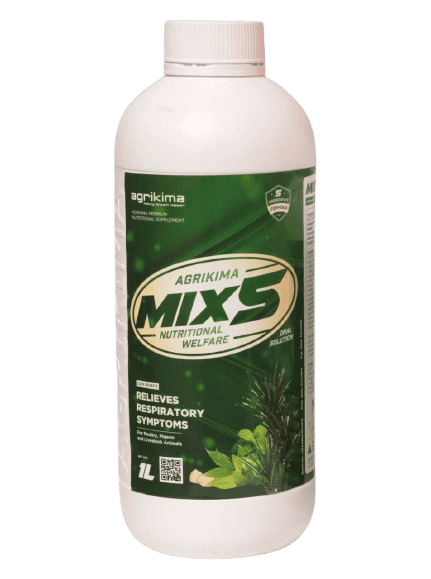
MIX5
Its plant-extract blend is labelled to relieve respiratory problems and post-vaccination reactions. It can help ease breathing discomfort in birds recovering from IB, or after IB vaccination, alongside vet care, warmth and good ventilation. It does not kill the virus or replace vaccination.
View product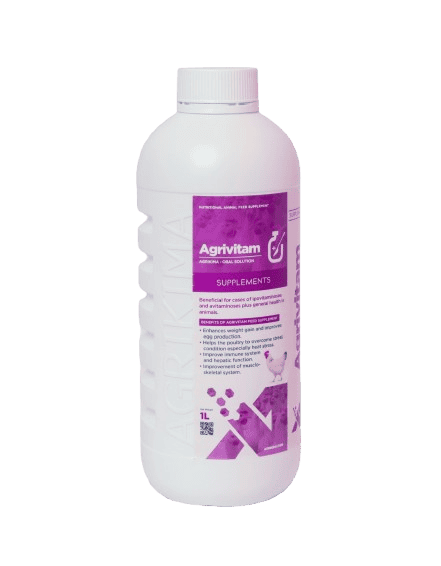
AGRIVITAM
A liquid vitamin and mineral supplement for stress recovery and layer productivity. Given in the water, it can help support appetite and recovery after an outbreak and support layers as egg production picks up again. It is an aid to good nutrition and vet-guided care, not a treatment for IB.
View productPrevention
- Vaccinate every flock according to a programme agreed with your vet or hatchery. Chicks usually receive a live IB vaccine, often combined with Newcastle disease vaccine, at the hatchery or in the first days of life, followed by boosters. Layers and breeders are commonly given an inactivated (killed) injectable vaccine before they start laying.
- Handle vaccines correctly. Keep them cold from the agrovet to the farm, protect them from sunlight, use them before expiry, and use them within the time stated once mixed. Use clean, non-chlorinated water (a vaccine stabiliser or skimmed milk powder helps). Make sure every bird drinks during the vaccination period.
- Ask your vet whether the vaccine type matches the strains found in your area. Variant IB strains occur, and a vaccine based on one type may not fully protect against another.
- Buy day-old chicks only from reputable, licensed hatcheries that vaccinate and give vaccination records, and avoid restocking with market or roadside birds.
- Practise all-in, all-out where possible: keep one age group per house. Between batches, remove all litter, clean and disinfect the house and equipment, and leave it empty for a rest period. The virus is killed by common disinfectants but can survive for some time in dirty litter.
- Keep the house well ventilated, dry and not overcrowded. Control ammonia by managing wet litter, and give chicks correct brooding temperatures, especially in the cold months and the rains.
- Practise everyday biosecurity: a footbath or dedicated shoes at the house entrance, limited visitors, a fence or run that stops contact with neighbours' and wild birds, and quarantine of any new birds for at least two weeks before mixing.
- Feed a balanced ration with correct vitamins, minerals and protein, and store feed dry. Well-nourished, low-stress birds respond better to vaccines and recover faster.
Risk to people
Infectious bronchitis virus infects chickens only and does not cause disease in people. It is not the same coronavirus as the one that causes COVID-19. Eggs and meat from affected flocks are safe to eat when properly cooked. The main human risk comes from drug residues. If birds are treated with antibiotics or other drugs for secondary infections, do not eat or sell eggs or meat until the vet's withdrawal period has passed. Always wash your hands after handling sick or dead birds.
Impact on your farm
IB hits a Kenyan farm's income in several ways. In chicks and broilers, deaths, especially with secondary E. coli or kidney strains, plus slow and uneven growth, mean more feed spent per kilo of meat and lighter birds at sale. In layers, the sudden drop in egg numbers, combined with soft, cracked, misshapen and pale eggs that traders reject or buy at a low price, can wipe out the profit margin for weeks. False layers are a hidden loss: you keep feeding hens that will never lay well, and you may only find out months later. Extra spending on vet visits, lab tests and treatment of secondary infections adds to the cost. For smallholders who depend on eggs for daily cash, an outbreak can seriously disrupt household income.
Outlook and recovery
Most adult birds survive IB, and breathing signs usually settle within about one to three weeks. Deaths are generally higher in young chicks, in flocks hit by kidney strains, and where secondary bacterial infections or poor housing, cold and ammonia make things worse. Broilers that recover may stay smaller than expected. In layers, egg numbers and quality often improve over several weeks but may not return fully to the previous level, and shell and egg-white problems can linger. Chicks infected very young may become permanent false layers. Recovery is best when the flock was vaccinated, the vet is involved early, secondary infections are managed properly, and birds are kept warm, dry and well fed.
Common questions
Can we eat or sell eggs from hens with infectious bronchitis?
The virus does not infect people, so properly cooked eggs from affected hens are safe to eat. The problem is quality: many eggs will be soft, wrinkled or have watery whites, so they crack easily and buyers may reject them. Sort eggs carefully and do not sell cracked or dirty eggs. If your vet prescribes an antibiotic or other drug, you must stop eating and selling the eggs for the full withdrawal period the vet gives you.
I vaccinated my chicks against IB. Why did they still get sick?
There are several common reasons. The vaccine may have been damaged by heat, sunlight or chlorinated water before it reached the birds. Not every bird may have drunk enough of the vaccine water. Boosters may have been missed. The virus on your farm may also be a different type from the one in the vaccine, because IB has many strains and protection between them is not always good. Stress, poor ventilation and other diseases also weaken the response. Talk to your vet about your vaccine handling, your schedule, and whether lab testing could identify the strain.
Will antibiotics from the agrovet cure IB?
No. IB is caused by a virus, and antibiotics do not kill viruses. A vet may prescribe an antibiotic only when bacteria such as E. coli or Mycoplasma are causing secondary infections. Giving antibiotics without a vet's advice wastes money, leaves residues in eggs and meat, and helps create bacteria that resist treatment. Good care, warmth, ventilation, water and nutrition matter most, together with vaccination for the future.
My hens look big and healthy with red combs, but they hardly lay. Could this be IB?
It could be. If the flock caught IB in their first two weeks of life, the virus may have permanently damaged the oviduct, the egg-forming tube. Such 'false layers' look normal but lay few or no eggs. Other causes, such as poor feed, lighting problems, parasites or other diseases, are possible too. A vet can examine a few birds, including by post-mortem, to check whether the oviduct is damaged and advise whether to cull non-layers.
Will my egg production come back after an outbreak?
Usually it improves over several weeks as the birds recover, but it often does not return fully to the level the flock had before. Shell quality and watery whites may take longer to improve. How well hens recover depends on their age when infected, the virus strain, whether secondary infections were controlled, and good feeding and management afterwards. Keep egg records so you and your vet can judge whether the flock is worth keeping.
Do my kienyeji chickens need IB vaccination?
Indigenous chickens can catch IB too, especially when they roam with neighbours' birds or are taken to and from markets. Many farmers vaccinate kienyeji and improved kienyeji flocks against Newcastle disease, and combined Newcastle and IB vaccines are widely available. Ask your vet or extension officer which vaccination programme suits your flock size, system and local disease situation.
A guide, not a diagnosis. This page is general information to help you recognise problems early. Always confirm with a vet or animal health worker before treating.