What it is
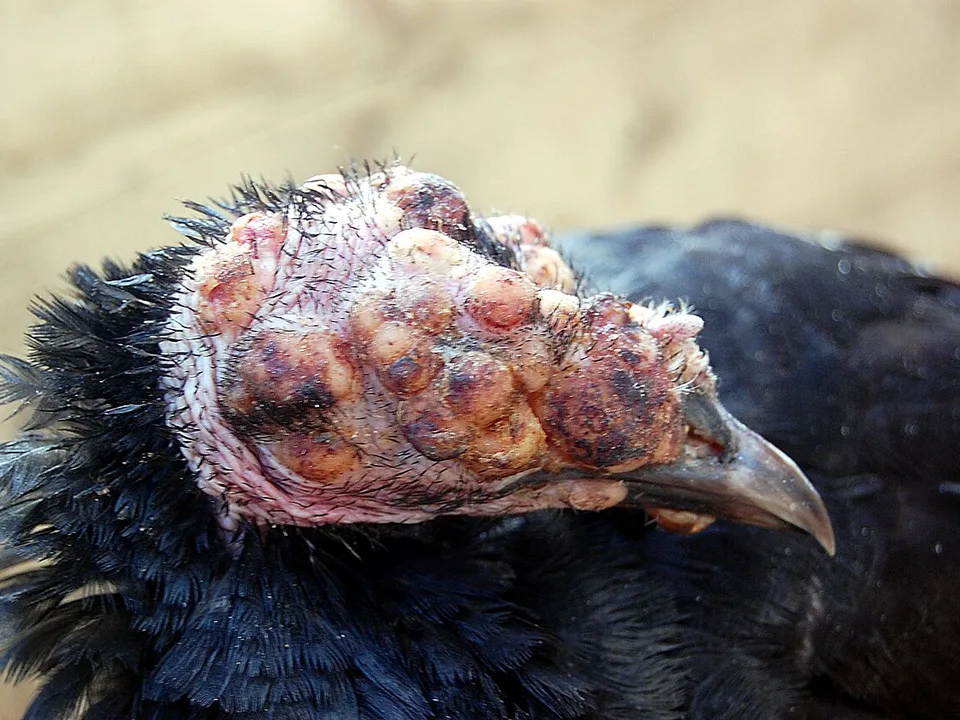
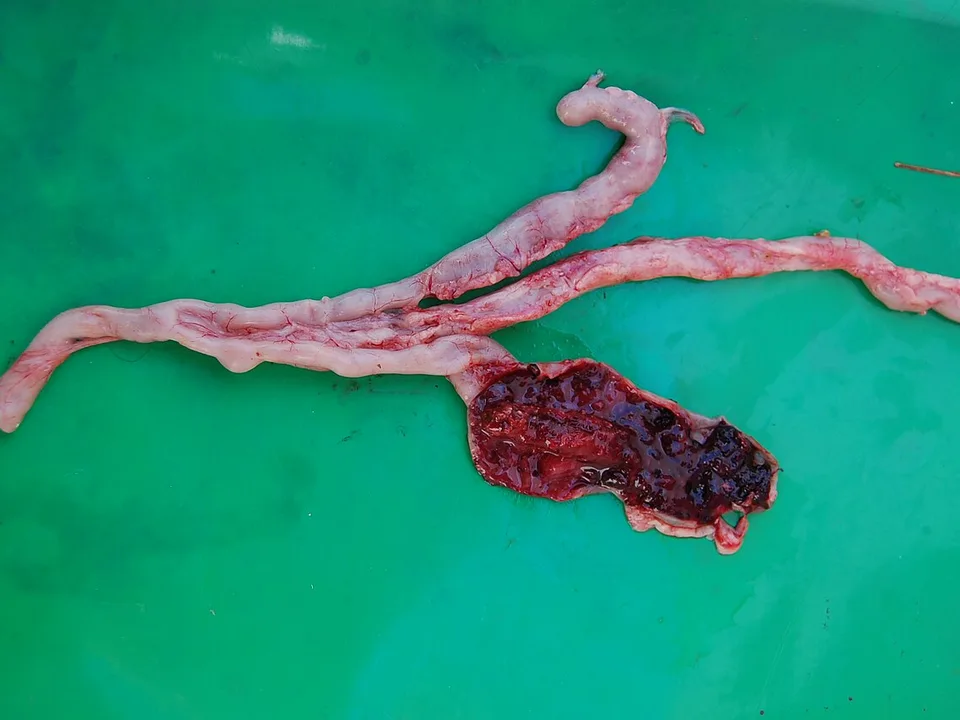
Marek's disease is caused by Marek's disease virus, a herpesvirus of chickens (scientific name Gallid alphaherpesvirus 2). A herpesvirus is a type of virus that stays in the body for life once a bird is infected. Chicks usually breathe the virus in with dust from the farm. The virus first attacks the bird's white blood cells, the cells that fight infection. This weakens the bird's immune system, so it catches other diseases more easily and may respond poorly to other vaccines. Later, some infected white blood cells turn into cancer cells. These multiply and gather in nerves, the eyes, skin and internal organs. In nerves, especially the big nerves to the legs and wings, they cause swelling that stops messages reaching the muscles, which leads to paralysis. In the eye they make the iris (the coloured ring) grey and the pupil irregular, causing blindness. In organs such as the liver, spleen, kidneys, ovary, heart and lungs they form tumours (lumps of cancer tissue). Meanwhile the virus grows in the feather follicles (the small pockets in the skin where feathers grow) and is shed in feather dander, so infected birds keep releasing virus for the rest of their lives, even if they look healthy.
Which animals are most at risk
All chickens can be infected, but disease is seen most often in birds between about 6 and 20 weeks old, though it can appear from around 3 to 4 weeks and occasionally in older layers. Layers, breeders and kienyeji or improved kienyeji birds (such as Kuroiler, Kenbro and KALRO improved kienyeji) are at highest risk because they live long enough for tumours to develop and because they are often bought unvaccinated or hatched at home under a hen. Broilers are usually slaughtered before signs appear, but can still be affected. Unvaccinated chicks, chicks vaccinated with poorly stored vaccine, and chicks exposed to heavy virus loads in their first two weeks are the most likely to fall sick. Farms that keep birds of many ages together, reuse litter, or brood chicks in old houses without thorough cleaning carry more risk. Free-range and backyard flocks are exposed because birds of all ages mix freely. Some breeds and strains are naturally more resistant than others, but no chicken is fully protected without vaccination. Marek's can occur in any season, as it depends on dust and management rather than rains.
Signs to look for
Early signs
- A bird that walks unevenly, limps, or rests a lot without an obvious injury to the foot or joint.
- Weakness in one leg or one wing, often on one side only, which slowly gets worse over days.
- Duller, slower birds that eat less and lag behind the rest of the flock at feeding time.
- Gradual loss of weight; you can feel a sharp keel (breastbone) when you pick the bird up.
- Pale comb and wattles in birds that should be bright red as they approach laying.
- One or both eyes looking greyer or cloudier than normal, with a pupil that is not perfectly round.
- In some birds, enlarged, raised or reddened feather follicles on the skin, best seen after plucking.
As it gets worse
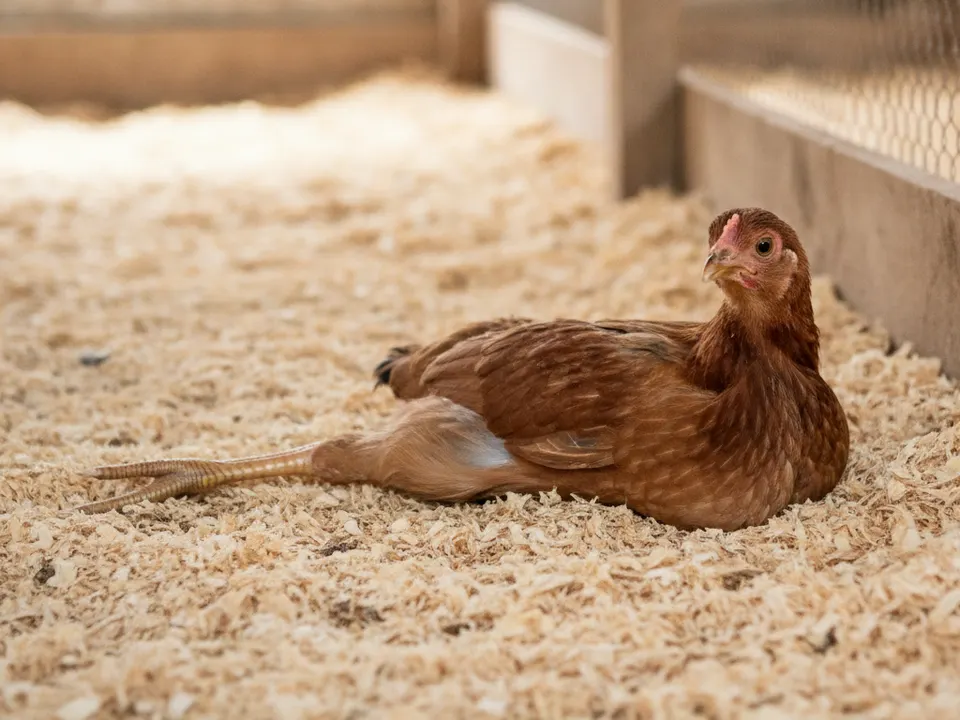
- The classic posture: the bird lies with one leg stretched forward and the other stretched backward, and cannot stand.
- A wing that hangs down, or a neck that is twisted or held low, because the nerves are damaged.
- Blindness: the bird bumps into things or cannot find feed and water, with a grey, pearl-coloured iris and a small irregular pupil.
- Severe wasting, dehydration and starvation because the bird cannot reach feed and water.
- Difficult breathing, gasping or a swollen crop if nerves to the chest or crop are affected.
- Pullets that never start laying or layers whose egg production drops, sometimes with sudden deaths and tumours found later in the liver, spleen or ovary.
- Lumps or tumours in the skin in the skin form, which may lead to carcasses being rejected at slaughter.
- Steady deaths in the flock over several weeks rather than one sudden wave.
What to do right now
- Separate any lame, paralysed or blind bird from the rest of the flock into a clean, quiet, dry pen so it is not trampled or pecked.
- Place shallow feed and water dishes right next to the bird so it can eat and drink without standing; birds with Marek's often die of hunger and thirst rather than the tumours.
- Call your vet or County Veterinary Officer and describe the signs, the age of the birds and their vaccination history; do not start any drug without the vet's advice.
- Find and keep the chick purchase receipt and hatchery vaccination certificate, and write down the dates and numbers of sick and dead birds.
- Keep freshly dead birds whole in a sealed bag in a cool place or fridge, not frozen, so the vet can do a post-mortem.
- Stop moving birds off or onto the farm, and do not sell sick or culled birds at the market, where they would spread the virus.
- Reduce dust and stress in the house: improve ventilation without creating cold draughts, avoid crowding, and do not add new chicks to this house.
- Wear a dust mask and separate shoes or overalls in the house, wash hands afterwards, and look after the youngest birds before the sick ones, never the other way round.
How it spreads
- The main route is breathing in dust: infected birds shed the virus in tiny flakes of skin and feather dander, which float in the air and settle in litter, on walls, sacks and equipment.
- The virus survives for many months in dry dust and old litter in a poultry house, so a house that once had Marek's can infect new chicks long after the sick birds are gone.
- Infected birds carry and shed the virus for life, including vaccinated birds and birds that look healthy, so older birds on the farm are a constant source for young chicks.
- Mixing ages is a major risk: brooding new chicks in the same house, or near, older birds lets the virus reach chicks before their vaccine immunity has developed.
- People, egg trays, crates, sacks, feeders and vehicles can carry contaminated dust from one house or farm to another.
- Buying adult or grower birds from markets or neighbours, and returning unsold birds from the market, can bring the virus onto a farm.
- It is not spread through the egg, so chicks hatch free of the virus; they get infected from their surroundings after hatching.
- Stress from transport, crowding, poor ventilation, other diseases such as Gumboro, and mouldy feed can make infected birds more likely to show disease.
Could it be something else?
Newcastle disease
Newcastle also causes paralysis and a twisted neck, but it usually spreads very fast through birds of all ages, with coughing, gasping, greenish watery diarrhoea, swollen heads and many deaths within days. Marek's spreads slowly, affects mainly growing birds, and the leg-forward-leg-back posture with grey eyes is typical. Newcastle is notifiable in Kenya, so if many birds of all ages are sick at once, call the vet urgently.
Lymphoid leukosis (avian leukosis)
This is another virus that causes tumours in organs, but it usually affects birds older than about 16 weeks and does not cause paralysis or enlarged nerves. On post-mortem, leukosis tumours involve the bursa (a small organ near the vent), while Marek's usually does not. A lab test is often needed to tell them apart.
Vitamin deficiencies (vitamin B2, vitamin E, vitamin D)
Vitamin B2 (riboflavin) deficiency causes curled toes and walking on the hocks in young chicks; vitamin E deficiency causes trembling and head pulling in chicks of about 2 to 4 weeks; vitamin D and calcium shortage causes soft beaks and bones and lameness. These usually affect younger chicks and many birds at once, often improve with corrected feed, and do not cause grey eyes or tumours.
Leg injuries and joint infections
Injuries, bumblefoot and bacterial or mycoplasma joint infections cause swollen, hot or painful joints or footpads that you can feel. The bird still tries to use the leg. In Marek's the leg is weak or limp with no swelling of the joint, and the bird often holds it stretched forward or back.
How it is diagnosed
A vet first looks at the flock history and signs: the age of affected birds, the leg-forward-leg-back posture, grey eyes, wasting, and whether chicks were vaccinated. The surest way to confirm Marek's is a post-mortem (opening up a dead or culled bird). The vet compares the large nerves of both legs and wings; in Marek's one nerve is often thick, swollen, greyish or yellowish, and has lost its normal fine stripes, while the other side looks normal. The vet also looks for tumours in the liver, spleen, kidneys, heart, ovary, lungs and skin. Because other diseases such as lymphoid leukosis can look similar, the vet may send tissue samples to a laboratory, for example the Central Veterinary Laboratories at Kabete, a regional veterinary investigation laboratory, a university veterinary lab or a private diagnostic lab, for histopathology (looking at tissue under a microscope) or PCR (a test that detects the virus's genetic material). To help, keep a record of how many birds are sick and dead, their ages, when signs started, where the chicks came from, the hatchery vaccination record, and other vaccines given. Take two or three typical sick birds to the vet alive, or keep freshly dead birds in a sealed bag in a cool place or fridge (not frozen) and deliver them within a day.
Treatment
There is no treatment that cures Marek's disease. It is caused by a virus, so antibiotics do not kill it, and herbal or other remedies have not been shown to reverse the nerve damage or tumours. Once a bird is paralysed, blind or wasting, it rarely recovers, and the vet will usually advise culling it humanely to end its suffering and reduce the amount of virus it sheds. The vet's main job is to confirm the diagnosis, rule out notifiable diseases such as Newcastle disease, and plan how to protect the rest of the flock and future batches. Sometimes affected birds also have secondary bacterial infections or coccidiosis because their immunity is weak, and a vet may prescribe treatment for those. Any antibiotic or other drug must be prescribed by a vet, used exactly as directed, and only when there is a real bacterial infection, because careless antibiotic use breeds antimicrobial resistance (germs that drugs no longer kill), which harms animal and human health. Respect the egg and meat withdrawal periods on the label or given by your vet, meaning the time you must wait after treatment before eating or selling eggs or meat. Vaccinating birds that are already sick or already several weeks old will not help them, because they have already met the virus. Expect the vet to focus on prevention: checking your chick source, vaccine handling, brooding practices and cleaning.
Medicines must be prescribed and dosed by a vet. Always respect milk and meat withdrawal periods, and finish the full course of any antibiotic.
How Agrikima products can help
These support the animal alongside — never instead of — your vet's treatment, vaccination and good management.

AGRITOXINILSTOP
Aflatoxins from mouldy feed weaken a bird's immune system, which can make Marek's vaccination less effective and the flock more vulnerable. Adding this mycotoxin binder to feed helps reduce that extra immune stress in growing chicks and pullets. It does not prevent or treat Marek's itself and is only an aid alongside day-old vaccination, clean brooding and good feed storage.
View product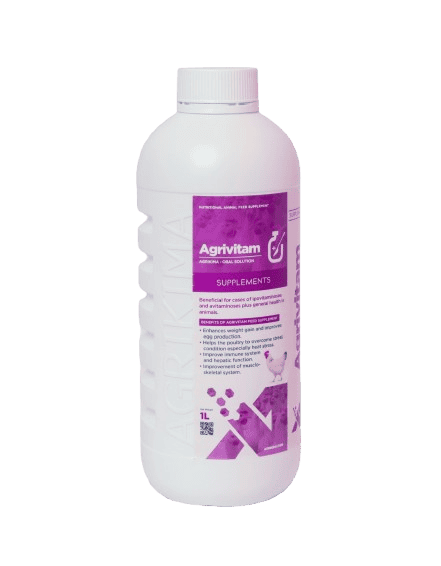
AGRIVITAM
Stress helps Marek's appear in infected flocks. This vitamin and mineral supplement can support the healthy birds in an affected flock as they recover from the stress of disease, handling and culling. It does not cure or prevent Marek's and does not replace vaccination or vet advice.
View productPrevention
- Vaccinate every chick against Marek's at day old or in the egg at the hatchery; this is the single most important step. The vaccine does not stop infection or shedding, but it greatly reduces paralysis, tumours and deaths.
- Buy chicks only from registered, reputable hatcheries, ask for a written Marek's vaccination record, and avoid buying unvaccinated chicks or birds of unknown history from markets.
- If you hatch your own kienyeji chicks, talk to your vet or agrovet about vaccinating them at day old; the vaccine usually comes in large vials that must be used within a short time after mixing, so farmer groups often arrange vaccination together through a vet.
- Make sure the vaccine is handled correctly: it must be kept in the right cold chain (some types in liquid nitrogen), mixed with its own diluent, and used quickly. Poorly stored vaccine is a common cause of failure.
- Protect chicks from the virus for their first two to three weeks while vaccine immunity builds: brood them in a separate, thoroughly cleaned house, far from older birds, and look after them first each day.
- Practise all-in, all-out: raise one age group at a time per house, then remove all litter, sweep away dust and cobwebs, wash and disinfect, and rest the house before the next batch.
- Control dust: good ventilation, dry litter and regular cleaning of walls, rafters and equipment reduce the virus load in the house.
- Prevent other immune-weakening problems: vaccinate against Gumboro (infectious bursal disease) as advised, control coccidiosis, and avoid mouldy feed, since aflatoxins weaken immunity.
- Feed a balanced ration with correct vitamins and minerals, and limit stress from crowding, heat, rough handling and long transport.
- Apply basic biosecurity: a footbath or dedicated shoes at the house door, limited visitors, no birds returned from the market into the flock, and clean crates and egg trays.
Impact on your farm
Marek's disease hits Kenyan farmers at the worst time. Birds usually fall sick between 6 and 20 weeks, after the farmer has already spent heavily on chicks, feed, vaccines and labour but before pullets begin to lay or kienyeji birds reach selling weight. In unvaccinated flocks, losses can be heavy and continue for weeks. Survivors may grow poorly, start laying late or lay fewer eggs. Because the virus weakens immunity, the flock may suffer more from other diseases such as coccidiosis, respiratory infections or Gumboro, and other vaccines may work less well, adding treatment costs. Carcasses with tumours can be rejected at slaughter. Because the virus stays in dust and litter for months, the problem can return with the next batch unless vaccination and cleaning improve, which hurts confidence and income for small-scale layer and improved kienyeji farmers in particular.
Outlook and recovery
For an individual bird with clear signs such as paralysis, blindness or wasting, the outlook is very poor; almost all such birds die or need to be culled. A rare form causes temporary paralysis from which a bird may seem to recover, but it often relapses or develops tumours later. For the flock, the outlook depends on vaccination status, how early the chicks were exposed, the strength of the virus on the farm, the breed, and other stresses and diseases. Well-vaccinated flocks raised in clean, single-age housing usually have few or no cases. Unvaccinated flocks, or flocks where vaccine was mishandled, can keep losing birds over many weeks. The best outlook comes from fixing prevention for the next batch: correct day-old vaccination, clean separate brooding and all-in, all-out management.
Common questions
Can I cure my paralysed chickens with antibiotics or herbal medicine?
No. Marek's is caused by a virus, and antibiotics do not kill viruses. No medicine or herbal product is known to reverse the nerve damage and tumours. A vet may treat a secondary bacterial infection, but a paralysed bird with Marek's rarely recovers. The kindest and safest choice is usually humane culling, then putting your effort into protecting the rest of the flock and future batches.
My chicks were vaccinated at the hatchery. Why did they still get Marek's?
Vaccination greatly reduces disease but does not give 100% protection. Common reasons for failure include vaccine that was poorly stored or mixed, chicks being exposed to heavy virus in dusty or old houses before immunity developed in the first two to three weeks, mixing chicks with older birds, very strong virus strains, and other immune-weakening problems such as Gumboro or mouldy feed. Discuss your hatchery source and brooding practices with your vet.
Can I vaccinate my older birds now that Marek's is in the flock?
Generally no. The vaccine works only when given to day-old chicks or in the egg, before they meet the field virus. Birds that are several weeks old have usually already been infected, so vaccinating them will not protect them. Focus on vaccinating every new batch of chicks at day old and brooding them away from older birds.
Is it safe to eat eggs or meat from a flock with Marek's?
Marek's virus is not known to infect people. However, sick, thin or paralysed birds and carcasses with tumours should not be eaten or sold; meat inspection rejects carcasses with tumours. If any bird has been treated with antibiotics or other drugs, follow the withdrawal period given by your vet before using its eggs or meat. Always cook eggs and chicken well and wash your hands after handling birds.
How long does the virus stay in my poultry house?
The virus can survive in dry dust, feather dander and old litter for many months. That is why new chicks placed in a poorly cleaned house often get infected. After a batch with Marek's, remove all litter, sweep away dust from walls, rafters and equipment, wash and disinfect, and rest the house before bringing in new, vaccinated chicks.
Can Marek's pass from the hen to the chick through the egg?
No. Marek's is not passed through the egg, so chicks hatch free of the virus. They pick it up from dust in their surroundings, often within their first days of life. This is why day-old vaccination and clean, separate brooding are so important, especially for chicks hatched under kienyeji hens that live among older birds.
A guide, not a diagnosis. This page is general information to help you recognise problems early. Always confirm with a vet or animal health worker before treating.