What it is
Fowl pox is caused by fowlpox virus, a member of the Avipoxvirus group. It is a large, very tough virus that can survive for months in dried scabs, dust and poultry house litter. The virus cannot pass through healthy, unbroken skin. It enters through small breaks in the skin, such as mosquito bites, pecking wounds, fighting injuries or scratches, or through the lining of the mouth, eyes and upper airway. Once inside, it multiplies in the skin cells, making them swell and pile up into raised nodules. These nodules dry out and turn into dark scabs, which is the dry form. When the virus infects the moist lining of the mouth, throat, windpipe (trachea) or eyes, it forms thick yellow-white membranes stuck to the tissue, which is the wet or diphtheritic form (diphtheritic means a tough false membrane forms on a moist surface). These membranes can make swallowing painful and can partly block the airway, so birds may starve or suffocate. Damaged skin and membranes also let bacteria in, which can make the illness worse.
Which animals are most at risk
Birds of any age can catch fowl pox, but unvaccinated growers and young layers are most commonly affected, and chicks from vaccinated or recovered parents may be protected for only a short time. Chickens and turkeys are the main poultry species affected; pigeons, quails and other birds have their own pox viruses that may or may not cross over. In Kenya and East Africa, cases rise during and just after the long and short rains, when standing water lets mosquitoes breed in large numbers. Free-range and semi-free-range kienyeji chickens are at high risk because they are exposed to mosquitoes at dusk and mix with other village birds, and they are often not vaccinated. Overcrowded houses with feather pecking, poor ventilation and old litter also have more cases. Birds weakened by poor nutrition, especially low vitamin A, by parasites or by other diseases such as Gumboro (infectious bursal disease) or Marek's disease tend to suffer more severe pox, including the wet form.
Signs to look for
Early signs
- Small white, grey or yellowish raised spots appear on bare skin, mainly the comb, wattles, earlobes, face and eyelids, and sometimes on the legs or under the wings.
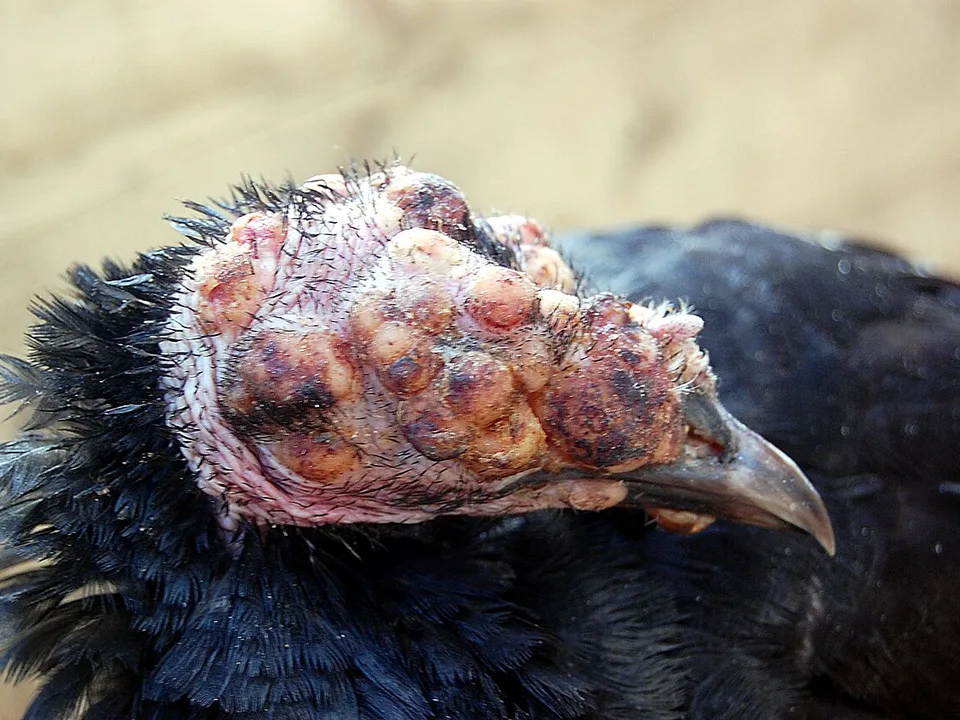
- The spots grow over a few days into larger lumps that look like warts and change colour to brown or black as they dry.
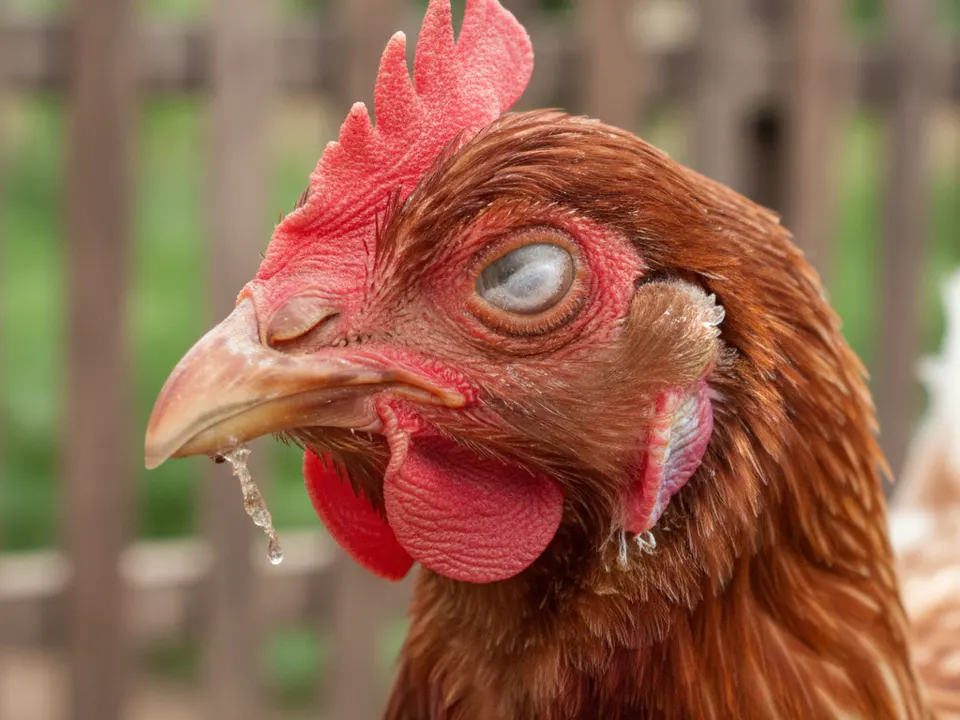
- Some birds have watery or swollen eyes, and the eyelids may start to stick together if scabs form at the eye edge.
- Birds may look slightly dull, eat a little less and stand apart, although many birds with mild dry pox carry on eating almost normally.
- In laying flocks, the first sign the farmer notices may be a slow drop in the number of eggs collected each day.
- Inside the mouth, small white or yellow raised spots may be seen on the tongue, corners of the beak or roof of the mouth if you gently open the beak in good light.
As it gets worse
- Thick crusty scabs cover large parts of the comb, wattles and face, and may join together into rough masses that crack or bleed slightly.
- Scabs around the eyes can close one or both eyes, so the bird cannot see to find feed and water and loses weight quickly.
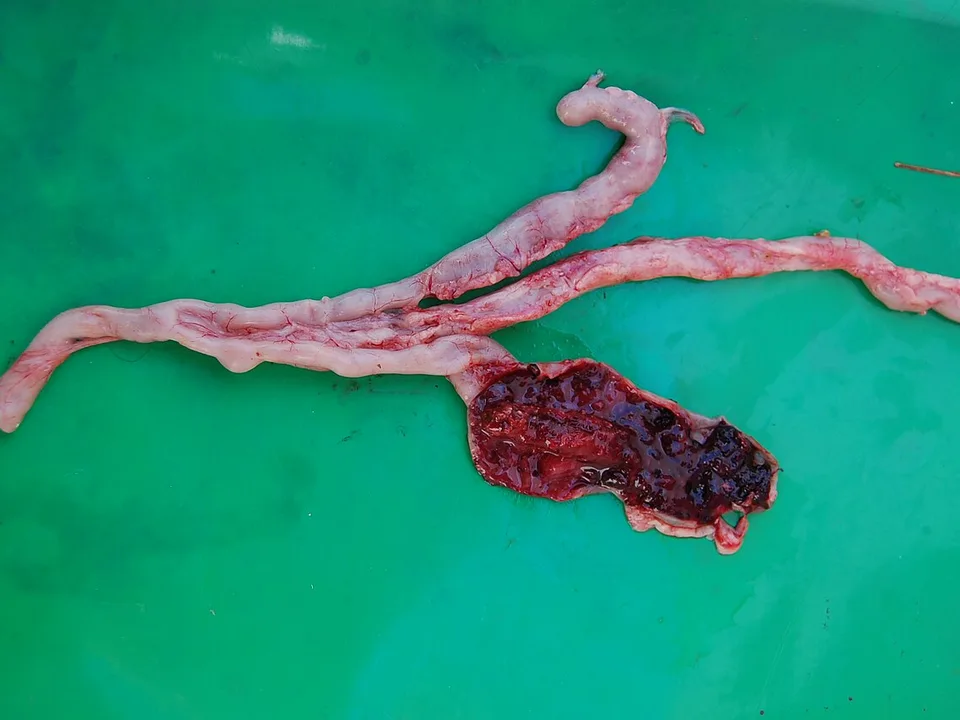
- In the wet form, yellow-white cheesy patches stick firmly to the mouth, tongue, throat and sometimes the windpipe, and they leave a raw surface if pulled off.
- Birds with the wet form breathe with an open beak, gasp, make rattling or wheezing sounds and stretch their necks to get air.
- Affected birds have a bad smell from the mouth, drool, shake their heads and pick at feed but cannot swallow it, so they become thin and weak.
- Egg production can fall sharply in laying flocks, and growth in young birds slows clearly.
- Some birds with severe wet pox die from suffocation or starvation, and deaths are higher when other infections are present at the same time.
What to do right now
- Separate birds with scabs or mouth lesions into a clean, dry pen away from the main flock, so other birds cannot peck at their scabs.
- Provide fresh clean water and soft, moist feed such as wet mash in shallow containers so that birds with sore mouths or closed eyes can still eat and drink.
- Keep sick birds in a quiet, shaded, well-ventilated place, protected from cold, rain and strong sun, so they use their energy to recover.
- Do not pick, peel or scrape scabs or the yellow mouth patches yourself, because this causes bleeding and pain and releases more virus into the house.
- Reduce mosquitoes at once by draining standing water around the house, clearing long grass, and using mosquito netting on windows of the poultry house, especially at dusk.
- Collect fallen scabs, old litter and feathers carefully and burn or bury them, and wash and disinfect feeders and drinkers.
- Stop selling, buying or moving birds to and from the farm until the vet has assessed the flock, and wash hands and change footwear after handling sick birds.
- Call your vet, County Veterinary Officer or a trusted agrovet to confirm the diagnosis and ask whether the healthy birds in the flock should be vaccinated now.
How it spreads
- Mosquitoes are the main way fowl pox spreads between birds and between farms: a mosquito that bites an infected bird can carry the virus on its mouthparts for weeks and pass it to every bird it bites afterwards.
- Other biting insects and mites, such as red mites and some flies, can also carry the virus mechanically from bird to bird.
- Direct contact spreads the virus when birds peck at each other's scabs or fight, especially in crowded houses where pecking and injuries are common.
- Scabs drop off infected birds into litter, dust and soil, where the virus can stay infectious for many months and infect birds through small wounds or by being breathed in.
- Contaminated feeders, drinkers, crates, egg trays, clothing and footwear can carry the virus from an infected house to a clean one.
- Buying in new or recovered birds from markets or other farms without quarantine can bring the virus onto a farm, because some birds may be carrying it without obvious signs.
- Wild birds and free-roaming village chickens that mix with your flock can share the virus, mainly through the mosquitoes that bite all of them.
Could it be something else?
Infectious laryngotracheitis (ILT)
ILT also causes gasping, coughing and cheesy material in the windpipe, and wet pox in the throat can look very similar. In ILT, birds often cough up blood-stained mucus and there are usually no wart-like scabs on the comb and wattles. If the same flock has scabs on the head as well as breathing problems, fowl pox is more likely, but a vet and laboratory are needed to be sure.
Vitamin A deficiency
Lack of vitamin A causes small white pimple-like spots in the mouth, throat and gullet, dull feathers and sticky eyes, and can look like early wet pox. These spots are usually many tiny pustules that are not firmly stuck down, there are no scabs on the comb, and the problem builds up slowly across birds on the same poor diet rather than spreading during the rainy season.
Wounds from pecking or fighting
Cocks fighting and feather pecking leave scabs on the comb and wattles too. These are usually cuts or scratches in lines or patches, they appear quickly after fights, and they heal without new spots forming. Pox lesions start as raised bumps, grow over days, and appear on many birds, including ones that do not fight.
Mouth canker (candidiasis or trichomoniasis)
Fungal thrush (candidiasis) and trichomoniasis cause whitish or cheesy growths in the mouth and crop. Thrush often follows long antibiotic use and affects the crop with a thick white 'towel-like' lining; trichomoniasis is common in pigeons and can spread to chickens through shared water. Neither causes scabs on the comb, and a vet can tell them apart by examining samples under a microscope.
How it is diagnosed
A vet can usually recognise fowl pox from the typical scabs on the comb, wattles and face, especially when several birds are affected during the rainy season. The wet form is harder, because cheesy throat lesions can be caused by other diseases such as infectious laryngotracheitis or vitamin A deficiency. To confirm, the vet may take scabs or pieces of the mouth lesions and send them to a veterinary laboratory, such as a county or regional veterinary investigation laboratory or the Central Veterinary Laboratories at Kabete. There the tissue can be examined under a microscope for the large inclusion bodies typical of pox virus (clumps of virus inside infected cells), tested by PCR (a test that detects the virus's genetic material) or grown in fertile eggs. A post-mortem on a bird that has died or been culled lets the vet look at the throat, windpipe and other organs and check for other diseases at the same time. Before the vet arrives, write down how many birds are affected and when signs started, the age and number of birds, vaccination history including the date and batch of any pox vaccine, recent new birds, egg production records and any deaths. Keep a sick or freshly dead bird cool (not frozen) in a sealed bag if the vet asks for one.
Treatment
There is no medicine that kills the fowl pox virus, and antibiotics do not cure it. Treatment is about helping birds through the illness, stopping spread and protecting the rest of the flock. A vet will usually advise good supportive care: soft feed, clean water, vitamins (especially vitamin A, which helps skin and mouth lining heal) and a calm, clean environment. The vet may recommend a mild antiseptic for skin scabs on selected birds, or may carefully treat mouth lesions in valuable birds; this should be done or shown by the vet, because rough removal causes bleeding and more harm. If bacteria have infected the scabs or airway, the vet may prescribe an antibiotic for a limited time. Use antibiotics only when a vet prescribes them, use the exact product and course given, and never use them 'just in case', because misuse breeds antimicrobial resistance (germs that no longer respond to medicines), which harms animal and human health. When any drug is used, follow the egg and meat withdrawal periods on the label and from the vet, and do not sell or eat eggs or meat from treated birds until that time has passed. In an outbreak, the vet will often recommend vaccinating birds that are not yet showing signs with live fowl pox vaccine, given by the wing-web stab method; this can slow the outbreak in the flock. Birds with severe wet pox that cannot breathe or eat may be humanely culled on the vet's advice to prevent suffering. Expect skin scabs to take a few weeks to dry and fall off.
Medicines must be prescribed and dosed by a vet. Always respect milk and meat withdrawal periods, and finish the full course of any antibiotic.
How Agrikima products can help
These support the animal alongside — never instead of — your vet's treatment, vaccination and good management.
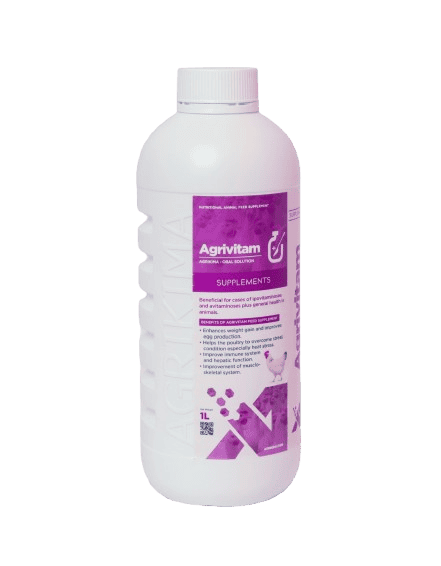
AGRIVITAM
Liquid vitamin and mineral supplement that can be added to drinking water to support birds recovering from the stress of fowl pox, helping appetite, condition and laying performance while scabs heal; vitamins such as vitamin A support healthy skin and mouth lining. Use alongside vaccination, mosquito control and your vet's advice, not as a cure for the virus.
View product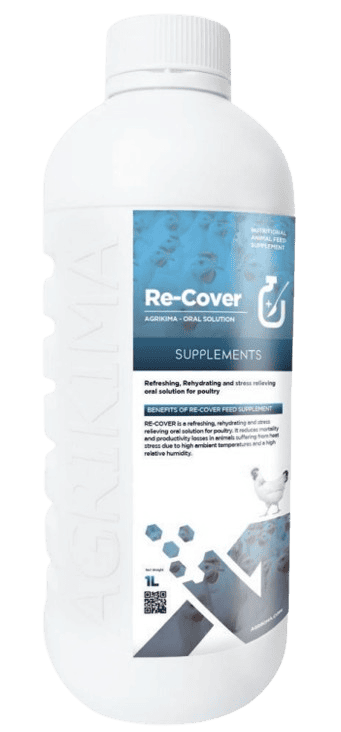
RE-COVER
Oral rehydration solution to help keep sick birds drinking and hydrated when sore mouths, closed eyes or fever reduce their intake of feed and water, supporting recovery while the flock is nursed and assessed by a vet.
View productPrevention
- Vaccinate every flock with live fowl pox vaccine, available from agrovets and produced locally, following the age and method advised by your vet or the vaccine label; it is usually given by pricking the wing web with a special two-pronged needle.
- Check the vaccination site about a week after vaccinating: a small swelling or scab (called a 'take') shows the vaccine worked, and birds with no take may need to be re-vaccinated on your vet's advice.
- Handle vaccine carefully: keep it cold, mix it just before use, use it all within the time on the label, and do not let vaccine splash onto the comb, face or eyes, where it can cause pox lesions.
- Control mosquitoes, especially before and during the long and short rains, by draining puddles, clearing blocked drains and old tyres or containers, cutting long grass near the house and using netting on poultry house openings.
- Bring free-range kienyeji chickens into a secure house before dusk, when mosquitoes are most active, and use clean, dry litter.
- Prevent feather pecking and fighting by avoiding overcrowding, providing enough feeders and drinkers, separating aggressive cocks and giving birds perches and space.
- Quarantine new birds for at least two weeks away from your flock, check them for scabs and mouth lesions, and buy from trusted, vaccinated sources where possible.
- Feed a balanced ration with enough vitamin A and other vitamins, and control worms, mites and other diseases so birds' immune systems stay strong.
Impact on your farm
Fowl pox rarely wipes out a flock the way Newcastle disease can, but it quietly costs Kenyan farmers a lot. Layers often drop in egg production for several weeks, which directly cuts daily income on farms that sell trays of eggs. Growing birds and broilers eat less and grow more slowly, so they take longer to reach market weight and feed costs rise. The wet form can cause deaths, especially in unvaccinated kienyeji flocks and when birds also have other infections. Birds with scabby heads look sick and fetch lower prices at local markets, and some buyers will refuse them. Extra costs include labour for nursing sick birds, vitamins, vet visits, antibiotics for secondary infections and vaccination during the outbreak. Compared with these losses, routine fowl pox vaccination and mosquito control are very cheap.
Outlook and recovery
Most birds with only the dry skin form recover on their own, with scabs usually drying and falling off over about two to four weeks. Recovered birds normally develop strong, long-lasting immunity to fowl pox. The wet form is more serious: birds with large membranes in the throat or windpipe may die from suffocation or starvation, and recovery is slower. The outlook is better when birds are kept eating and drinking, when secondary bacterial infections are controlled, and when the rest of the flock is vaccinated early in the outbreak. It is worse in birds that are young, poorly fed, low in vitamin A, infested with parasites or suffering from other diseases at the same time. The virus stays in scabs and litter for months, so new unvaccinated birds placed on the same farm can catch it unless the house is cleaned and vaccination is kept up.
Common questions
Can I eat eggs or meat from chickens with fowl pox?
Fowl pox does not infect people, so the disease itself is not a danger to humans. However, very sick birds should not be slaughtered for food, and any bird or egg from a bird treated with antibiotics or other drugs must not be sold or eaten until the withdrawal period given by your vet or the label has passed. Always cook poultry and eggs well as normal good practice.
My birds already have fowl pox. Is it too late to vaccinate?
It is not too late for the healthy birds. Vets often recommend vaccinating birds that do not yet show signs during an outbreak, because this can protect many of them before the virus reaches them. Vaccination will not cure birds that are already sick, and some vaccinated birds may still develop mild disease. Ask your vet to check the flock and advise which birds to vaccinate.
Should I remove the scabs or yellow patches in the mouth?
No, not by yourself. Pulling off scabs or mouth patches causes bleeding, pain and raw areas that bacteria can infect, and it spreads virus into the house. Scabs will dry and fall off on their own. If a valuable bird has mouth or throat lesions that stop it eating or breathing, ask your vet to examine it and advise what is safe.
Why do my chickens get fowl pox mostly during the rains?
The rains create puddles and standing water where mosquitoes breed. Mosquitoes are the main carriers of fowl pox, picking up the virus from one bird and passing it on to others for weeks. This is why outbreaks are common during and after the long and short rains, especially in free-range flocks. Vaccinating before the rains and controlling mosquitoes around the house greatly lowers the risk.
Will antibiotics cure fowl pox?
No. Fowl pox is caused by a virus, and antibiotics do not kill viruses. A vet may sometimes prescribe an antibiotic if bacteria have infected the scabs or throat, but using antibiotics without good reason wastes money, leaves residues in eggs and meat, and helps create germs that medicines can no longer treat. Focus on nursing, vaccination and mosquito control.
Can a bird get fowl pox again after it recovers?
Birds that recover from fowl pox usually have strong, long-lasting immunity to it, so a second bout is uncommon. Vaccinated birds are also well protected when the vaccine 'takes' properly. The bigger risk is to new, unvaccinated birds you bring onto the farm, because the virus can remain in old scabs and litter for months. Vaccinate each new batch and clean the house well between flocks.
A guide, not a diagnosis. This page is general information to help you recognise problems early. Always confirm with a vet or animal health worker before treating.