What it is
Infectious coryza is caused by a bacterium called Avibacterium paragallinarum (it used to be called Haemophilus paragallinarum). The bacterium enters through the nostrils and eyes and settles in the lining of the nasal passages and the sinuses, which are the air spaces under the skin of the face, below and in front of the eyes. There it causes inflammation: the lining swells and produces large amounts of mucus and pus. Because the sinuses cannot drain well, the pus builds up, so the face swells and the discharge turns thick, yellow and foul-smelling. The eyelids become inflamed (conjunctivitis) and stick shut, so birds struggle to find feed and water. Sick birds eat and drink less, which is why growth slows and egg-laying drops. Signs usually appear within one to three days of infection. On its own the disease usually runs for about two to three weeks, but it often becomes worse and longer-lasting when other infections join in, especially Mycoplasma (chronic respiratory disease), other bacteria, or viruses such as infectious bronchitis. After recovery, many birds keep the bacterium in their noses and sinuses without looking sick. These carrier birds are the main reason the disease keeps coming back on a farm.
Which animals are most at risk
Chickens are the main species affected; guinea fowl and some game birds can occasionally be infected, while ducks, turkeys and pigeons are generally considered resistant. Growing birds from a few weeks old and adult birds are affected, and the disease tends to be more severe in older birds and in layers. Pullets coming into lay and laying hens suffer the biggest losses because of the egg drop. Farms with multiple ages on one site, such as layer farms that add new batches without emptying, are at highest risk. Free-range and kienyeji flocks that mix at markets, with neighbours' birds or with newly bought birds are also at high risk. Outbreaks are often worse during the cold, wet long and short rains, when houses are closed up, litter gets wet and ammonia builds up. Crowded, poorly ventilated houses and birds stressed by poor feeding or other diseases are more likely to have severe outbreaks.
Signs to look for
Early signs
- Sneezing and head shaking, often in several birds at once.
- Watery discharge from the nostrils that soon becomes thick and sticky.
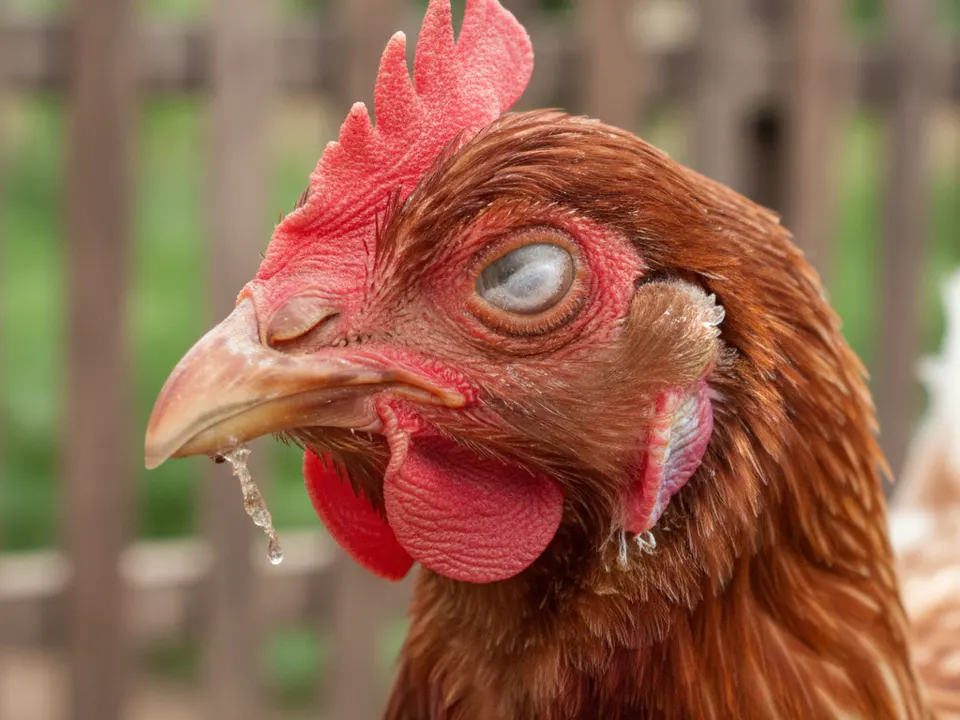
- Wet, foamy or watery eyes, with birds partly closing their eyes.
- Mild swelling under one or both eyes, which may be easier to feel than see at first.
- A slightly sour or unpleasant smell in the house, especially near the birds.
- Birds eating and drinking a little less than normal, and a small drop in egg collection.
- Feed and dust stuck to the nostrils and the sides of the beak.
As it gets worse
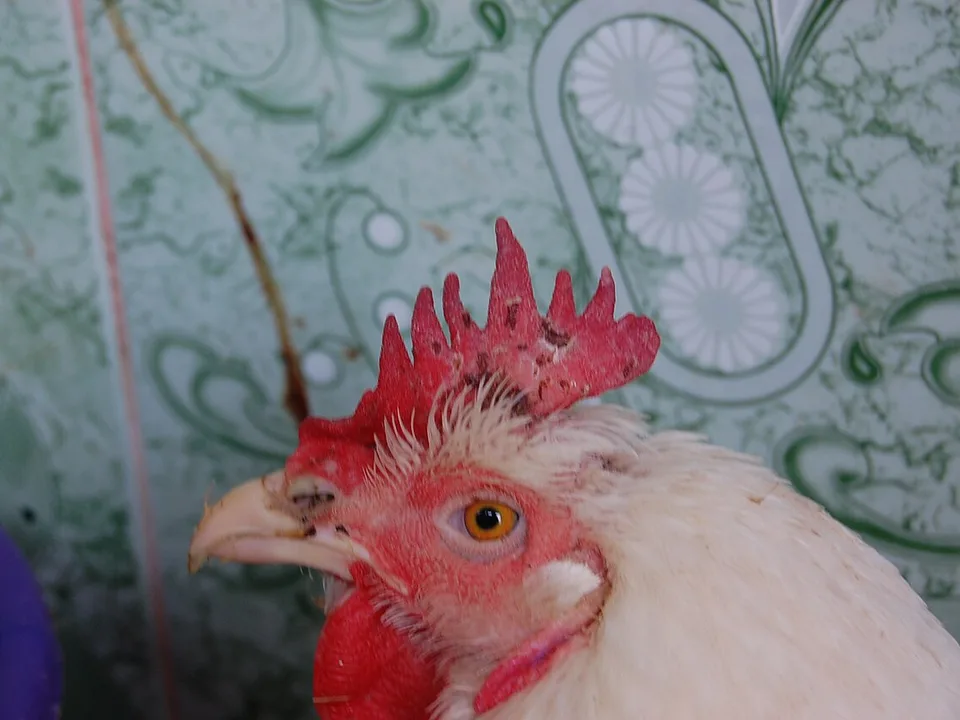
- Clear swelling of the face on one or both sides, sometimes so large the eye is hidden.
- Swollen wattles, which are often more obvious in cocks.
- Eyelids glued shut with dried discharge, and yellow cheesy material in or around the eye.
- Thick, yellow, foul-smelling nasal discharge and crusts around the nostrils.
- A sharp fall in egg production, and pullets that delay starting to lay.
- Birds standing hunched, losing weight, and not reaching feed and water because they cannot see.
- Rattling or gurgling breathing sounds, mouth breathing, and some diarrhoea when the lower airways or other infections are involved.
- Higher deaths than usual, which suggests other diseases have joined in and needs urgent vet attention.
What to do right now
- Separate visibly sick birds into a clean, dry, draught-free pen away from the main flock, and care for them last each day.
- Stop all movement: do not buy, sell, give away or mix birds until the vet has seen the flock, because selling infected birds spreads the disease to other farms.
- Make sure every bird can reach clean, fresh water easily; place extra drinkers close to birds that cannot see well, and clean and refill drinkers at least daily.
- Gently wipe dried crusts from the eyes and nostrils with clean cotton wool dipped in clean, warm water so birds can see to eat and drink, using a fresh piece for each bird.
- Improve ventilation without creating cold draughts, remove wet and caked litter, and add fresh dry litter to reduce ammonia, which irritates the airways.
- Reduce crowding and stress where possible, and keep feed fresh and easy to reach.
- Wash your hands and change or clean your boots after handling sick birds, and keep visitors out of the poultry houses.
- Record the number of sick and dead birds, egg collection and feed use each day, then call your vet or County Veterinary Officer. Do not start antibiotics on your own.
How it spreads
- The main source is carrier birds: recovered or healthy-looking chickens that still carry the bacterium in their nose and sinuses and shed it to others.
- Bringing new birds onto the farm, especially point-of-lay pullets or kienyeji birds bought from markets, is one of the most common ways the disease arrives.
- Birds pass it to each other through direct contact and through droplets sneezed or coughed into the air over short distances in the same house.
- Shared drinkers and feeders spread it quickly, because sick birds drip nasal discharge into the water and feed.
- Keeping several age groups on one farm lets older carrier birds infect each new batch of younger birds.
- People, crates, egg trays, sacks and equipment carried between houses or farms can move the bacterium, though it does not survive long outside the bird.
- Stress makes outbreaks worse: overcrowding, poor ventilation, ammonia from wet litter, cold draughts during the rains, transport, vaccination stress and poor nutrition.
- It is not passed from hen to chick through the egg, so the problem starts after chicks meet infected birds.
Could it be something else?
Mycoplasma (chronic respiratory disease, CRD)
Mycoplasma spreads more slowly through a flock and lasts for weeks or months. Birds often have foamy eyes, a gentle rattling cough and swollen sinuses, but the discharge is usually less foul-smelling. Coryza appears within days, spreads fast and has a strong bad smell. The two often occur together, so only lab tests can be sure.
Fowl cholera (Pasteurella multocida)
The chronic form of fowl cholera also causes swollen wattles and faces, but it often comes with swollen joints, lameness, greenish diarrhoea and more deaths. The acute form can kill birds suddenly with few signs. Coryza mainly affects the face and nose and usually kills few birds on its own.
Newcastle disease or infectious laryngotracheitis (ILT)
Newcastle disease usually causes many deaths, greenish diarrhoea and nervous signs such as twisted necks or paralysis. Suspected Newcastle disease must be reported to the County Veterinary Officer. ILT causes gasping with neck stretched and sometimes bloody mucus. Coryza causes mainly face swelling and nasal discharge, with far fewer deaths.
Vitamin A deficiency
Lack of vitamin A causes whitish cheesy material in the eyes and nostrils and small white spots in the mouth and throat. It develops slowly over weeks and is linked to poor or old feed or no green feed. It does not spread suddenly from bird to bird like coryza, and there is little face swelling or bad smell.
How it is diagnosed
A vet will usually suspect coryza from the history and signs: a sudden outbreak of swollen faces, smelly nasal discharge and egg drop spreading through the flock within days, often after new birds were introduced. To confirm it, the vet may take swabs from the sinuses of sick birds or send live sick birds to a laboratory. In Kenya this may be the Central Veterinary Laboratories at Kabete, a regional veterinary investigation laboratory, or a university veterinary laboratory. The bacterium is hard to grow, so labs use special culture methods or a DNA test (PCR). A post-mortem (examining a dead or put-down bird) shows sticky mucus and yellow cheesy pus in the nasal passages and sinuses. The lab may also check for other infections, such as Mycoplasma, infectious bronchitis or fowl cholera, because mixed infections are common and change the treatment plan. A sensitivity test may be done to show which antibiotics will still work. To help, the farmer should pick two or three birds in the early stage of illness that have not yet been given any medicine. Keep records of when signs started, how many birds are sick or dead, daily egg numbers, feed and water intake, vaccination history, and any birds recently bought or brought back from market.
Treatment
Once the vet has confirmed or strongly suspects coryza, treatment is usually an antibiotic given in the drinking water or feed for the whole affected house. Many cases are treated with medicines from groups such as sulfonamides (sometimes combined with trimethoprim), tetracyclines, or macrolides like erythromycin or tylosin. The vet chooses the drug based on the lab results, local resistance patterns, whether birds are laying, and what is approved for poultry in Kenya. Treatment usually reduces signs and losses, but it rarely clears the bacterium from every bird, so relapses after treatment stops and carrier birds are common. Badly affected birds that do not respond may need to be culled humanely. If other infections such as Mycoplasma are present, the treatment plan changes. Every antibiotic has a withdrawal period, the time after the last treatment during which eggs and meat must not be sold or eaten. Some antibiotics are not allowed at all in laying hens whose eggs are eaten. Follow the vet's instructions and the product label exactly. Use antibiotics only when a vet prescribes them, complete the full course, and never use leftover or human medicines. Wrong or repeated use breeds antimicrobial resistance, where the bacteria stop responding to drugs, and this harms both animal and human health.
Medicines must be prescribed and dosed by a vet. Always respect milk and meat withdrawal periods, and finish the full course of any antibiotic.
How Agrikima products can help
These support the animal alongside — never instead of — your vet's treatment, vaccination and good management.
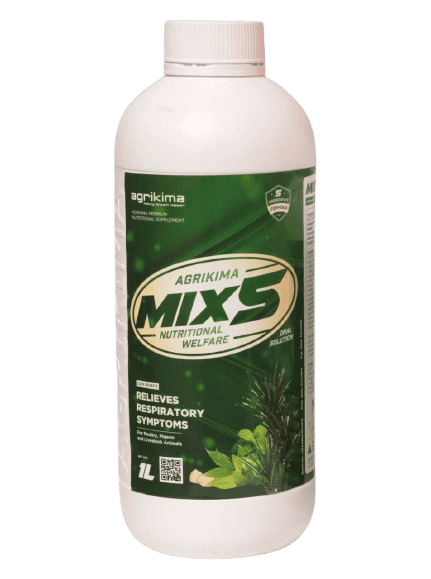
MIX5
Its plant extracts are labelled to relieve respiratory problems, so it can be used in the drinking water as supportive care to help birds cope with nasal and airway irritation during recovery. It does not kill the coryza bacterium or replace vet-prescribed treatment, vaccination or good ventilation.
View product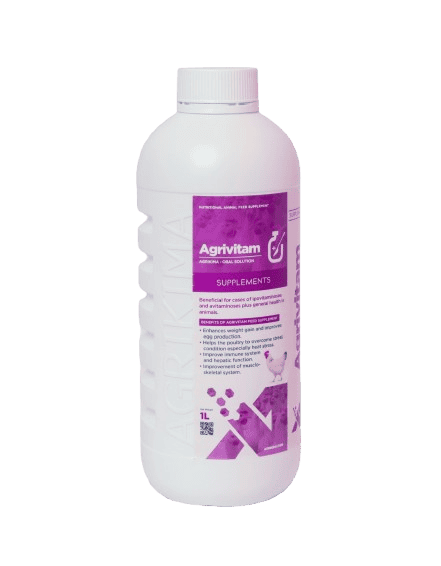
AGRIVITAM
A vitamin and mineral supplement labelled for stress recovery and layer productivity. It can help sick birds that are eating less to keep up their vitamin intake, including vitamin A for the lining of the airways, and support the return of egg production after the vet's treatment. It supports recovery but does not treat the infection.
View productPrevention
- Keep a closed flock where possible: buy birds only from trusted, well-managed hatcheries or farms with no history of coryza, and avoid restocking from open markets.
- Quarantine any new or returning birds in a separate place for at least two to three weeks and watch them for sneezing, face swelling or eye discharge before mixing.
- Use the all-in, all-out system: raise one age group per house or site, sell or cull the whole batch, then clean, disinfect and rest the house before new birds arrive.
- On farms where coryza is known, vaccinate replacement pullets with an inactivated coryza vaccine before they begin laying, usually two injections some weeks apart, following your vet's programme. The vaccine should match the strains (serovars) found in the area.
- Never keep recovered birds from an outbreak to mix with a new batch; plan to sell or cull the affected flock at the end of its productive life rather than carrying it over.
- Provide good ventilation, dry litter and enough space per bird, and protect houses from cold draughts and rain during the long and short rains.
- Clean and disinfect drinkers and feeders regularly, and raise or cover drinkers to keep litter and droppings out of the water.
- Feed a balanced ration with enough vitamins, especially vitamin A, and control other diseases such as Newcastle disease, infectious bronchitis, Mycoplasma and worms, which make coryza worse.
- Limit visitors, use dedicated boots or footbaths at each house, and do not share crates, egg trays or equipment with other farms without cleaning them.
Risk to people
Infectious coryza is not known to infect people, so handling sick birds does not give you the disease. The main human-health concern is drug residues: antibiotics used to treat the flock can remain in eggs and meat for a period after treatment. Do not eat or sell eggs or meat from treated birds until the vet's or label's withdrawal period has passed. Never use antibiotics in laying hens unless the vet confirms the product is allowed for layers. Always wash your hands after handling sick birds and their discharge, as good hygiene protects against other poultry germs.
Impact on your farm
Coryza hits Kenyan poultry farmers mainly through lost production rather than deaths. In layer flocks, egg collection can fall sharply within days, and pullets may start laying weeks late, directly cutting income from egg sales. Broilers and growing birds eat less and grow slowly, so they take longer to reach market weight and use more feed per kilogram gained. Swollen, sick-looking birds fetch lower prices, and kienyeji birds with swollen faces are hard to sell at market. Farmers also pay for vet visits, lab tests and antibiotics. During and after treatment, eggs and meat cannot be sold until the withdrawal period ends. Because recovered birds remain carriers, the disease tends to return with each new batch on multi-age farms, so losses repeat year after year unless the farm changes its management. When other infections join in, deaths and costs rise much more.
Outlook and recovery
Most birds with uncomplicated coryza recover within about two to three weeks, and deaths are usually low. Recovery is slower and losses higher when other infections such as Mycoplasma, infectious bronchitis or fowl cholera are present. Poor ventilation, wet litter, overcrowding, cold weather and poor nutrition also make it worse. Early vet involvement, good nursing and better housing improve the outlook. Egg production usually returns as birds recover, but it may not fully reach the level it was before the outbreak. The biggest long-term problem is that many recovered birds stay carriers, so the flock remains a source of infection for new birds. Lasting control depends on all-in, all-out management, careful restocking and vaccination rather than on treatment alone.
Common questions
Can I eat or sell eggs from hens with coryza?
The disease itself does not infect people, so eggs from sick but untreated hens are not a coryza risk to humans, though sick hens lay fewer and sometimes poorer-quality eggs. The real concern comes once you treat: many antibiotics leave residues in eggs, and some are not allowed in laying hens at all. After any treatment, do not eat or sell eggs until the withdrawal period given by your vet or the product label has passed.
Why does coryza keep coming back on my farm?
The most common reason is carrier birds. Hens that recovered from an earlier outbreak look healthy but still carry the bacterium in their sinuses, and they infect each new batch of younger birds you bring in. Antibiotics reduce signs but rarely clear every carrier. To break the cycle, avoid keeping different ages together, empty and clean houses between batches, do not carry old birds over to mix with new ones, and talk to your vet about vaccinating pullets before lay.
Is there a vaccine for coryza in Kenya, and does it work?
Yes, inactivated coryza vaccines are available through vets and some agrovets, usually given by injection to pullets before they start laying. They reduce how sick birds get and protect egg production, but they do not give complete protection. They work best when the vaccine contains the strains found in your area. Ask your vet or County Veterinary Officer whether vaccination is worthwhile for your farm and how to fit it into your programme.
Can I just buy an antibiotic from the agrovet and treat the birds myself?
It is better not to. Several diseases look like coryza, including Mycoplasma, fowl cholera and even Newcastle disease, and they need different handling. Newcastle disease is viral, so antibiotics will not help, and it must be reported. The wrong drug, dose or course length wastes money, leaves residues in eggs and meat, and helps bacteria become resistant. Let a vet confirm the cause and prescribe the right treatment and withdrawal period.
Should I cull the birds that had coryza?
Not always straight away. Many birds recover and lay again, and culling a whole laying flock can be costly. However, birds that stay badly swollen, blind or thin after treatment are best culled humanely. Recovered birds should not be mixed with new stock because they can carry the disease. Many farmers keep the recovered flock until the end of its laying life, then sell it, clean the house thoroughly and restock with clean birds.
Will coryza spread to my ducks, turkeys or other animals?
Coryza mainly affects chickens; guinea fowl and some game birds can occasionally be infected. Ducks, turkeys and pigeons are generally considered resistant, and it does not affect cattle, goats, dogs or people. Other birds and people can still carry contaminated dirt between houses, so keep good hygiene and limit movement between poultry pens during an outbreak.
A guide, not a diagnosis. This page is general information to help you recognise problems early. Always confirm with a vet or animal health worker before treating.