What it is
E. coli bacteria live normally in the gut of every chicken and in their droppings, so they are always present in litter, dust and water around birds. Most strains are harmless, but some, called avian pathogenic E. coli (APEC), can invade the body when the bird's defences are down. The most common route is through the breathing system: ammonia from wet litter and heavy dust damage the fine hairs that clean the windpipe, or a virus like infectious bronchitis or Newcastle disease (or a strong reaction to a live vaccine) damages the lining. E. coli carried on dust then reaches the air sacs, which are thin balloon-like bags that help the bird breathe. From there the bacteria spread through the blood (septicaemia, meaning blood infection) and cause a thick, yellowish, cheesy layer of pus over the heart, liver and air sacs. In chicks, bacteria enter through a navel that has not healed or through dirty, cracked eggs in the hatchery, infecting the yolk sac (the leftover yolk the chick lives on in its first days). In layers, bacteria can travel up the vent into the oviduct (egg tube), causing salpingitis and egg peritonitis, where egg material and infection collect in the belly. Bacteria can also settle in joints, causing arthritis, or under the skin, causing cellulitis.
Which animals are most at risk
All poultry can be affected, including chickens, turkeys, ducks and quails. Young chicks in their first one to two weeks are at high risk of yolk sac infection, especially those from poorly managed hatcheries or hatched from dirty eggs under hens. Broilers between about three and eight weeks are commonly hit by airsacculitis and blood infection, often a few days after a respiratory virus or vaccination. Laying hens, particularly at the start of lay and in peak production, are prone to egg peritonitis and salpingitis. Risk rises in deep-litter and closed houses with poor ventilation, wet litter and overcrowding, common in zero-grazing style urban and peri-urban units. During the long and short rains, litter gets wet and ammonia builds up, while in cold nights people close curtains tightly and trap gases. In the dry, dusty season, dust levels rise. Kienyeji flocks are often more hardy but suffer losses in chicks hatched in dirty nests and in birds weakened by Newcastle disease or worms.
Signs to look for
Early signs
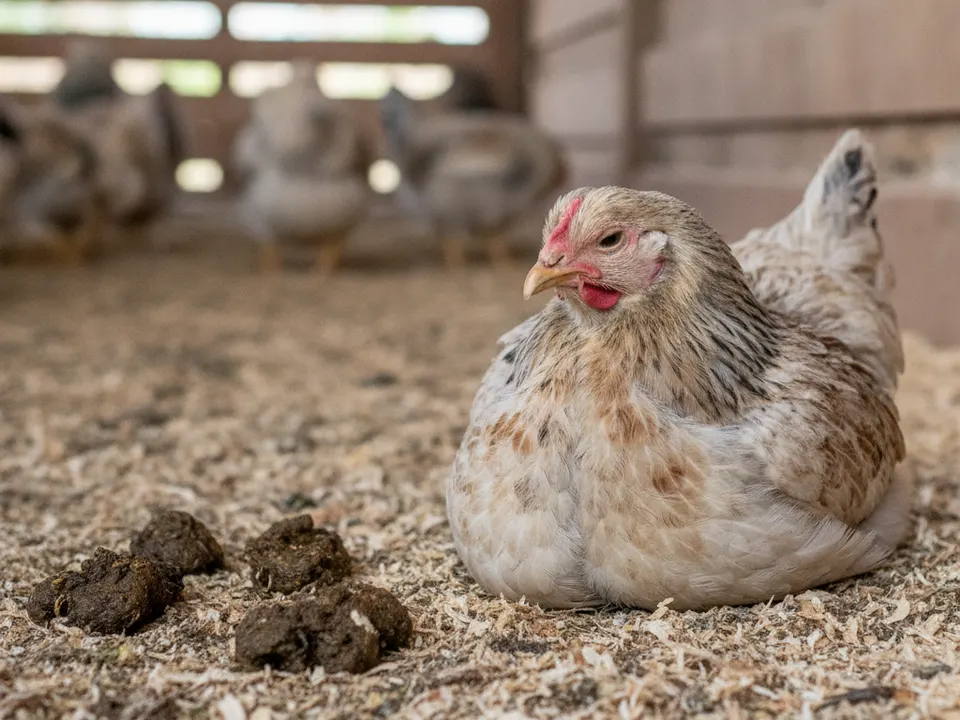
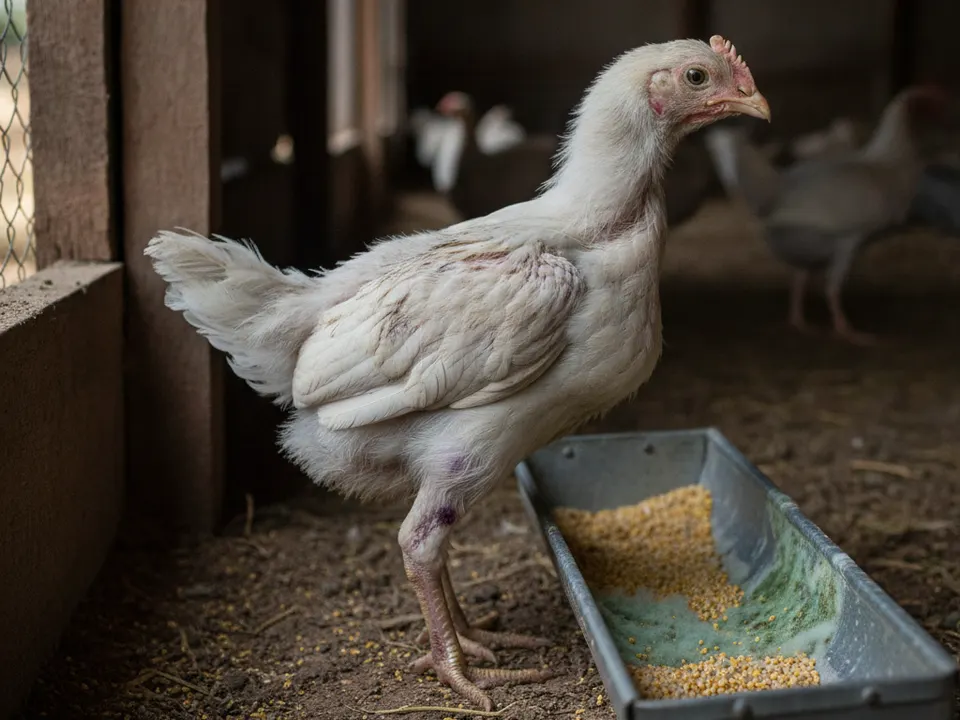
- Birds are dull, sleepy and stand hunched with ruffled feathers, often away from the feeder.
- Reduced feed and water intake, and broilers stop gaining weight evenly so the flock looks uneven in size.
- Sneezing, a wet rattling sound or gurgling when you listen to the flock quietly at night.
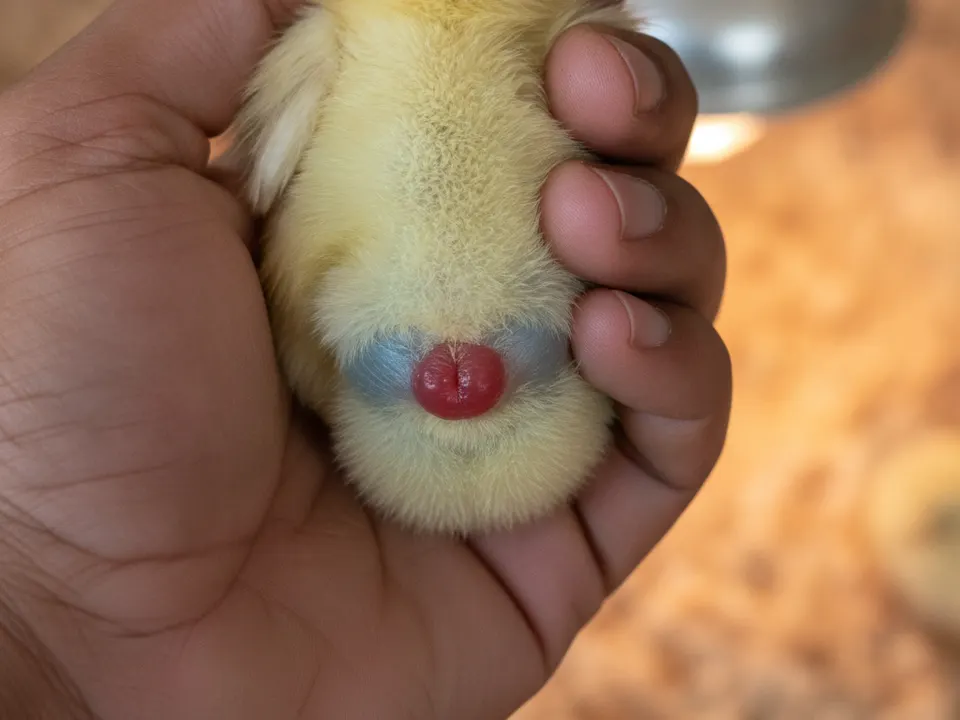
- Chicks with wet, red, swollen or scabbed navels and a bloated, soft belly; they may huddle near the heat source.
- A small rise in daily deaths, often a few birds each day rather than many at once.
- Pasty or watery diarrhoea, sometimes greenish or yellowish, soiling the vent feathers.
As it gets worse
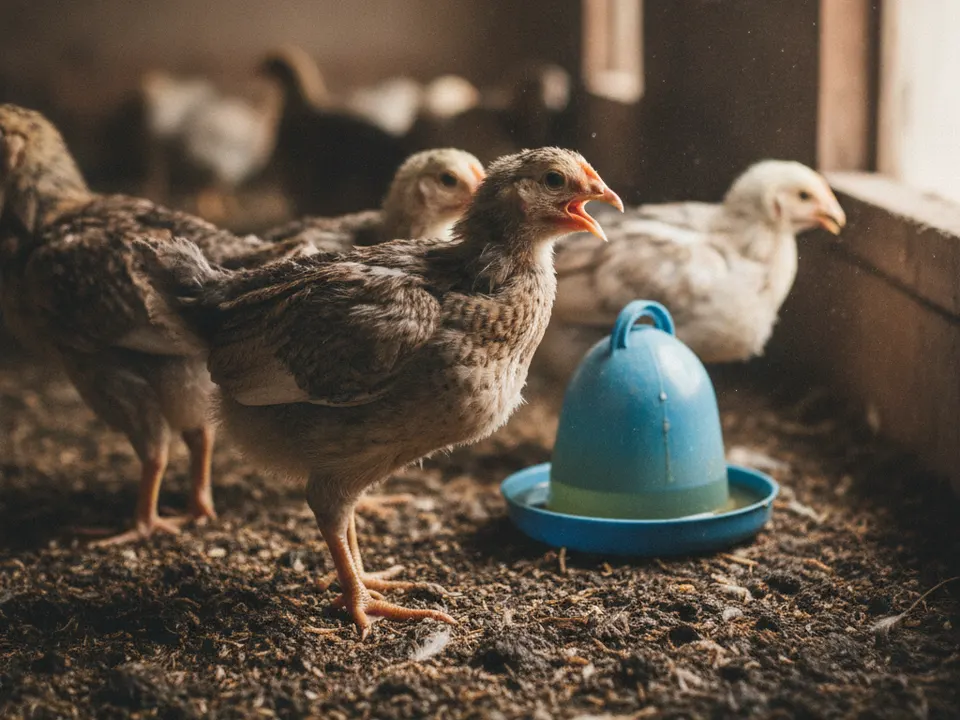
- Open-mouth breathing, gasping and tail bobbing with each breath as the air sacs fill with pus.
- Lameness, with hot, swollen hocks or foot joints, and birds sitting down and unwilling to walk.
- Swelling of the head and around the eyes in broilers (swollen head syndrome), sometimes with one eye cloudy or closed.
- In layers, a sharp drop in egg production, birds standing upright like a penguin with a swollen, hanging belly, and hens that stop laying for good.
- Rough, yellowish or thickened skin patches over the belly or thighs in broilers (cellulitis), often noticed at slaughter.
- Steadily rising deaths, with dead chicks that smell foul, and birds that become thin and stunted if they survive.
What to do right now
- Separate obviously sick, lame or gasping birds into a clean, dry, draught-free pen with easy access to feed and fresh water.
- Remove wet, caked litter, especially around drinkers, and add fresh dry litter such as wood shavings; do not wait for the end of the batch.
- Improve ventilation by opening curtains or windows on the side away from strong wind, so the ammonia smell clears while birds are not chilled.
- Clean and disinfect drinkers and feeders daily, provide fresh clean water, and check that the water source is safe.
- Keep chicks at the correct brooding temperature; watch their spread under the heat source and adjust so they are neither crowded nor gasping.
- Collect dead birds promptly, wearing gloves, keep a few fresh ones cool for the vet, and bury deeply or burn the rest away from the house and water.
- Write down the number of sick and dead birds each day, feed and water use, egg numbers, and recent vaccines or drugs.
- Call your vet or County Veterinary Office and do not buy or give antibiotics from the agrovet until a vet has examined the flock and advised you.
How it spreads
- Contaminated droppings, litter and dust: birds breathe in dust carrying E. coli, especially in closed, poorly ventilated houses.
- High ammonia from wet, caked litter damages the airways and lets bacteria in; if the house smell stings your eyes, ammonia is too high.
- Dirty or cracked hatching eggs, poor hatchery hygiene and chicks with unhealed navels lead to yolk sac infections in the first week.
- Contaminated drinking water, dirty drinkers and stagnant water in free-range compounds spread bacteria between birds.
- Other diseases weaken birds first: Newcastle disease, infectious bronchitis, Gumboro (IBD), Mycoplasma, coccidiosis and worms often open the door to E. coli.
- Stress from chilling or overheating during brooding, overcrowding, transport, sudden feed changes and poor nutrition lowers resistance.
- Rodents, wild birds, flies and dirty boots, crates or equipment carry contaminated droppings between houses and farms.
- Mycotoxins (poisons from mouldy feed) weaken the immune system and make outbreaks more likely.
Could it be something else?
Newcastle disease
Newcastle disease usually spreads very fast with many deaths in a few days, plus nervous signs such as twisted necks, circling and paralysis, and greenish diarrhoea. E. coli is often slower with a steady trickle of deaths. The two often occur together, so a vet and post-mortem are needed; Newcastle disease must be reported to the County Veterinary Officer.
Chronic respiratory disease (Mycoplasma gallisepticum)
Mycoplasma causes slow-building respiratory signs with foamy eyes, swollen sinuses under the eyes and nasal discharge over weeks. It very often comes together with E. coli, which then causes the cheesy pus on heart and liver seen at post-mortem. Only lab tests can confirm Mycoplasma.
Pullorum disease and fowl typhoid (Salmonella)
Pullorum causes white, chalky diarrhoea that pastes the vents of young chicks, while fowl typhoid causes sudden deaths in growers and adults with a swollen, bronze-coloured liver. These look very similar to E. coli infections and need lab culture to tell apart; your vet will advise if reporting is needed.
Fowl cholera and infectious coryza
Fowl cholera often causes sudden deaths in adult birds with swollen, purple wattles and combs. Infectious coryza causes a swollen face with a sticky, foul-smelling nasal discharge spreading quickly through older birds. E. coli swollen head syndrome is mainly in young broilers and usually follows a viral infection.
How it is diagnosed
A vet will look at the flock history, ventilation, litter and recent vaccinations or illness, then examine live birds. The most useful step is a post-mortem (opening up freshly dead or sick, humanely killed birds). Typical findings include a thick, white-to-yellow cheesy layer covering the heart (pericarditis), liver (perihepatitis) and cloudy, thickened air sacs; infected, foul-smelling yolk sacs in chicks; and yolk-like material in the belly of layers. Because these findings can also be caused by Salmonella, Mycoplasma or others, the vet will often send samples to a laboratory such as the Central Veterinary Laboratories at Kabete, a regional or county veterinary lab, or a university or private lab. The lab grows the bacteria (culture) and runs an antibiotic sensitivity test, which shows which drugs will actually work, important because resistant E. coli are common. Tests for underlying viruses or Mycoplasma may also be done. To help, keep records of daily deaths, feed and water intake, egg numbers, vaccination dates and any drugs already given. Bring two to four freshly dead or sick birds, kept cool in a clean sealed bag, and do not give antibiotics before samples are taken if you can avoid it, because this can hide the bacteria.
Treatment
Treatment depends on the form of disease and what the lab finds. Vets usually treat the whole flock through the drinking water with an antibiotic, ideally chosen using a sensitivity test. Drug classes commonly used for poultry E. coli include tetracyclines, penicillins such as amoxicillin, and sulphonamides combined with trimethoprim; some drugs such as fluoroquinolones (for example enrofloxacin) and colistin are considered critically important for human medicine and should only be used when a vet decides nothing else will work. Doses and length of treatment must be prescribed by a vet, and the full course must be completed. Every antibiotic has a withdrawal period, a set time after treatment when eggs and meat must not be eaten or sold; follow the label and the vet's instructions exactly, and remember some drugs are not allowed at all in laying hens. Misuse, such as under-dosing, stopping early or routinely adding antibiotics to water, is a major reason E. coli in Kenya has become resistant, which means future treatment fails. The vet will also tackle the underlying cause, for example reviewing Newcastle, infectious bronchitis and Gumboro vaccination, Mycoplasma control, coccidiosis and worms, and housing. Expect birds with mild airsacculitis to improve within a few days if conditions are fixed. Chicks with yolk sac infection, layers with egg peritonitis and birds with badly swollen joints usually respond poorly, and the vet may advise humane culling of these birds.
Medicines must be prescribed and dosed by a vet. Always respect milk and meat withdrawal periods, and finish the full course of any antibiotic.
How Agrikima products can help
These support the animal alongside — never instead of — your vet's treatment, vaccination and good management.
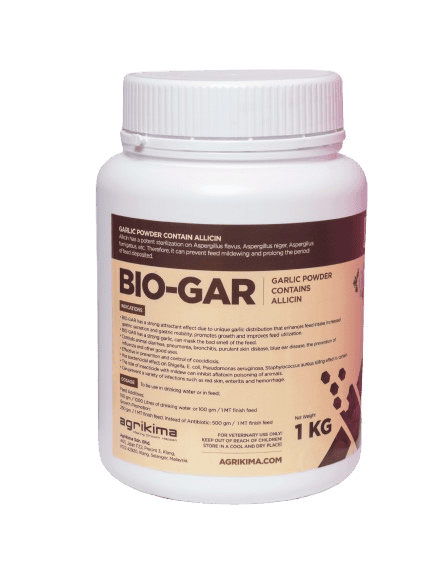
BIO-GAR
A probiotic that supports healthy gut bacteria. It can help keep the gut balanced as part of good management and may help the gut recover after a vet-prescribed antibiotic course. Ask your vet about timing during treatment. It does not treat E. coli infection or replace hygiene, vaccination or vet care.
View product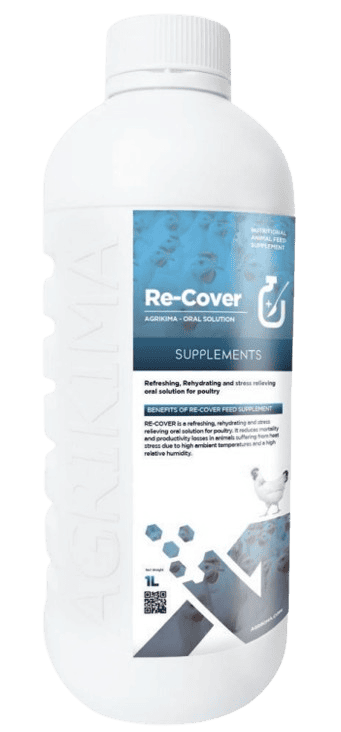
RE-COVER
An oral rehydration solution that helps dull, feverish birds keep drinking and stay hydrated while they recover under vet treatment. It is also useful during hot weather or after transport, when stress can trigger outbreaks. It supports recovery but does not cure the infection.
View productPrevention
- Buy day-old chicks only from reputable, licensed hatcheries and check on arrival for dry, healed navels, bright eyes and active chicks; for kienyeji, set only clean, uncracked eggs and keep nests clean and dry.
- Prepare the brooder properly before chicks arrive: clean and disinfect, use dry litter, pre-heat, and keep a steady temperature with chick guards to stop chilling and crowding.
- Keep litter dry and loose by fixing leaking drinkers and roofs, raising drinkers to the right height, turning litter regularly and replacing wet patches, especially in the rainy seasons.
- Control ammonia and dust with good ventilation day and night; adjust curtains rather than sealing the house shut on cold nights.
- Provide clean drinking water from a safe source, clean drinkers daily, and consider water sanitation as advised by your vet or extension officer.
- Vaccinate on time against Newcastle disease, infectious bronchitis and Gumboro according to your vet's or hatchery's schedule, as these diseases open the door to E. coli; ask your vet whether an E. coli vaccine is suitable and available for your farm.
- Avoid overcrowding, practise all-in-all-out with a full clean-out and rest period between batches, and keep birds of different ages apart.
- Practise biosecurity: footbaths, dedicated boots and clothes, control of rodents, wild birds and flies, and limit visitors and shared crates.
- Feed a balanced, fresh ration stored off the floor in a dry place, avoid mouldy feed, and control worms and coccidiosis to keep the gut and immune system strong.
- Collect eggs often from clean nest boxes so eggs are not soiled, and do not use dirty or cracked eggs for hatching.
Risk to people
The E. coli strains that cause disease in chickens are not usually a major direct threat to people, but some can be related to strains that cause urine or blood infections in humans, and chicken droppings can also carry other germs. Antibiotic-resistant E. coli from poultry can pass to farm workers and consumers through droppings, poor hand hygiene and undercooked meat. Wash hands with soap after handling birds, litter or dead chickens, wear gloves and boots when cleaning, keep children away from sick birds, and cook chicken and eggs thoroughly. Never eat or sell eggs or meat from treated birds before the withdrawal period is over, because drug residues can cause allergies in some people and add to antibiotic resistance.
Impact on your farm
Colibacillosis is one of the costliest poultry problems on Kenyan farms because it causes a steady flow of losses rather than one dramatic event. Chick deaths in the first week reduce the number of birds you can sell and waste money spent on chicks and brooding. Broilers that survive are often stunted and uneven, eat feed without gaining well, and may be condemned or downgraded at slaughter because of pus on the organs or skin cellulitis. In layers, egg peritonitis kills hens and causes others to stop laying permanently, and production drops can last weeks. Farmers also spend money on drugs, often more than once if the wrong antibiotic is chosen, and must throw away or not sell eggs and meat during withdrawal periods. Repeated use of antibiotics builds resistance on the farm, making each new outbreak harder and more expensive to control.
Outlook and recovery
The outlook depends on how early the problem is caught and whether the underlying causes are fixed. Flocks with mild airsacculitis often recover well once ventilation, litter and water are improved and the correct antibiotic is used. Birds with advanced disease, chicks with yolk sac infection, layers with egg peritonitis and birds with chronically swollen joints rarely return to full production, and culling is often the kindest and most economical choice. If ammonia, poor hygiene or other diseases are not dealt with, the problem tends to come back in every batch, and treatment becomes less effective as resistance builds.
Common questions
Can I just buy an antibiotic at the agrovet and put it in the water?
It is better not to. E. coli in Kenya is often resistant to commonly used antibiotics, so a drug chosen by guessing may not work, wastes money and builds more resistance on your farm. Many other diseases look similar, some of which antibiotics cannot help, such as Newcastle disease. A vet can examine the flock, do a post-mortem and, ideally, a sensitivity test to choose a drug that works, and tell you the correct withdrawal period for eggs and meat.
Why are my chicks dying in the first week with big, smelly bellies?
This is usually yolk sac infection, also called omphalitis. Bacteria enter through dirty or cracked eggs at hatching or through an unhealed navel. Chilling, overheating and dirty brooders make it worse. Treatment rarely saves badly affected chicks, so talk to your supplier about chick quality, check navels on arrival, and make sure your brooder is clean, dry and at the right temperature.
Is it safe to eat eggs or meat from a flock with E. coli?
Eggs and meat from healthy-looking birds are safe if cooked thoroughly and the birds have not been treated recently. If the flock has received antibiotics, you must wait for the full withdrawal period on the label or given by your vet before eating or selling. Do not eat or sell birds that were sick or died.
Does E. coli spread from one chicken to another like Newcastle disease?
Not in the same way. E. coli is already present in every flock. It causes disease mainly when birds are weakened by ammonia, dust, dirty water, poor brooding or another disease. That is why fixing housing and hygiene is the most important step, along with vaccinating against the viral diseases that open the door to it.
Is there a vaccine for E. coli?
Some E. coli vaccines exist for poultry in other countries and may be available through some suppliers in Kenya, but they do not cover every strain and are not a replacement for hygiene. Ask your vet whether one is suitable for your farm. Much more important for most farmers is vaccinating on time against Newcastle disease, infectious bronchitis and Gumboro.
Why does the problem keep coming back in every batch?
Repeated outbreaks usually mean the root cause is still on the farm: wet litter, poor ventilation, a poor chick source, dirty water, crowding, mixing ages, or an underlying disease like Mycoplasma. A full clean-out and rest between batches, better ventilation, and a vet visit to review vaccination and management usually make the biggest difference.
A guide, not a diagnosis. This page is general information to help you recognise problems early. Always confirm with a vet or animal health worker before treating.