What it is
Mycotoxins are poisons produced by certain moulds as they grow on grain and feed ingredients. Aflatoxins are made mainly by Aspergillus flavus and Aspergillus parasiticus, moulds that thrive in warm, humid conditions and on grain that was harvested wet, dried poorly or stored in damp, leaking stores. Maize, maize bran, groundnut cake, cottonseed cake and sunflower cake are common sources. Other mycotoxins also affect poultry: ochratoxin damages the kidneys, T-2 toxin (from Fusarium moulds) causes sores in the mouth and beak corners, and fumonisins and other toxins add to the harm. Feed is often contaminated with more than one toxin at once, and their effects can add up. Once eaten, aflatoxin is absorbed from the gut and carried to the liver, which is the organ that processes poisons. The liver becomes damaged, swollen, pale or yellow and fragile. A damaged liver cannot make enough protein, including the proteins that help blood clot, so birds bruise and bleed easily. Fat and the yellow pigments in feed are absorbed poorly, which is why combs, shanks and egg yolks turn pale. Aflatoxin also shrinks the bursa and thymus, the organs where young birds build their immune defences, so birds catch other diseases easily and respond weakly to vaccines. The damage depends on how much toxin is in the feed and how long birds eat it; low levels over weeks cause silent losses, while high levels can cause deaths.
Which animals are most at risk
All poultry can be affected, but sensitivity varies. Ducks and ducklings are especially sensitive, turkeys and quails are also highly sensitive, and chickens are somewhat more tolerant, though they still suffer losses. Young birds such as chicks, poults and ducklings are hit harder than adults. Fast-growing broilers show poor growth and weight gain, while layers show egg drop and poor shells. Risk is highest during and after the long and short rains, in humid coastal and lake regions, and when harvests were wet. Farms that mix their own feed from locally bought maize and cakes, and zero-grazing or semi-intensive units that store large amounts of feed, are at higher risk. Kienyeji chickens that scavenge on mouldy grain, spoiled food scraps or brewer's waste can also be exposed.
Signs to look for
Early signs
- Birds eat less, grow more slowly than expected and the flock looks uneven in size.
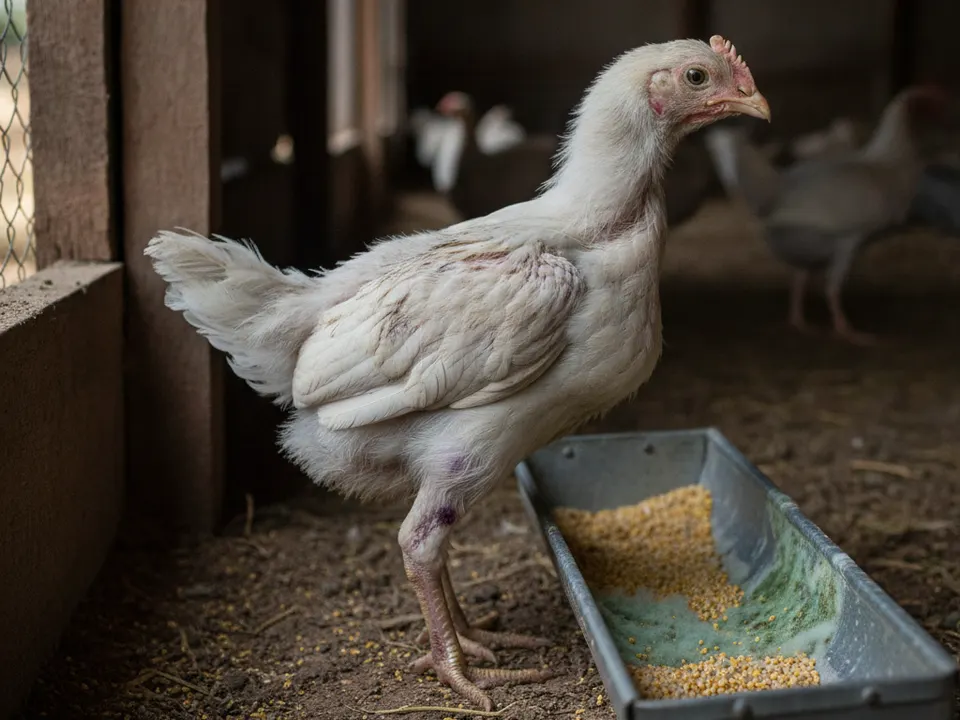
- Combs, wattles, shanks and skin look pale, and broiler skin is less yellow than normal.
- Layers produce fewer eggs, and eggs may be smaller with paler yolks.
- Feed conversion worsens: birds eat the feed but do not gain weight well.
- Birds look dull, ruffled and less active, especially young birds.
- Vaccinated flocks still get diseases like Gumboro or Newcastle, or other infections seem to keep coming back.
- Watery or pale droppings may be seen in some birds.
As it gets worse
- Bruises and small bleeding spots appear under the skin, on the legs, wings and breast, even with light handling.
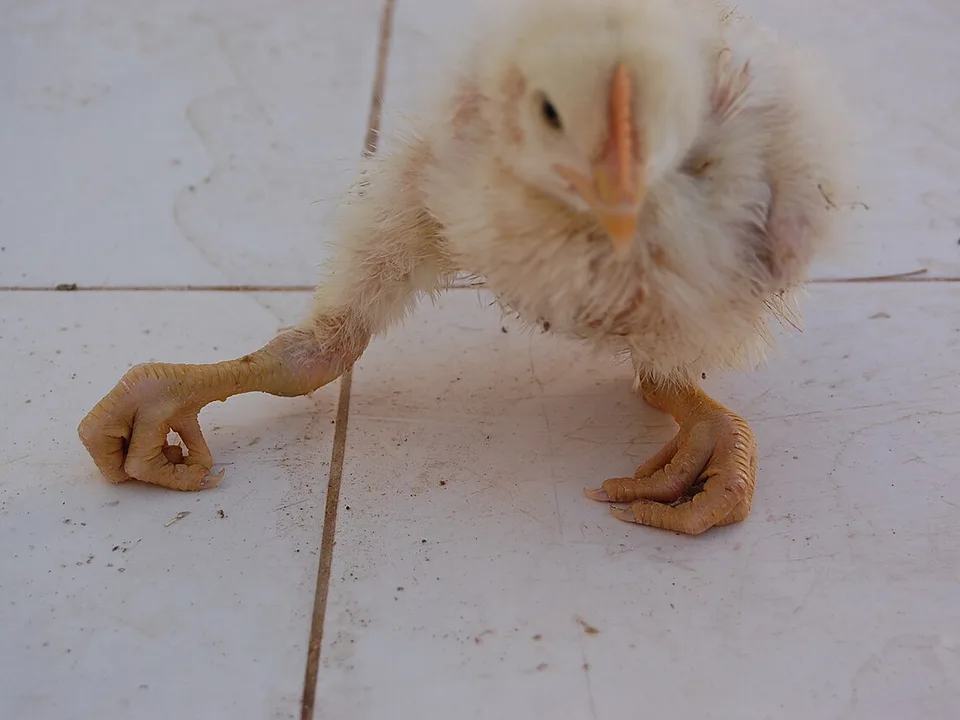
- Birds become weak, lame or reluctant to stand, and may sit with eyes half closed.
- Egg shells become thin or soft and egg production can drop sharply.
- In ducklings and young birds, deaths rise and some may have shaking or unsteady walking before dying.
- If T-2 toxin is involved, yellowish crusty sores appear at the corners of the beak and inside the mouth.
- If ochratoxin is involved, birds drink a lot, droppings are very wet and litter becomes soaked.
- At post-mortem the liver is enlarged, pale or yellow and breaks easily, and the bursa may be small.
What to do right now
- Stop feeding the suspected feed immediately and replace it with fresh feed from a trusted source, ideally a different batch or supplier.
- Keep a well-mixed sample of the old feed in a labelled bag, and keep the remaining bags aside rather than throwing them away, in case they need testing or you need to discuss them with the supplier.
- Empty, scrub and dry all feeders, and remove caked, wet or mouldy feed and litter around feeders and drinkers.
- Make sure every bird has plenty of clean, fresh water at all times, and place feed and water where weak birds can reach them easily.
- Separate very weak, lame or badly bruised birds into a clean, quiet, dry pen so they are not trampled and can eat without competition.
- Handle birds gently, because their skin and muscles bruise and bleed easily.
- Wear a dust mask and gloves when handling mouldy feed or litter, and wash your hands afterwards.
- Record dates, feed batches, egg numbers, weights and deaths, then call your vet or County Veterinary Officer before giving any medicines or vaccinating.
How it spreads
- It is not contagious: birds do not catch it from each other, and every affected bird has eaten contaminated feed.
- Grain that was harvested during or just after rain, or left on the ground or in heaps before drying, can carry mould into the feed.
- Poor storage is a major trigger: feed bags stacked directly on the floor or against damp walls, leaking roofs, and hot, humid stores let mould grow after the feed leaves the mill.
- Wet feeders and spilled feed that gets damp in the litter can grow mould inside the poultry house within days.
- Buying cheap or poorly stored maize, maize bran, groundnut cake or sunflower cake from unknown sources raises the risk.
- Keeping feed too long, especially in the long and short rains, gives mould more time to grow and produce toxin.
- Insect and rodent damage to grain opens the kernels and lets mould enter more easily.
Could it be something else?
Gumboro (infectious bursal disease)
Gumboro usually strikes chicks around 3 to 6 weeks old suddenly, with many birds sick within days, white watery droppings and deaths that peak and fall within about a week. Aflatoxin problems build up slowly, affect birds of any age, and follow a change of feed. The two often happen together, because aflatoxin weakens vaccine protection against Gumboro.
Newcastle disease
Newcastle often causes coughing, gasping, greenish diarrhoea, twisted necks and rapid spread with high deaths across the flock. Aflatoxin poisoning has no breathing signs or twisted necks and does not spread from bird to bird or farm to farm.
Coccidiosis
Coccidiosis causes bloody or reddish-brown droppings, huddled birds and is linked to wet litter, usually in young birds. Aflatoxin causes pale birds and bruising rather than bloody droppings, and a vet can check gut samples for coccidia to tell them apart.
Fatty liver haemorrhagic syndrome
This affects overweight laying hens in high production, often with sudden deaths from liver bleeding while the rest of the flock looks well. Aflatoxin affects birds of all body conditions, causes pale combs and bruising across many birds, and is linked to the feed batch; a feed test settles the question.
How it is diagnosed
A vet will look at the flock history, the timing of signs and any recent change of feed, then examine live birds and open some dead or sick birds (post-mortem). An enlarged, pale or yellow, crumbly liver, a small bursa, bruising and bleeding in the muscles strongly suggest aflatoxin. The vet may send liver samples for laboratory tissue examination (histopathology). The most important test is analysis of the feed itself: laboratories at KALRO, the universities, the Government Chemist and some private and feed-company labs can measure aflatoxin and other mycotoxins, and some vets and agrovets use rapid test kits. Because mould grows in patches, a single handful can miss the toxin. To help, collect small amounts from many places in the bag or store (top, middle, bottom, several bags), mix them, and keep around one kilogram in a clean, dry, labelled bag in a cool place. Write down the feed brand, batch number, date bought and supplier, keep receipts, and record egg numbers, weights, feed intake and deaths day by day. Bring a few freshly dead or sick birds to the vet if asked.
Treatment
There is no antidote that removes aflatoxin or reverses the poison once it is inside the bird, so treatment focuses on stopping exposure and helping the liver recover. The vet's first step is confirming the feed source and switching to clean feed. They will usually advise adding a mycotoxin binder (an ingredient such as certain clays or yeast cell wall products that holds toxins in the gut so less is absorbed) to the new feed, and may raise the protein quality of the diet, since a damaged liver needs good protein and amino acids such as methionine to repair. Vitamin supplements, especially vitamins A, D3, E and K and selenium, are commonly used because aflatoxin increases the need for them and vitamin K helps blood clotting. If birds already have secondary bacterial infections, the vet may prescribe an antibiotic, but antibiotics do not treat the toxin itself, and using them without a clear need adds cost and drives antimicrobial resistance, where drugs stop working for animals and people. Only use medicines prescribed by a vet, follow the label, and observe egg and meat withdrawal periods, which is the time after treatment when eggs and meat must not be sold or eaten. Because vaccines may have failed, the vet may also review your vaccination programme and advise when and whether to revaccinate once birds recover. Most flocks start to improve within one to several weeks after clean feed is given, but badly damaged birds may never return to full production.
Medicines must be prescribed and dosed by a vet. Always respect milk and meat withdrawal periods, and finish the full course of any antibiotic.
How Agrikima products can help
These support the animal alongside — never instead of — your vet's treatment, vaccination and good management.

AGRITOXINILSTOP
A mycotoxin binder mixed into feed to help reduce how much aflatoxin and ochratoxin birds absorb from the gut. Useful as a routine safeguard in the rainy seasons and when changing to new feed after an outbreak. It cannot make mouldy feed safe or reverse liver damage, so always remove contaminated feed and follow your vet's advice.
View product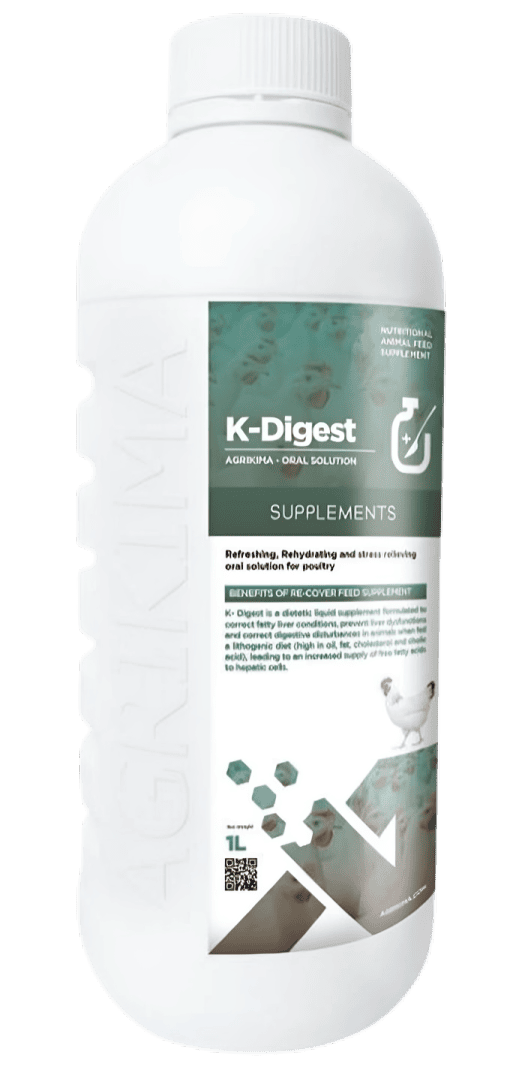
K-DIGEST
Supports liver function and digestion while birds recover on clean feed after aflatoxin exposure. It is an aid alongside vet care, vitamins and good nutrition, not a cure for liver damage.
View productPrevention
- Buy feed only from reputable, licensed feed millers and agrovets, check the manufacture date and batch number, and avoid bags that are damp, lumpy, musty-smelling, discoloured or caked.
- Buy only as much feed as your flock will finish in about two to three weeks, especially during the long and short rains, so feed does not sit long enough to grow mould.
- Store feed bags on wooden pallets off the floor and away from walls, in a dry, cool, well-ventilated store with a sound roof, and keep rats and insects out.
- If you mix your own feed, dry maize and other grain well, to the safe moisture level of around 13.5% or lower recommended for maize, sort out rotten, discoloured, shrivelled or insect-damaged kernels, and never use visibly mouldy grain or cakes.
- Use a mycotoxin binder in the feed as a routine safeguard during high-risk seasons or when you cannot be sure of ingredient quality, while still prioritising clean feed.
- Clean feeders regularly, fill them with only what birds will eat in a day, place drinkers so they do not wet the feed, and replace wet litter around feeders.
- Never feed birds mouldy bread, spoiled food scraps, mouldy brewer's waste or rotten grain, including to free-range kienyeji chickens.
- Give a well-balanced diet with adequate protein, vitamins and minerals, and keep your vaccination and parasite control programmes up to date so birds are better able to cope.
Risk to people
Aflatoxin does not spread from birds to people as an infection, but it is a serious human poison. It damages the liver and is a known cause of liver cancer with long-term exposure, and Kenya has experienced deadly human aflatoxin poisoning from contaminated maize. Small amounts of aflatoxin and its breakdown products can pass into eggs and especially into the liver of poisoned birds, so avoid eating the livers of affected birds and follow your vet's advice on when eggs and meat are safe to use again. Never give mouldy maize or feed meant for animals to people, and do not try to 'clean' mouldy grain for home use. Dust and spores from mouldy feed and litter can cause breathing problems and, rarely, lung infection with Aspergillus mould, especially in people with weak immunity, so wear a dust mask and gloves when handling mouldy material and wash afterwards. Observe withdrawal periods for any medicines your vet prescribes.
Impact on your farm
Aflatoxin often causes silent, ongoing losses that farmers blame on poor chicks or bad luck. Broilers take longer to reach market weight and eat more feed for each kilogram gained, eating into already thin margins. Layers lay fewer and smaller eggs with weaker shells, raising breakages and rejected trays. Bruised carcasses may be downgraded or rejected by buyers. The biggest hidden cost is immune suppression: vaccines against Newcastle, Gumboro and other diseases may fail, leading to disease outbreaks, extra vet bills, medicine costs and deaths. Ducklings and young birds can die in large numbers on highly contaminated feed. A farmer may also lose money on bags of feed that cannot be used. Because laying flocks that suffer severe liver damage may not fully return to peak lay, the losses can last for the rest of the flock's life.
Outlook and recovery
The outlook is usually fair to good if the contaminated feed is found and removed early and the toxin levels were moderate. Most birds start eating better and growing again within days to a few weeks on clean feed, and egg numbers gradually recover. Recovery is slower and less complete when birds ate highly contaminated feed for a long time, when young birds or ducks were affected, or when secondary diseases took hold because of immune suppression. Some birds with severe liver damage may stay stunted or poor layers and may need to be culled after discussion with your vet. The key to a good outcome is acting quickly, preventing re-exposure and supporting the flock through recovery.
Common questions
The feed looks fine and does not smell bad. Can it still have aflatoxin?
Yes. Aflatoxin itself has no colour or smell, and feed can be contaminated even when you cannot see mould, because the toxin stays after the mould has died or been ground up in the mill. Visible mould, musty smell, lumps or dampness are warning signs, but clean-looking feed is not proof of safety. Only a laboratory test or a reliable test kit can tell you the toxin level.
Can I dry mouldy feed in the sun and use it again?
No. Drying stops more mould growing, but it does not destroy the aflatoxin already made. Heating, cooking or sun drying do not make poisoned feed safe. Mouldy feed should not be fed to poultry, other livestock or people; ask your vet or County Veterinary Officer how to dispose of it safely.
My birds were vaccinated, so why did they get Gumboro or Newcastle?
Aflatoxin weakens the immune organs, so birds may not build strong protection after vaccination. Vaccine failure can also come from poor vaccine storage, wrong timing or poor water quality, so discuss all these with your vet. If aflatoxin is confirmed, your vet can advise how to plan revaccination once birds are on clean feed.
Is a toxin binder enough on its own?
No. A binder reduces how much toxin is absorbed, and it is a useful safety net, but it cannot make heavily contaminated feed safe and it does not repair liver damage that has already happened. Clean feed, good storage and buying from reliable suppliers always come first, with a binder as extra protection.
Are the eggs and meat safe to eat?
Only small amounts of aflatoxin pass into eggs and meat, with more ending up in the liver. Avoid eating livers from affected birds, and ask your vet when eggs and meat can safely be used again, especially if birds received any medicines with withdrawal periods. Once birds have been on clean feed for some time, residues fall away.
Can I complain to the feed supplier?
You can, and a tested sample makes your case much stronger. This is why you should keep a labelled sample, the bag with its batch number and your receipt. You can also report suspected poor-quality feed to the Kenya Bureau of Standards (KEBS) or seek advice from your County Veterinary Officer.
A guide, not a diagnosis. This page is general information to help you recognise problems early. Always confirm with a vet or animal health worker before treating.