What it is
A laying hen's liver works very hard. Under the influence of the female hormone oestrogen, it makes large amounts of fat and yolk material that are sent to the ovary to build eggs. When a hen eats more energy than she needs, especially from starchy grains like maize, the liver makes more fat than it can send out. The extra fat stays in the liver cells. Over weeks the liver becomes enlarged, yellow, greasy and very fragile, like overripe pawpaw. Small blood vessels in this weak liver tear easily. A small tear causes a small bleed and the hen may recover, but a bigger tear causes heavy bleeding into the belly and the hen dies within minutes to hours. Hens with many small bleeds lose blood slowly, which is why their combs turn pale. Other things make the damage worse: hot weather (hens need less energy but keep eating), lack of exercise in cages, too little calcium in the feed (hens eat more to find calcium), mouldy feed containing aflatoxin (a poison made by moulds that damages the liver), and shortages of nutrients that help the liver move fat out, such as choline, methionine, vitamin E and selenium. Experts agree the main driver is too much energy for too little work, but the exact mix of causes varies between farms.
Which animals are most at risk
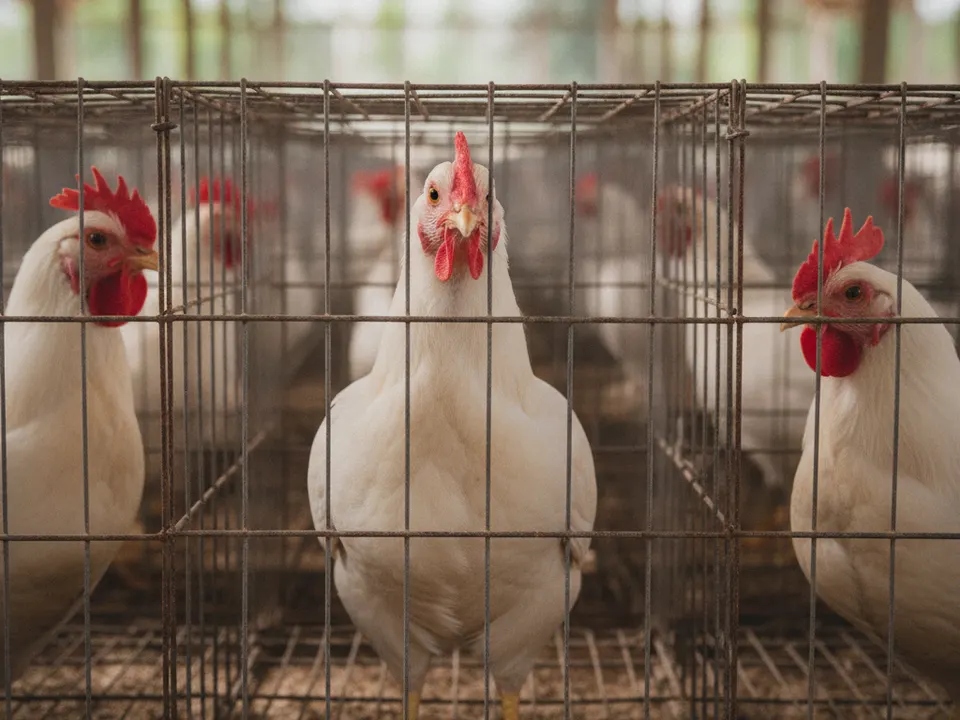
Laying hens at or after peak production are most at risk, especially high-producing commercial layer breeds kept in cages. Hens that are heavier than the breed's target weight are the main victims, and the best layers are often the ones that die because their livers are working hardest. Commercial caged layer units in peri-urban areas such as Kiambu, Nakuru, Machakos and Kajiado are where most Kenyan cases are seen, along with deep-litter layers that are overfed. Flocks fed freely all day, or fed complete layer mash plus extra grain, are at high risk. Cases rise in hot months. Kienyeji and improved kienyeji chickens on free range rarely get it because they walk, scratch and forage, using up energy, though overfed confined indigenous birds can still be affected. Broilers and young pullets are rarely affected; males are not affected because it is linked to egg-laying hormones.
Signs to look for
Early signs
- Hens look fat and heavy when lifted, with a large soft belly and thick fat that you can feel under the skin around the vent and abdomen.
- Egg production drops slowly below what the flock was laying, even though the hens look well fed and are eating normally.
- Some combs and wattles become pale, and may look dry or scaly, instead of being bright red.
- The flock is eating a lot of feed, more than the bag or breed guide suggests for their age.
- One or two good layers are found dead with no illness seen beforehand, often under or near the feeder.
As it gets worse
- Sudden deaths continue, a few birds at a time, mostly among the heaviest and best-laying hens.
- Dead birds have very pale combs, wattles and skin, because they bled internally.
- Some live hens become dull, sit quietly and stop laying, and may have a swollen, heavy belly.
- Eggs become fewer and the flock never returns to its expected laying level.
- When a dead hen is opened, the belly contains a large blood clot, and the liver is big, yellow or orange, greasy and breaks apart easily when touched.
- The belly and organs are surrounded by large amounts of yellow fat.
What to do right now
- Remove dead birds quickly and take one or two fresh ones to your vet, County Veterinary Officer or nearest veterinary laboratory for a post-mortem, because other serious diseases can also cause sudden deaths.
- Stop adding any extra maize, maize bran, bread, ugali leftovers or other starchy foods on top of the layer feed, and feed only a good complete layer ration.
- Check how much feed you are giving against the feed company or breed guide for the hens' age, and stop leaving feeders full all day if you have been overfeeding; do not starve the hens or cut feed sharply without advice, as this can crash egg production.
- Look at your feed and stored grain for mould, caking, bad smell or damp, and stop using any feed that looks mouldy.
- Handle hens calmly and as little as possible, avoid chasing and catching, and keep dogs, rats and noise away, because stress can cause fragile livers to bleed.
- Keep the house cool and airy with open sides, shade on the roof, and plenty of clean, cool drinking water at all times.
- Make sure the hens are getting enough calcium, for example from a good layer feed, and ask your vet or feed adviser before adding limestone or shell grit.
- Record daily deaths, egg numbers and feed used so the vet can see the pattern and you can tell whether changes are working.
How it spreads
- It does not spread from bird to bird. It is not caused by a germ, so it cannot be passed by contact, eggs, droppings or visitors.
- The main trigger is feeding too much energy, for example giving layers mash freely all day or adding extra maize, maize bran or other starchy grain to a complete layer feed.
- Home-mixed rations that are heavy on maize and light on protein, calcium and vitamins raise the risk, because the hen eats more to meet her needs and stores the extra energy as fat.
- Hot weather is a known trigger, especially the hot dry months before the long rains, because hens need less energy to keep warm but often eat the same amount.
- Lack of exercise in battery cages or crowded houses means the hens burn little energy and get fat more quickly.
- Feed contaminated with moulds and aflatoxin, a common problem with damp-stored maize in Kenya, can damage the liver and make fatty liver worse.
- Sudden stress such as rough handling, catching, chasing by rats or dogs, loud noise or vaccination can cause a fragile liver to tear and bleed in hens that are already affected.
Could it be something else?
Newcastle disease (kideri)
Newcastle usually kills many birds quickly across all ages, with coughing, gasping, twisted necks, paralysis and green watery droppings. FLHS kills a few fat hens at a time with no breathing or nervous signs, and the post-mortem shows a blood clot around a fatty liver.
Fowl typhoid and fowl cholera
These bacterial diseases make birds visibly sick before death: drowsy, ruffled feathers, fever, yellow-green or watery diarrhoea, and often swollen wattles in cholera. Deaths are often higher and hit birds of all weights. At post-mortem the liver may be bronze-coloured or have white spots rather than being yellow, greasy and bleeding. Laboratory tests tell them apart.
Heat stroke
Heat stroke deaths happen on very hot afternoons, with many birds panting, wings held out and lying flat before dying. Dead birds often have dark combs. FLHS deaths are scattered over days or weeks, can happen in cool weather, and show a clot in the belly.
Egg peritonitis and egg binding
Egg peritonitis hens stand upright like a penguin, stop laying and slowly waste, and the belly contains yolk or smelly material rather than a blood clot. Egg-bound hens strain at the vent and an egg can be felt stuck. FLHS deaths are sudden with fresh blood in the belly.
How it is diagnosed
FLHS is confirmed mainly by post-mortem examination, which means opening a dead bird to look inside. A vet or veterinary laboratory will find a large blood clot in the belly, a swollen, yellow, greasy liver that crumbles easily, and lots of belly fat. They may look at a piece of liver under the microscope. Because sudden deaths in layers can also come from Newcastle disease, fowl typhoid, fowl cholera or poisoning, the vet may take samples to rule these out, and may test the feed for aflatoxin. You can help by bringing one or two birds that died within the last few hours, kept cool but not frozen, in a sealed bag. Also bring or write down: the age and breed of the flock, number of birds, how many have died and when, daily egg numbers, how much feed the flock eats per day, the feed brand or your home-mix recipe, any extra grain or kitchen waste given, and recent weather and housing changes. If you have a scale, weighing ten hens and comparing with the breed target weight is very useful.
Treatment
There is no medicine that cures a liver that has already bled badly, and hens with heavy internal bleeding usually die. Treatment is mainly about correcting the diet and management so that the rest of the flock stops getting worse. A vet or poultry nutritionist will typically review the ration and feeding method, reduce the total energy the hens eat (for example by controlled feeding rather than free access, or by changing the ration), and make sure protein, calcium and phosphorus are balanced. They may advise replacing part of the starchy energy with a small amount of fat or oil, which some references show can reduce liver fat production, and providing calcium partly in coarse particles such as limestone grit. They may recommend lipotropic supplements, meaning nutrients that help the liver move fat out, such as choline, methionine, vitamin E, selenium and B vitamins; these can help but results vary, and they do not replace diet correction. If aflatoxin is found or suspected, they will advise changing the feed and possibly using a mycotoxin binder. Antibiotics do not treat FLHS because it is not an infection, and using them without a proper diagnosis wastes money, may leave residues in eggs, and adds to antimicrobial resistance, where germs stop responding to drugs. If the vet finds a bacterial infection as well and prescribes a drug, follow their instructions and respect the egg withdrawal period stated on the product before selling or eating eggs. Expect deaths to slow over several weeks once the diet is corrected, but already-damaged hens may keep dying for a while and egg numbers may not fully recover in older hens.
Medicines must be prescribed and dosed by a vet. Always respect milk and meat withdrawal periods, and finish the full course of any antibiotic.
How Agrikima products can help
These support the animal alongside — never instead of — your vet's treatment, vaccination and good management.

CHOLINE CHLORIDE 70%
Choline helps the liver package and move fat out of liver cells. Used as a feed supplement under the advice of your vet or feed nutritionist, it can support liver function and help reduce fat build-up in layers at risk, alongside the essential steps of cutting excess energy, controlling body weight and correcting the ration. It cannot repair a liver that has already bled.
View product
AGRITOXINILSTOP
Mouldy maize and feed can contain aflatoxin, which damages the liver and can make fatty liver worse. This mycotoxin binder added to feed helps reduce the toxins hens absorb, as support alongside buying clean feed, storing it dry and throwing away mouldy feed. It does not treat fatty liver itself.
View productPrevention
- Control body weight from the start: rear pullets to the breed's target weight, weigh a sample of birds every two to four weeks, and adjust feed so hens stay on target rather than getting fat.
- Feed a complete, balanced layer ration from a reputable miller or a home-mix formulated by a qualified nutritionist, and do not add extra maize, bran or kitchen leftovers on top of it.
- Give the amount of feed recommended for the breed and age instead of filling feeders all day, and adjust down during hot weather when hens need less energy.
- Make sure the ration has enough calcium and phosphorus, ideally with part of the calcium as coarse limestone or shell grit, so hens are not eating extra feed searching for calcium.
- Ensure the feed contains adequate choline, methionine, vitamin E and selenium, which help the liver handle fat; ask your feed supplier what the ration provides.
- Buy dry, clean feed and maize, store it off the floor on pallets in a dry, aired store, use it within a few weeks, and never feed mouldy feed, to reduce aflatoxin damage to the liver.
- Keep houses cool with good ventilation, roof insulation or shade, and constant cool water, especially during the hot dry months.
- Where possible, give hens room to move and scratch, for example deep litter with scattered grit, and avoid overcrowding.
- Keep stress low by handling birds gently, controlling rats and predators, and planning vaccinations and moves carefully.
Impact on your farm
FLHS usually kills only a small number of birds at a time, but those are often the heaviest, best-laying hens, so each death is a real loss. Death rates vary from farm to farm and can add up over months if the cause is not fixed. Egg production in affected flocks drops below the expected level, which hurts daily income on a layer farm where eggs pay for feed and labour. At the same time the farmer is paying for extra feed that is turning into liver fat instead of eggs, so feed cost per tray goes up. Repeated unexplained deaths also push farmers to buy antibiotics and other drugs that do not help, adding cost and residue risks. On a Kenyan smallholder unit of a few hundred caged hens, the combination of lost hens, fewer eggs and wasted feed can turn a profitable flock into a loss-making one.
Outlook and recovery
Hens that suffer a large liver bleed usually die quickly, and there is no reliable way to save them. Hens with mild fatty liver can improve gradually once the diet and feeding are corrected, and the number of deaths in the flock usually falls over the following weeks. Recovery of egg production is often only partial, especially in older hens past peak, because the liver damage takes time to heal. The outlook is best when the problem is caught early, the post-mortem confirms the cause, feed energy and quantity are corrected, mouldy feed is removed and heat stress is controlled. Flocks where overfeeding or poor feed continues will keep losing birds.
Common questions
My hens look fat and healthy. Why are they dying?
A fat hen is not always a healthy hen. In laying hens, extra fat collects in the liver and makes it weak and easy to tear. The hen looks fine until a blood vessel in the liver bursts and she bleeds inside, often dying within hours. That is why the heaviest, best layers are often the ones found dead.
Will giving more feed make my hens lay more eggs?
Only up to the point that meets their needs. Once a hen gets enough energy, protein, calcium and vitamins, extra feed does not make more eggs; it turns into fat, including in the liver. Feed the amount recommended for the breed and age, and check body weight regularly. Overfeeding costs money and can cause FLHS.
Should I give antibiotics to stop the deaths?
No, not unless a vet diagnoses an infection. FLHS is caused by diet and management, not germs, so antibiotics will not help. Using them without need wastes money, may leave residues in your eggs and helps create germs that resist treatment. Get a post-mortem done first so you know what you are dealing with.
Are eggs from my flock safe to eat or sell?
FLHS is not an infection and does not pass to people, so eggs from hens with fatty liver are not a health risk in themselves. However, if your vet prescribes any medicine for another problem, follow the egg withdrawal period on the product before selling or eating the eggs. Also avoid mouldy feed, because aflatoxin can harm both hens and, through residues, people.
Can I just cut the feed sharply to make them slimmer?
Do not suddenly starve layers. A sharp cut in feed can crash egg production and cause other problems. Changes should be gradual and guided by a vet or feed adviser, usually by moving to controlled daily feeding, removing extra grain, and balancing the ration, while keeping water always available.
Do kienyeji chickens get fatty liver?
It is uncommon in free-range kienyeji chickens because they walk and forage all day and are not usually overfed. Improved kienyeji or indigenous hens kept confined and fed large amounts of high-energy feed can still be affected, so the same rules on controlled feeding and exercise apply.
A guide, not a diagnosis. This page is general information to help you recognise problems early. Always confirm with a vet or animal health worker before treating.