What it is
Leg weakness happens when a bird's skeleton cannot keep up with its growth or cannot be built properly because nutrients are missing or out of balance. Modern broilers gain weight very fast, and their soft, young bones and growth plates (the zones of cartilage near the ends of long bones where new bone is made) are under heavy strain. Perosis is mainly linked to a shortage of manganese, and also of choline, biotin, folic acid or niacin. Without these, the long bones and the hock joint grow short, thick and slightly crooked, and the large gastrocnemius tendon (the thick cord at the back of the hock, similar to a person's heel tendon) slides off its groove, so the lower leg twists outward and the bird cannot straighten it. Rickets is a different but related problem caused by too little vitamin D3, calcium or phosphorus, or by the wrong ratio between calcium and phosphorus. The bones stay soft and rubbery, bend under the bird's weight, and the growth plates become wide and weak. Tibial dyschondroplasia is a third form, where a plug of soft cartilage stays in the top of the shank bone instead of turning into hard bone; it is linked to very fast growth and to calcium-phosphorus imbalance. Mouldy feed can make all of these worse, because mycotoxins (poisons made by moulds, such as aflatoxin) damage the liver and kidneys, which are needed to activate vitamin D and use minerals properly.
Which animals are most at risk
Broiler chickens between about one and six weeks of age are most at risk, especially heavy, fast-growing males. Chicks and young growers of improved kienyeji types (such as KALRO Kienyeji, Kuroiler and Rainbow Rooster) can also be affected when fed cheap or home-made feeds. Turkeys and ducks can get perosis too. Indoor birds with no sunlight depend completely on vitamin D3 in the feed, so deep-litter and cage systems are more exposed than free-range birds that get sun. Farms that mix their own feed, buy from unknown or uncertified feed sellers, or store feed for long periods in hot, humid weather (common during the long and short rains) face the highest risk. Free-range kienyeji chickens that scavenge are less often affected, but chicks kept indoors in brooders during cold, wet weather can still develop rickets.
Signs to look for
Early signs
- Birds sit down more than normal and get up slowly or unwillingly when you walk through the house.
- A slight limp, unsteady or waddling walk, or birds resting on their hocks instead of standing on their feet.
- Birds that stay near the feeder or drinker and do not move around the house like the rest of the flock.
- Some birds look smaller and less even in size than the flock, because they reach feed and water less often.
- In rickets, the beak and toes may feel soft and bend easily when pressed gently between your fingers.
- Slight swelling or flattening of the hock joint on one or both legs.
As it gets worse
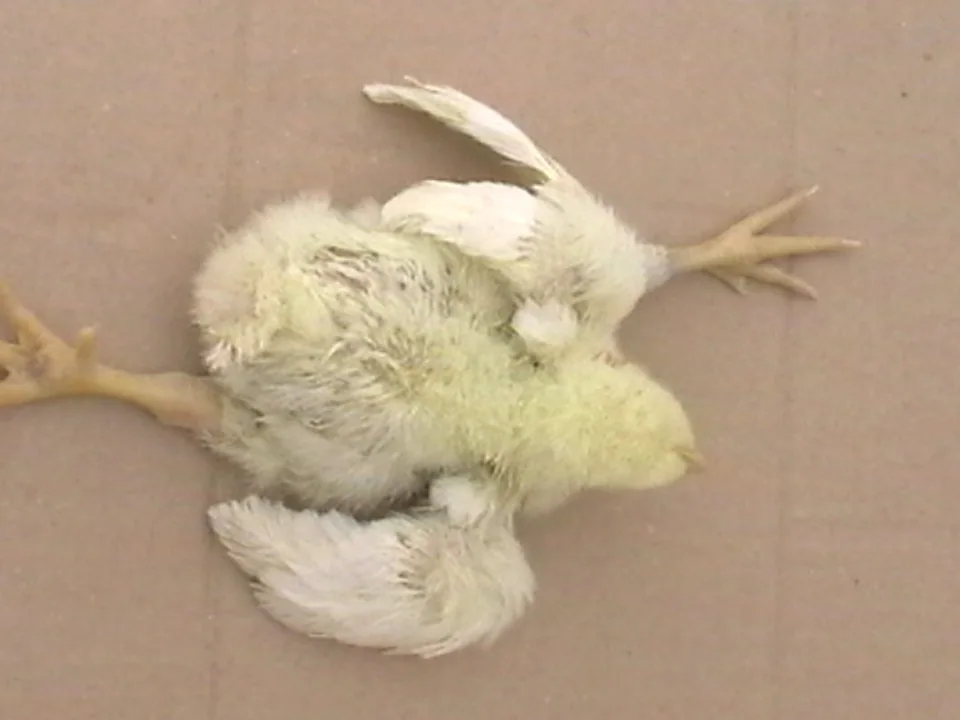
- The lower leg twists outwards at the hock, often only on one side, and the bird cannot straighten it; you may feel the thick tendon lying to the side of the joint instead of at the back.
- Legs bowed outward or inward (valgus or varus deformity), giving a knock-kneed or bow-legged look.
- Birds walk on their hocks or push themselves along with their wings, or cannot stand at all.
- Beading or knobbly swellings along the ribs where they join the spine (a sign of rickets).
- Weight loss, dull feathers, dirty or breast-blistered birds from lying on wet litter, and dehydration because they cannot reach drinkers.
- Lame birds pecked or trampled by others, and rising numbers of culls and deaths.
What to do right now
- Walk through the house and count how many birds are lame or sitting, and write down their age, the feed in use and daily deaths so you can see if the problem is growing.
- Move lame but alert birds to a small, dry, well-bedded pen where feed and water are at their level and they do not have to compete or walk far.
- Lower drinkers and feeders, or add extra ones, so that weak birds in the main house can still eat and drink easily.
- Stop diluting the feed with bran, maize or leftovers, and do not give layer mash to chicks or broilers.
- Check your feed store and sacks for damp, caking, a musty smell or visible mould; stop using any spoiled feed and keep a sample for testing.
- Keep litter dry and loose, fix leaking drinkers and improve ventilation so birds are not sitting on wet, ammonia-smelling litter.
- If you run lights all night, give birds a dark rest period each night as your vet or feed supplier advises, which slows very fast growth and lets birds rest.
- Call your vet, animal health officer or feed supplier's technical advisor to review the ration before you add any supplements; do not give drugs without a vet's advice.
- Birds that cannot stand, cannot reach water or are badly twisted are suffering; ask your vet about humane culling rather than leaving them to slowly die.
How it spreads
- It does not spread from bird to bird like an infection; many birds are affected at the same time because they all eat the same faulty feed.
- Home-mixed rations made without a proper mineral and vitamin premix, or with wrong proportions of maize, bran and protein, are a common trigger in Kenya.
- Diluting commercial broiler or chick feed with maize bran, maize germ or kitchen scraps to save money lowers the minerals and vitamins each bird gets.
- Feeding layer mash to chicks or broilers gives far too much calcium, which upsets the calcium-phosphorus balance and can damage bones and kidneys.
- Old feed, or feed stored in damp, hot stores, loses vitamins and can grow moulds that produce mycotoxins.
- Very fast growth pushed by 24-hour lighting, with no dark rest period, makes heavy birds sit more and puts extra load on young legs.
- Wet, caked or slippery floors, overcrowding and poor ventilation make birds less active and worsen leg problems.
- Chicks from breeder hens fed a poor diet may hatch with low reserves of vitamins and minerals and show leg weakness in the first weeks.
Could it be something else?
Marek's disease
Marek's is a viral disease mostly seen in unvaccinated layers and kienyeji birds from about 6 to 20 weeks old, and rarely in broilers. A typical bird lies with one leg stretched forward and the other backward, the eyes may turn grey, and there is weight loss. The legs are paralysed but not twisted at the hock, and the vet finds enlarged nerves or tumours at post-mortem.
Infectious arthritis or tenosynovitis (bacterial, Mycoplasma synoviae or viral reovirus)
Infected joints and tendons are usually hot, swollen and sometimes contain pus or sticky fluid, and birds may also have breast blisters, fever or other illness. Nutritional leg weakness usually has no heat or pus, and affects many birds in an even way linked to feed. A vet needs to open joints or send samples to the lab to tell them apart.
Curled-toe paralysis (riboflavin or vitamin B2 deficiency)
Chicks walk on their hocks with the toes curled inward like a fist, usually in the first two to three weeks. In perosis the toes are normal but the leg twists out at the hock. Both point to a poor feed premix, so the ration needs checking either way.
Newcastle disease
Newcastle can cause leg paralysis, but it also brings twisted necks, coughing, green diarrhoea, a sudden drop in eggs and many sudden deaths across all ages. Nutritional leg weakness develops slowly in young growing birds with no breathing signs or diarrhoea. If you see nervous signs plus sudden deaths, call the vet urgently.
How it is diagnosed
A vet or animal health officer will first look at the flock: the age of affected birds, how many are lame, the type of housing and lighting, and above all the feed you are using. They will handle lame birds to check whether the tendon has slipped, whether the bones are soft or bent, and whether joints are hot or swollen, which would point to infection. A post-mortem on a few typical birds is very helpful. The vet can split the shank bone to look for the white cartilage plug of tibial dyschondroplasia, check for wide, soft growth plates and beaded ribs of rickets, and rule out infection or Marek's disease. Feed samples can be sent to a feed analysis laboratory (for example KALRO, a university laboratory or a private feed lab) to measure calcium, phosphorus and, where possible, mycotoxins. Bone ash tests are sometimes done to measure how well bones are mineralised. To prepare, keep a sample of about half a kilo of the current feed in a clean, labelled bag, note the feed brand, batch number and date bought, write down what you add if you mix your own feed, and record bird age, lighting hours, number of lame birds and daily deaths. Keep two or three live, typical lame birds ready for the vet to examine.
Treatment
There is no single drug that cures leg weakness, so treatment is mainly about correcting the feed and managing the flock. The vet or nutritionist will advise changing to a properly balanced, certified feed or fixing your home-mixed ration with the right mineral and vitamin premix. Depending on the cause found, they may recommend extra vitamin D3, a correctly balanced calcium and phosphorus source, manganese, choline or B vitamins such as biotin, usually given through feed or drinking water for a short period. The amounts must come from the vet or nutritionist, because too much calcium, phosphorus or vitamin D can itself damage bones and kidneys. Early rickets often improves within one to two weeks once the diet is corrected, and birds may recover well. A fully slipped tendon in perosis, or badly bent bones, usually does not return to normal even after the diet is fixed, so those birds are often culled humanely or marketed early if otherwise healthy. Antibiotics do not help nutritional leg problems and should only be used if the vet confirms a bacterial joint infection; unnecessary antibiotic use feeds antimicrobial resistance, meaning drugs stop working for animals and people. If any medicine is prescribed, follow the vet's instructions exactly and respect the meat and egg withdrawal period, which is the time you must wait after the last dose before selling or eating the birds or eggs.
Medicines must be prescribed and dosed by a vet. Always respect milk and meat withdrawal periods, and finish the full course of any antibiotic.
How Agrikima products can help
These support the animal alongside — never instead of — your vet's treatment, vaccination and good management.
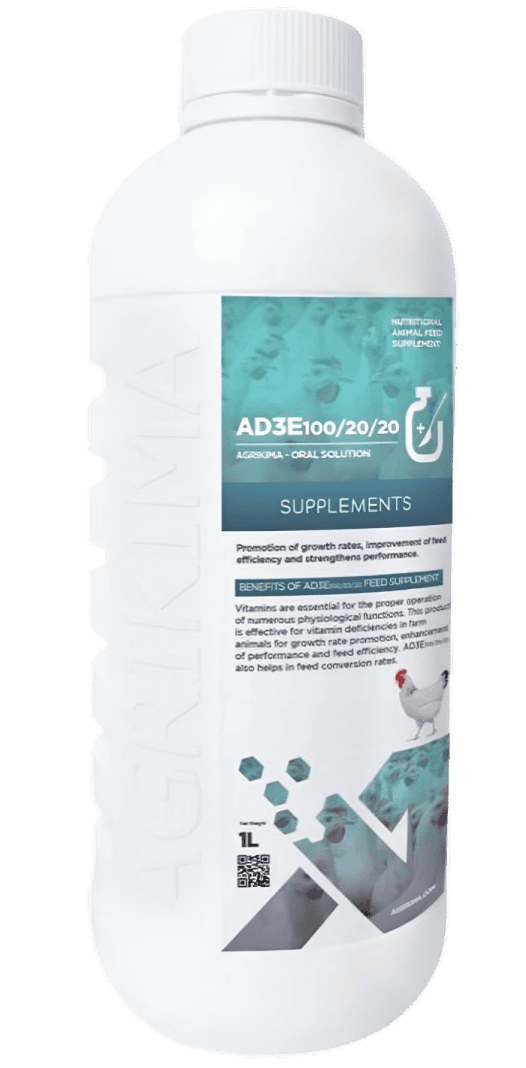
AD3E 100/20/20
Supplies vitamins A, D3 and E; vitamin D3 is needed to absorb and use calcium and phosphorus for strong bones, so it can support birds and flocks where a vet or nutritionist suspects rickets or low vitamin D intake, used alongside a corrected, balanced ration and at the level they advise.
View product
DCP-18
Provides calcium and phosphorus for bone building in home-mixed rations that are short of these minerals; it should only be added on the advice of a nutritionist or vet, because extra calcium or phosphorus in an already complete commercial feed can upset the balance and make leg problems worse.
View productPrevention
- Buy chick, broiler and grower feed from reputable, KEBS-certified feed millers, use the right feed for each stage, and do not mix it with extra bran, maize or scraps.
- If you mix your own feed, follow a tested formula from KALRO, your county extension office or a qualified nutritionist, and always include a good poultry vitamin and mineral premix that contains manganese, choline, biotin and vitamin D3.
- Keep calcium and phosphorus in the right balance; never give layer feed, extra limestone or eggshells to chicks and broilers unless a nutritionist says so.
- Store feed off the floor on pallets in a cool, dry, rat-proof store, use it within a few weeks of manufacture, and never use mouldy or caked feed, especially during the rainy seasons.
- Give broilers a lighting programme with a daily dark period after the first week, as advised by your hatchery or feed supplier, to slow excessive early growth and let birds rest and move.
- Keep stocking density reasonable, provide enough feeders and drinkers, and keep litter dry and loose so birds stay active and legs stay strong.
- Buy chicks from reliable hatcheries with well-fed parent flocks, and give improved kienyeji chicks some safe access to sunlight once they are old and strong enough.
- Walk the flock every day, and act early when you see the first few birds sitting or limping, because the cause is usually the same for the whole flock.
Impact on your farm
On a Kenyan broiler farm, leg weakness hits directly at income. Lame birds cannot compete at the feeder and drinker, so they grow slowly and the flock becomes uneven at market time, which buyers and hotels pay less for. Feed is still being spent on birds that may end up as culls, so feed conversion (how much feed it takes to make a kilo of meat) gets worse. Some birds die from dehydration, trampling or secondary infections, and badly deformed birds are hard to sell or may be rejected by processors. Birds lying on wet litter get breast blisters and dirty skin, lowering carcass quality. For smallholders raising a few hundred broilers or improved kienyeji, even a modest number of culls can wipe out the profit from a batch. There is also the extra cost of changing feed, supplements and vet visits, and the stress and labour of caring for lame birds.
Outlook and recovery
The outlook depends on the cause, how early it is caught, and how badly birds are affected. Birds with early rickets or mild weakness often recover well once the feed is corrected, usually within a week or two. Birds with a fully slipped tendon, bones that have set in a bent shape, or severe tibial dyschondroplasia rarely return to normal and are often best culled humanely or sold early if they are otherwise healthy. The rest of the flock can usually be protected quickly by fixing the ration, improving feed storage and managing growth and housing. If the problem keeps coming back batch after batch, the feed source, premix or lighting programme is almost always the reason and should be reviewed with a nutritionist.
Common questions
Is leg weakness contagious? Will it spread to my other birds?
Nutritional leg weakness and perosis are not infectious and do not pass from bird to bird. Many birds get it at once because they all eat the same faulty feed or live in the same conditions. However, some infections such as bacterial arthritis, reovirus or Marek's disease can also cause lameness, so if joints are hot and swollen, birds are sick in other ways, or many die suddenly, ask your vet to check.
Can a bird with a slipped tendon be fixed?
Usually not. Once the tendon has slipped off the hock and the bones have grown twisted, correcting the feed rarely straightens the leg. Correcting the diet helps prevent new cases and helps birds with early, mild weakness. Badly affected birds that cannot walk to food and water should be humanely culled or, if otherwise healthy, marketed early after discussing with your vet.
Why are my broilers sitting down at three or four weeks old?
Broilers grow extremely fast, and around three to five weeks their legs are under the most strain. Common reasons include an unbalanced or diluted feed, poor premix, mouldy feed, 24-hour lighting that pushes growth too fast, overcrowding and wet litter. Check the feed first, make sure there is a dark period each night, keep litter dry, and get your vet or feed supplier to look at a few birds.
Can I just add crushed eggshells, bone meal or limestone to help their legs?
Not without advice. Too much calcium is as harmful as too little: it upsets the calcium-phosphorus balance, can make leg problems worse and can damage the kidneys. Leg weakness can also come from missing manganese, choline, biotin or vitamin D3, which eggshells do not provide. Ask your vet or a nutritionist which nutrient is short before adding anything.
Can I eat or sell birds with leg weakness?
The leg problem itself does not make the meat unsafe for people. Birds that are thin, sick, badly blistered or dehydrated are not suitable for sale, and any bird treated with medicine must complete the withdrawal period before it is slaughtered. If in doubt, ask your vet or meat inspector.
Do kienyeji chickens get this too?
Free-range kienyeji chickens that scavenge and get sunshine rarely get leg weakness. But improved kienyeji chicks kept indoors in brooders on cheap or home-mixed feed can develop rickets or perosis just like broilers. Give them a proper chick and grower feed with premix, and safe outdoor access once they are strong enough.
A guide, not a diagnosis. This page is general information to help you recognise problems early. Always confirm with a vet or animal health worker before treating.