What it is
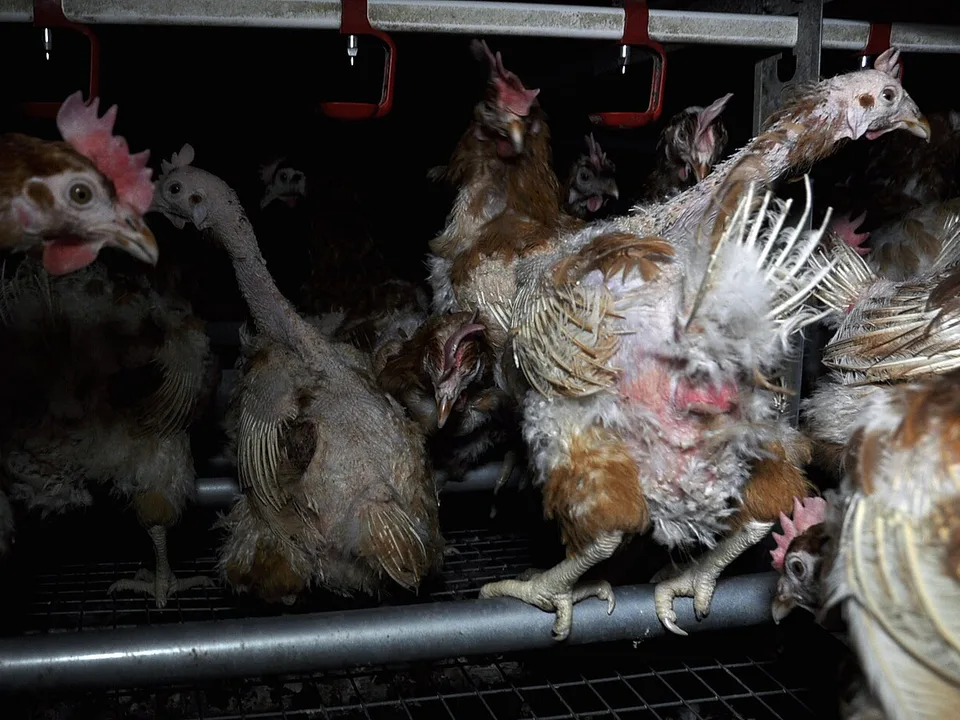
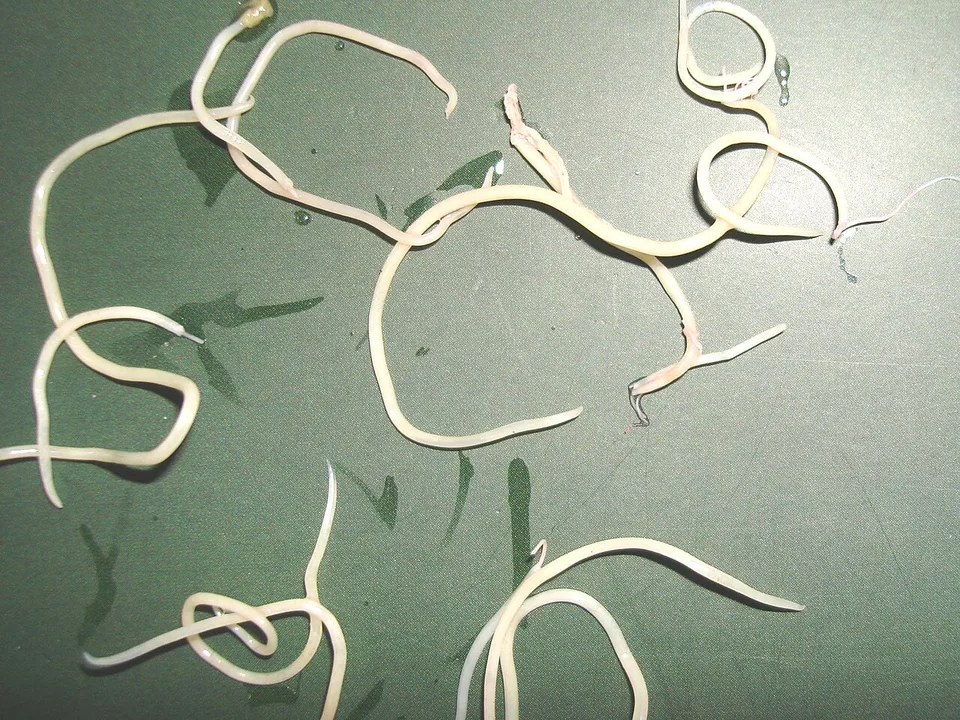
Several types of worm affect poultry. The large roundworm (Ascaridia galli) is a thick, white worm several centimetres long that lives in the small intestine; it robs the bird of nutrients, damages the gut lining, and in heavy cases worms can block the intestine. The caecal worm (Heterakis gallinarum) is small and lives in the caeca, the two blind pouches near the end of the gut; on its own it does little harm in chickens, but it can carry the parasite that causes blackhead (histomoniasis), which is serious in turkeys and sometimes in chickens. Hairworms (Capillaria species) are very thin and hard to see; they burrow into the lining of the crop or intestine and can cause real damage even in small numbers. Tapeworms (such as Raillietina and Davainea) are flat, segmented worms that hook onto the gut wall; the bird passes small white segments in its droppings. Together these worms reduce how well the bird absorbs food, cause inflammation and sometimes blood loss in the gut, and lower the bird's ability to fight off other infections. The result is poor growth, poor feathering, paleness and fewer eggs.
Which animals are most at risk
Free-range and semi-free-range kienyeji chickens are most at risk because they scratch soil and eat insects, earthworms and snails every day. Birds in deep-litter houses are also at risk when litter is old, wet or rarely changed. Young growing birds, from a few weeks to a few months old, usually suffer most because they have not built resistance, while older birds often carry worms with fewer signs but keep contaminating the ground. Layers in their production period lose eggs when burdened. Worm burdens tend to rise during and after the long and short rains, when soil is moist and earthworms, snails and insects are plentiful. Turkeys kept with chickens are at special risk of blackhead carried by caecal worms. Broilers on fresh litter for a short cycle are usually less affected, but problems appear when litter is reused between batches.
Signs to look for
Early signs
- Birds eat normally or even more but stay thin or grow more slowly than expected.
- The comb and wattles look paler or duller red than usual.
- Feathers look rough, dull or ruffled and moulting seems slow.
- Layers produce fewer eggs, and some eggs may be smaller or have paler yolks.
- Droppings become looser or slightly watery, sometimes with more mucus.
- Small white flat segments, like grains of rice, or thin white worms are seen in fresh droppings or on the litter.
As it gets worse
- Birds become clearly weak, thin with a sharp breastbone, and stand hunched with drooping wings.
- Combs and faces are very pale, showing anaemia (shortage of blood).
- Persistent diarrhoea, sometimes with mucus or a little blood if hairworms or heavy burdens damage the gut.
- Egg laying drops sharply or stops in affected layers.
- Young birds may die suddenly from a heavy roundworm burden blocking the intestine, with masses of worms found inside at opening.
- Birds catch other diseases more easily, and the flock seems to be always sick with something.
- In turkeys, and occasionally chickens, sulphur-yellow droppings and depression may signal blackhead spread by caecal worms.
What to do right now
- Look closely at fresh droppings and litter, and note whether you see round white worms, flat rice-like segments or nothing visible, then write it down.
- Separate the weakest, thinnest birds into a clean, dry pen so they can eat and drink without competition and are easier to watch.
- Make sure all birds have constant access to clean, fresh drinking water and a good balanced feed in raised feeders and drinkers, not on the ground.
- Remove wet, caked litter and replace it with fresh dry litter, and avoid spreading droppings from the house onto the run.
- Collect fresh dropping samples and contact your vet or County Veterinary Officer to confirm the type of worm before buying any dewormer.
- Keep records of birds affected, egg numbers, weights if you have them, and any deaths, as this helps the vet and shows whether treatment works.
- Stop buying or selling birds and stop sharing equipment with neighbours until you know what you are dealing with.
- Wear boots or shoe covers and wash hands after handling birds and litter, as good hygiene protects your other flocks and family.
How it spreads
- Roundworm and caecal worm eggs pass out in droppings and become infective on the ground or in litter after some days; birds pick them up while scratching, pecking and feeding.
- Worm eggs are tough and can survive for many months in damp soil, shaded runs and old litter, so the same ground keeps reinfecting birds.
- Earthworms can carry roundworm, caecal worm and hairworm eggs, and birds that eat earthworms after rain often pick up heavy burdens.
- Tapeworms need a middle host: birds become infected by eating beetles, ants, houseflies, snails, slugs or earthworms that carry tapeworm larvae, so free-range birds are most exposed.
- Feed and water containers placed on the ground get contaminated with droppings, spreading eggs to the whole flock.
- New birds bought from markets or neighbours often bring worms into a clean flock.
- Overcrowding, wet litter and keeping birds on the same run for years all build up worm numbers over time.
Could it be something else?
Coccidiosis
Coccidiosis usually strikes young birds quickly, often after rains or in wet litter, with blood-stained or reddish-brown droppings, huddling and deaths within days. Worms cause a slower, longer loss of condition and you may see actual worms or segments. A vet can tell them apart with a faecal test or by opening a dead bird.
Red mites, lice and other external parasites
External parasites also cause pale combs, poor laying and weakness. Check birds and perches at night with a torch for red mites, and part the feathers around the vent for lice and their eggs. If you find these, the cause is on the outside, though birds can have both problems at once.
Poor nutrition or mycotoxin-contaminated feed
Unbalanced feed or mouldy maize causes poor growth, weak eggshells and dullness across the whole flock, often soon after a new feed batch. There are no worms in droppings, and a faecal test is negative. Check feed storage, smell and colour, and whether the problem started with a feed change.
Chronic respiratory disease or gapeworm
Respiratory problems cause sneezing, wet eyes, rattling or gasping, with birds stretching the neck to breathe. Gapeworm is a worm that lives in the windpipe and causes gaping and head-shaking, which is different from gut worms. Gut worms cause no breathing signs.
How it is diagnosed
A vet will look at the flock history, body condition, comb colour, laying records and droppings. The most useful test is a faecal examination, where fresh droppings are mixed with a special solution and checked under a microscope for worm eggs; this can show which type of worm is present and roughly how heavy the burden is. Tapeworms are often confirmed by seeing their segments in droppings, as their eggs do not always show up well in the test. The surest check is a post-mortem, where the vet opens a sick or recently dead bird and examines the crop, intestines and caeca for worms and gut damage; hairworms, which are hard to see, are often found this way. The vet will also rule out coccidiosis, mites and other diseases. To prepare, collect several fresh dropping samples from different parts of the house into a clean, labelled container or bag and keep them cool, note the age and number of birds, egg records, feed type, when you last dewormed and with what, and whether birds free-range. If a bird dies, keep it cool (not frozen) and take it to the vet or county veterinary laboratory quickly.
Treatment
Treatment is with a dewormer, called an anthelmintic, chosen by the vet for the type of worm and the kind of birds. Different drug groups work on different worms: piperazine acts mainly on large roundworms; levamisole works on roundworms and some others; benzimidazoles such as albendazole, fenbendazole and flubendazole cover roundworms, caecal worms and hairworms, and some also act on tapeworms; tapeworms often need a specific product such as praziquantel or niclosamide. Most poultry dewormers are given in drinking water or feed to the whole flock, and the vet may advise repeating treatment after a period to kill worms that hatch from eggs left in the environment. Doses and timing must come from the vet and the product label, because too little lets worms survive and encourages resistance, while the wrong product simply will not work on that worm. Very important: many dewormers have egg and meat withdrawal periods, meaning eggs and meat must not be eaten or sold for a set time after treatment, and some products are not allowed at all for laying hens whose eggs are eaten. Ask the vet specifically about the egg and meat withdrawal for the product used. Antibiotics do not kill worms; they should only be used if the vet finds a bacterial infection alongside the worms. Rotating between dewormer groups as advised by the vet, and deworming based on need and testing rather than blindly, helps slow down worm resistance. After deworming, birds usually regain appetite, condition and comb colour over the following weeks, and laying recovers gradually.
Medicines must be prescribed and dosed by a vet. Always respect milk and meat withdrawal periods, and finish the full course of any antibiotic.
How Agrikima products can help
These support the animal alongside — never instead of — your vet's treatment, vaccination and good management.
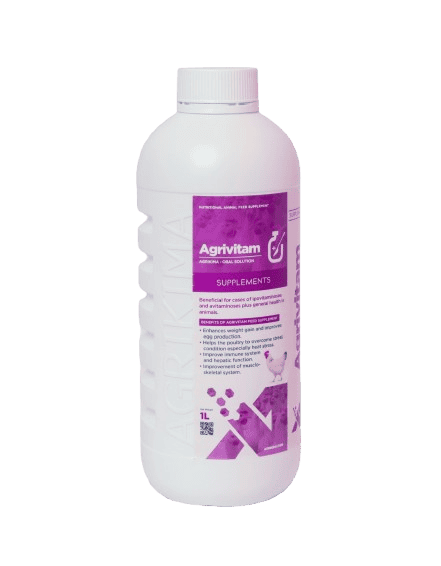
AGRIVITAM
After vet-prescribed deworming, this liquid vitamin and mineral supplement can help birds recover from the stress of a worm burden and support a return to normal laying in layers. It does not kill worms and is used alongside the dewormer and better hygiene.
View product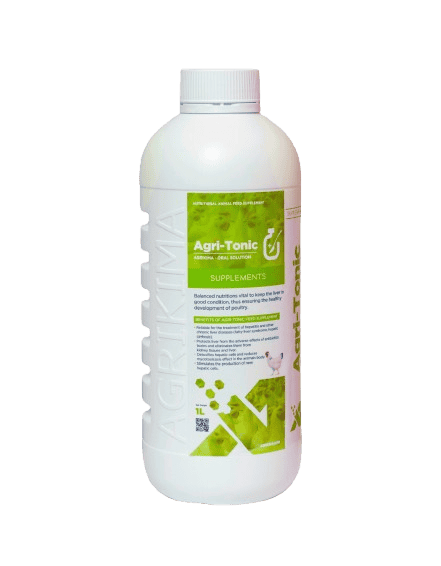
AGRITONIC
A liquid tonic that can help support appetite and growth in thin, recovering birds once worms have been treated by a vet, helping them regain condition. It is not a dewormer and does not replace treatment or good litter management.
View productPrevention
- Deworm on a regular schedule agreed with your vet, often linked to the rains and to key points like before point of lay, and check droppings in between so you treat only when needed.
- Keep deep litter dry and clean by fixing leaking roofs and drinkers, turning litter often, and removing wet patches; replace all litter between batches of birds.
- Raise feeders and drinkers off the ground, or hang them, so droppings do not fall into feed and water.
- Rotate free-range runs where possible, resting ground for some months, and avoid keeping birds on the same small, muddy patch year after year.
- Improve drainage and sunlight in runs, as sun and dry conditions kill many worm eggs, while shade and mud preserve them.
- Control the middle hosts of tapeworms by reducing flies, beetles and snails around the house through good manure management and keeping grass short.
- Isolate new birds for about two to three weeks, check their droppings and deworm them on vet advice before mixing them with your flock.
- Do not keep turkeys together with chickens on the same ground, because caecal worms from chickens can spread blackhead to turkeys.
- Feed a balanced diet with enough protein, vitamins and minerals so birds are better able to tolerate low worm burdens and recover quickly.
- Avoid overcrowding, as more birds per square metre means more droppings and faster build-up of worm eggs.
Risk to people
The common chicken worms (roundworms, caecal worms, hairworms and chicken tapeworms) are not known to infect people, so handling infected birds is not a direct worm risk to your family. The main human health concern is drug residues: dewormers can pass into eggs and meat. Always follow the egg and meat withdrawal period given by the vet or on the product label, do not sell or eat eggs or meat during that time, and never use dewormers in laying hens unless the vet confirms the product is approved for layers. Wash hands after handling birds, litter and droppings, as droppings can carry other germs such as Salmonella.
Impact on your farm
Worms are one of the most common hidden causes of poor profits on Kenyan poultry farms. Kienyeji and improved kienyeji birds take longer to reach market weight, so feed costs rise and selling is delayed. Layers lay fewer eggs and may produce smaller eggs, which directly cuts daily income, especially for farmers supplying local shops and hotels. Birds with heavy worm burdens have weaker immunity, so outbreaks of coccidiosis, Newcastle disease and respiratory infections can be worse, and vaccines may not protect as well. Feed is wasted because birds eat but do not convert it into meat and eggs. There are also costs from dewormers, lost egg sales during withdrawal periods, and occasional deaths of young birds. Because the losses are slow and quiet, many farmers do not notice them until production is already low.
Outlook and recovery
The outlook is good for most flocks when the worm type is identified and the right dewormer is used together with better litter and range management. Birds with mild to moderate burdens usually regain condition, comb colour and laying over a few weeks. Very young birds with heavy burdens, birds already badly weakened, and flocks with other diseases at the same time recover more slowly, and some may not recover fully. Without changes in hygiene and ground management, reinfection is very likely, especially on free-range land after the rains. Repeated use of the same dewormer without testing can lead to worms that no longer respond, so following vet advice matters for long-term success.
Common questions
How often should I deworm my kienyeji chickens?
There is no single rule for every farm, because it depends on how much your birds free-range, the season and how much worm build-up there is on your land. Many vets advise regular deworming at set times, often around the rainy seasons and before birds start laying, and checking droppings in between. Ask your vet to help you set a plan for your farm rather than deworming blindly every month, which wastes money and builds resistance.
Can I eat eggs from hens I have just dewormed?
Not until the withdrawal period is over. Many dewormers leave residues in eggs for a period of time, and some are not approved for laying hens at all. Ask your vet which product is safe for layers and exactly how long to discard eggs. Do not sell eggs during that period either.
I see small white flat pieces in the droppings. What are they?
These are most likely tapeworm segments, which look like grains of rice and may move slightly when fresh. Tapeworms are not killed by every dewormer; some common products like piperazine work only on roundworms. Show a sample to your vet so they can choose a product that covers tapeworms, and reduce flies, beetles and snails that spread them.
Do herbal remedies like garlic, pawpaw seeds or aloe get rid of worms?
Many farmers use these traditionally, and some may support general gut health, but there is not enough reliable evidence that they clear worm burdens the way a proper dewormer does. Do not rely on them alone if birds are already sick or thin. Use a vet-recommended dewormer, and treat herbal practices only as an extra alongside good hygiene and nutrition.
My birds were dewormed but are still thin. Why?
Possible reasons include the wrong product for that type of worm, an incorrect amount, birds being reinfected immediately from dirty litter or ground, worm resistance to the drug, or another problem such as coccidiosis, mites, poor feed or mouldy feed. Take fresh droppings to the vet for testing a couple of weeks after treatment and review your litter, feed and range management.
Do broilers need deworming?
Broilers raised on fresh, dry litter for a short cycle usually pick up few worms and often do not need routine deworming. Problems arise when litter is reused, birds are kept longer, or they free-range. If you see poor growth or worms in droppings, ask your vet, and remember meat withdrawal periods before selling.
A guide, not a diagnosis. This page is general information to help you recognise problems early. Always confirm with a vet or animal health worker before treating.