What it is
Chickens feel most comfortable at moderate temperatures, roughly the high teens to mid-twenties °C for grown birds. As the air gets hotter, the bird's body struggles to shed heat. Heat also builds up inside the bird from digesting feed and from growing or laying, so fast-growing broilers and busy layers make a lot of their own heat. The bird's main cooling method is panting. This loses water and also blows out too much carbon dioxide from the blood. That upsets the blood's acid balance, a state vets call respiratory alkalosis. One result is that less carbonate is available to build eggshells, so shells become thin and crack easily. The bird also drinks much more water and eats much less feed, so growth and laying drop. If body temperature keeps rising, the heart and circulation cannot keep up, blood thickens from water loss, and the bird becomes weak, collapses and can die. High humidity makes all of this worse, because panting cools far less well when the air is already wet. Crowding, poor ventilation and hot iron roofs push the inside of a house well above the temperature outside.
Which animals are most at risk
Broilers close to market weight, usually from about four weeks of age onwards, are at the highest risk because they are heavy, grow fast and make a lot of body heat. High-producing commercial layers at peak lay are also very vulnerable, and heavy breeder birds too. Improved breeds suffer more than kienyeji (indigenous) chickens, which are smaller and generally handle heat better, although kienyeji birds can still suffer when confined in hot houses or kept without shade and water. Birds in deep-litter or cage systems under iron roofs, overcrowded flocks, and birds kept in hot humid lowland counties face the most danger. Risk peaks between late morning and late afternoon, and during the hot dry season and sudden hot spells. Birds already weakened by disease, worms or poor feed cope worse.
Signs to look for
Early signs
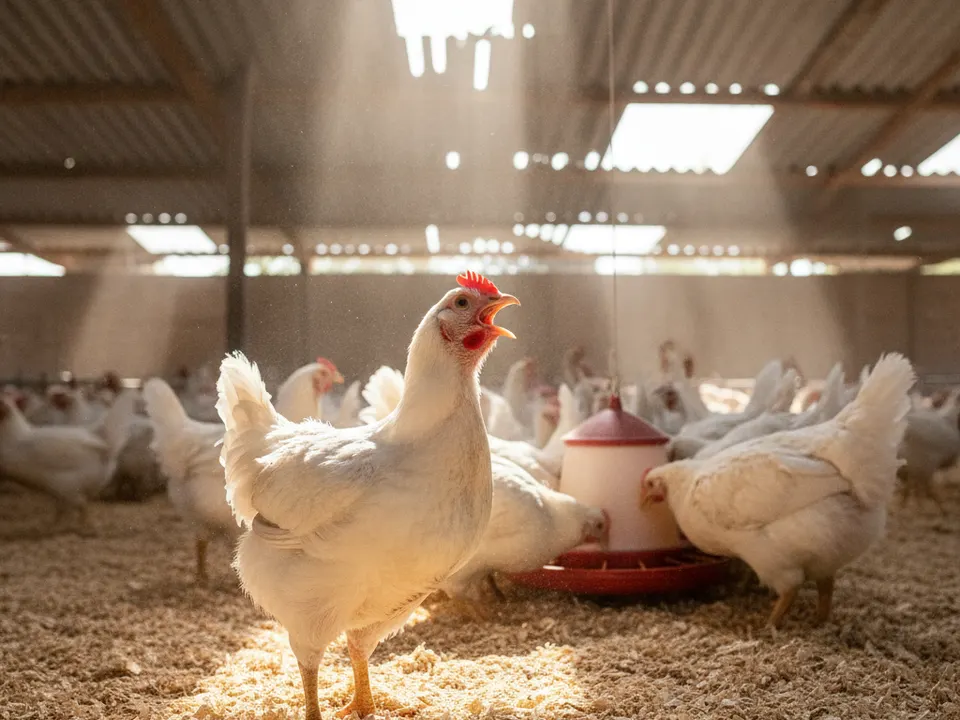
- Birds breathe with their beaks open and pant quickly, and you may see the throat fluttering.
- Wings are held out and away from the body to let heat escape.
- Birds drink far more than usual and crowd around drinkers, and droppings become wetter and more watery.
- Feed intake drops, especially at midday, and birds stop moving around and look dull.
- Birds spread out, press against walls, lie on cool floors or move towards any breeze or shade.
- Combs and wattles may look pale or, in some birds, darker and flushed.
- Layers produce fewer eggs, and shells become thin, rough or easily cracked, with more soft-shelled eggs.
As it gets worse
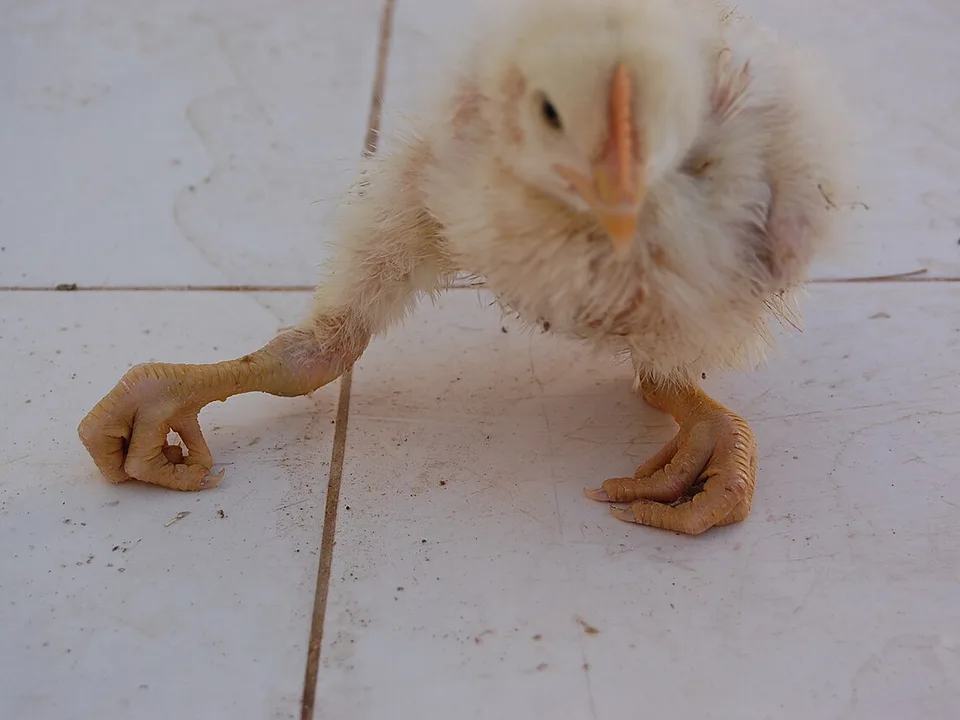
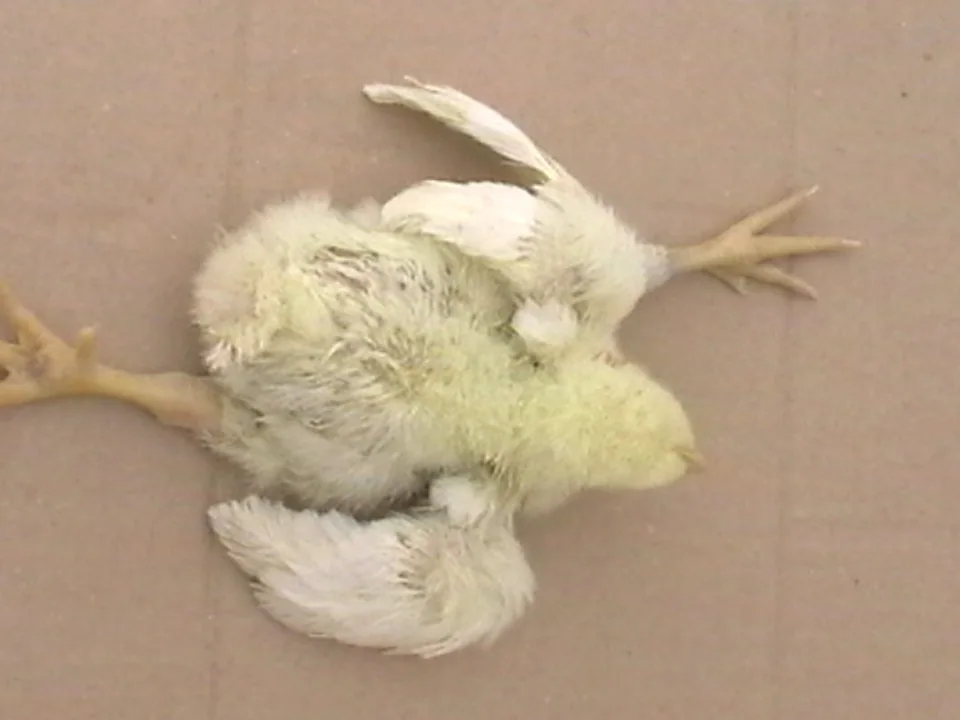
- Birds become weak, wobble or cannot stand, and may lie flat with legs stretched out and wings drooped.
- Panting becomes laboured, then slows down as the bird tires, which is a very bad sign.
- Birds stop responding when you approach and may have their eyes half closed.
- Heavy broilers die suddenly, often several at once in the afternoon or soon after, and the heaviest birds are usually the first to die.
- Growth slows clearly across the flock and broilers miss their target market weight.
- Egg production falls sharply and more eggs are small or misshapen.
What to do right now
- Open all curtains, doors and windows straight away and remove anything that blocks airflow, so hot air can escape and a breeze can pass through the house.
- Give plenty of clean, cool drinking water, add extra drinkers, and shade water tanks and pipes or replace warm water with fresh water several times a day.
- Stop catching, vaccinating, weighing, moving or transporting birds during the hot hours, and do any necessary work only in the early morning or evening.
- Remove feed for a few hours before and during the hottest part of the day, then feed in the cool early morning and evening, so birds are not digesting during peak heat.
- Cool the house from outside: wet the roof or lay wet sacks or grass on the roof, plant or put up shade, and if you have fans, switch them on to move air over the birds.
- Gently move collapsed birds to a shaded, airy, cooler spot with water within reach, and avoid dunking birds in cold water, which can shock them.
- Reduce crowding by moving some birds to another house or a shaded run if you can, and spread out litter that is wet and smelly.
- Remove dead birds quickly, record the number and time of deaths, and call your vet or animal health officer if deaths continue, or if birds are still sick in the cool of the evening, in case a disease is also present.
How it spreads
- Heat stress does not spread from bird to bird; it is caused by the environment and how birds are housed and managed.
- Hot spells and the hot dry months, such as January to March and the weeks before the short rains, are common triggers in many parts of Kenya.
- Hot, humid areas such as the Coast, the Lake Victoria basin and other lowlands carry a higher year-round risk than cool highland areas.
- Houses with bare iron-sheet roofs, no ceiling, low walls, closed sides or poor airflow trap heat and can be much hotter inside than outside.
- Overcrowding raises the heat in the house because every bird gives off body heat.
- Shortage of drinking water, warm water from tanks or pipes in the sun, or too few drinkers quickly turns a hot day into a deadly one.
- Handling, catching, vaccinating, weighing or transporting birds during the hottest hours greatly increases the risk of sudden deaths.
- Feeding a full crop just before the hottest part of the day adds digestive heat at the worst moment.
Could it be something else?
Newcastle disease
Newcastle disease also causes gasping and deaths, but it spreads through the flock regardless of the weather and often brings green watery diarrhoea, nasal discharge, swelling around the eyes, twisted necks, paralysis and a sudden stop in laying. Heat stress improves quickly once the house is cool, and deaths happen mainly in the hottest hours. If birds stay sick in the cool of the evening and morning, suspect disease and call the vet.
Infectious bronchitis and chronic respiratory disease (CRD)
These respiratory infections cause sneezing, coughing, rattling or gurgling breath sounds, watery eyes and nasal discharge. Heat-stressed birds pant fast and open-mouthed but have clean nostrils and eyes and no rattling sounds. Infectious bronchitis also causes thin or wrinkled shells, so if shell problems continue in cool weather, ask the vet to check.
Acute fowl cholera or other bacterial infections
Sudden deaths can look similar, but fowl cholera often shows purple or dark swollen combs and wattles, yellow-green diarrhoea, swollen joints and deaths at any time of day and in any weather. A post-mortem by a vet separates them.
Ascites (water belly) in broilers
Ascites also causes heavy broilers to breathe hard and die, but these birds have a swollen, soft, fluid-filled belly and a bluish comb, and it is more common in cool highland areas and at altitude. Heat stress birds have normal bellies and recover when cooled.
How it is diagnosed
Heat stress is usually diagnosed from the history and the setting: hot weather, birds panting with wings out, more drinking, less eating and deaths clustered in the hottest hours, with birds improving once it cools. A vet or animal health officer will examine live birds to rule out infectious diseases such as Newcastle disease, infectious bronchitis or fowl cholera, which can look similar or happen at the same time. A post-mortem of freshly dead birds may show dehydration, congested (blood-filled) organs and lungs, and no signs of infection; the vet may send samples to a laboratory if disease is suspected. You can help a great deal by preparing: record the highest temperature inside the house each day (a simple maximum-minimum thermometer hung at bird height is very useful), the time and number of deaths, how much water and feed the flock used, egg numbers and shell problems, the age and breed of the birds, and recent vaccinations. Keep one or two freshly dead birds cool in a sealed bag, but do not freeze them, so the vet can open them.
Treatment
There is no medicine that cures heat stress; the real treatment is cooling the birds and fixing the housing and management. A vet or animal health officer will first make sure no infectious disease is involved, then advise on ventilation, stocking density, water supply and feeding times. They may recommend adding electrolytes (salts that replace those lost through panting and wet droppings) and vitamins, especially vitamin C and E, to the drinking water during hot spells. Some vets advise sodium bicarbonate or other additives to help the blood's acid balance and eggshell quality, and some anti-stress or fever-reducing products exist; these should only be used on a vet's advice because the wrong mix can upset salt balance and harm the birds. Antibiotics do not treat heat stress and should not be used unless the vet confirms a bacterial infection, because unnecessary antibiotic use builds antimicrobial resistance, which makes medicines fail for animals and people. If any medicine is prescribed, follow the label and the vet's instructions and respect the egg and meat withdrawal periods, the time you must wait before selling eggs or slaughtering birds. Once cooled, most birds start eating and drinking normally again within hours, though growth and laying may take days to weeks to recover.
Medicines must be prescribed and dosed by a vet. Always respect milk and meat withdrawal periods, and finish the full course of any antibiotic.
How Agrikima products can help
These support the animal alongside — never instead of — your vet's treatment, vaccination and good management.
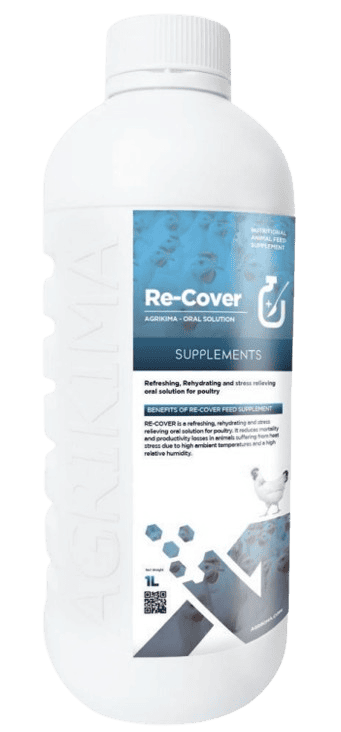
RE-COVER
An oral rehydration and heat-stress relief solution for the drinking water that helps replace water and salts lost through panting and wet droppings during hot spells; use it alongside cooling, ventilation and plenty of clean water, not instead of them.
View product
BETAINE 50%
An osmolyte (a substance that helps cells hold water) added to feed that can help birds stay better hydrated and keep up performance in hot weather; it supports birds through the hot season as part of good housing and management, but does not replace cooling or treat collapsed birds.
View productPrevention
- Build or improve houses for airflow: face the long side across the main wind direction, keep side walls low with wire mesh above, raise the roof height, and add roof overhangs to keep out direct sun.
- Insulate or cool the roof by adding a ceiling, painting iron sheets white or silver, putting a thatch or grass layer on top, or planting shade trees around the house.
- Do not overcrowd; follow the space recommendations for your bird type and reduce numbers in the hot season, especially for broilers near market weight.
- Make sure there is always enough clean, cool water, with extra drinkers in hot weather, shaded tanks and buried or shaded pipes, because birds may drink about twice as much in heat.
- Feed in the cool early morning and evening, and plan to sell or slaughter broilers before the hottest months where possible.
- Do all catching, vaccination, debeaking and transport in the early morning, late evening or at night, and never pack birds tightly in hot vehicles.
- Use electrolytes, vitamins and anti-stress supplements in the water before and during expected hot spells and stressful events, as advised by your vet or agrovet.
- Keep birds healthy with good vaccination, worm control and quality feed free of mould, because sick or weakened birds cope much worse with heat, and keep a thermometer in the house so you can act before birds start dying.
Impact on your farm
Heat stress costs Kenyan poultry farmers money in several ways. Broilers eat less, grow slower and take longer to reach market weight, which means more days of feed costs and lower selling weights, and sudden deaths of the heaviest birds just before sale hit profits hardest. Layers lay fewer eggs, eggs are smaller, and thin or cracked shells mean more broken eggs, more rejects at the market and lower prices. Feed is used less efficiently, so the cost of producing each kilogram of meat or tray of eggs rises. Heat-stressed birds also have weaker immunity, so outbreaks of other diseases and vaccination failures become more likely. For small-scale farmers with a few hundred birds, one hot afternoon with poor ventilation can wipe out a large part of the profit of the batch.
Outlook and recovery
The outlook is good when the problem is caught early. Most birds recover quickly once the house is cooled and they have water, often within a few hours. Birds that have collapsed, stopped panting strongly or cannot stand are much less likely to survive, and heavy broilers near market weight are the most likely to die. Growth and egg production usually recover over days to weeks, but a flock that suffers repeated hot spells may never reach its full potential. Long-term success depends mainly on better housing, ventilation, stocking and water supply rather than on any single product.
Common questions
Why are my eggshells thin when the weather is hot?
When hens pant to cool down, they breathe out too much carbon dioxide, which upsets the acid balance of the blood. This leaves less material to build the shell, and hens also eat less feed, so they take in less calcium. The result is thin, rough or soft shells. Cooling the house, feeding in the cool hours, keeping good calcium in the layer feed and following your vet's advice on additives all help. If shell problems continue in cool weather, ask the vet to check for diseases such as infectious bronchitis.
Should I give my chickens ice-cold water or pour water on them?
Cool, fresh water is very helpful, but there is no need for ice. Changing warm water for fresh water several times a day is usually enough. Do not dunk birds in cold water or soak them heavily, as this can shock them, and in humid areas wet birds and wet litter make things worse. It is better to cool the roof, improve airflow and move collapsed birds to a shaded, breezy place.
Can I use antibiotics to stop the deaths?
No. Heat stress is caused by the environment, not by germs, so antibiotics will not help and waste money. Using antibiotics without need also builds antimicrobial resistance and can leave residues in eggs and meat. Only use antibiotics if a vet examines your birds and finds a bacterial infection, and then respect the withdrawal period.
When is the best time to feed during a heat wave?
Feed in the cool early morning and again in the evening, and remove feed for a few hours before and during the hottest part of the day. Digesting feed makes heat inside the bird, so a full crop at midday adds to the danger. Always keep water available, even when feed is removed.
Do kienyeji chickens get heat stress too?
Yes, though less often than broilers and commercial layers. Kienyeji chickens are smaller, grow more slowly and are adapted to local conditions, so they handle heat better. But if they are locked in hot houses, crowded, or left without shade and water on a hot day, they can still suffer and even die. Give them shade, water and space to move to cooler spots.
My house has an iron-sheet roof. What can I do without spending a lot?
Iron roofs get very hot. Cheap fixes include laying grass, thatch or wet sacks on the roof, painting it white, adding a simple ceiling of polythene or sacks with an air gap, planting shade trees, and raising curtains during the day to let air through. Reducing the number of birds in the house during the hot season also makes a big difference.
A guide, not a diagnosis. This page is general information to help you recognise problems early. Always confirm with a vet or animal health worker before treating.