What it is
The cause is Clostridium perfringens, a bacterium found in soil, dust, litter, feed and the normal chicken gut. On its own, in small numbers, it does little harm. The problem starts when something upsets the gut. Coccidia (tiny parasites that cause coccidiosis) damage the gut wall and make it leak protein into the gut. That protein is perfect food for the clostridia, which multiply very fast. Disease-causing strains produce powerful toxins (poisons), especially one called NetB, that destroy the lining of the small intestine. The gut wall becomes thin, swollen with gas and covered in a yellow-brown, dead layer that vets describe as looking like a rough towel. A damaged gut cannot absorb food or water, and toxins can pass into the blood and liver. This is why birds become dull, stop eating and can die within hours. In the milder, hidden (subclinical) form, the gut is only partly damaged, so birds survive but grow slowly, convert feed poorly, and their livers may be rejected at slaughter.
Which animals are most at risk
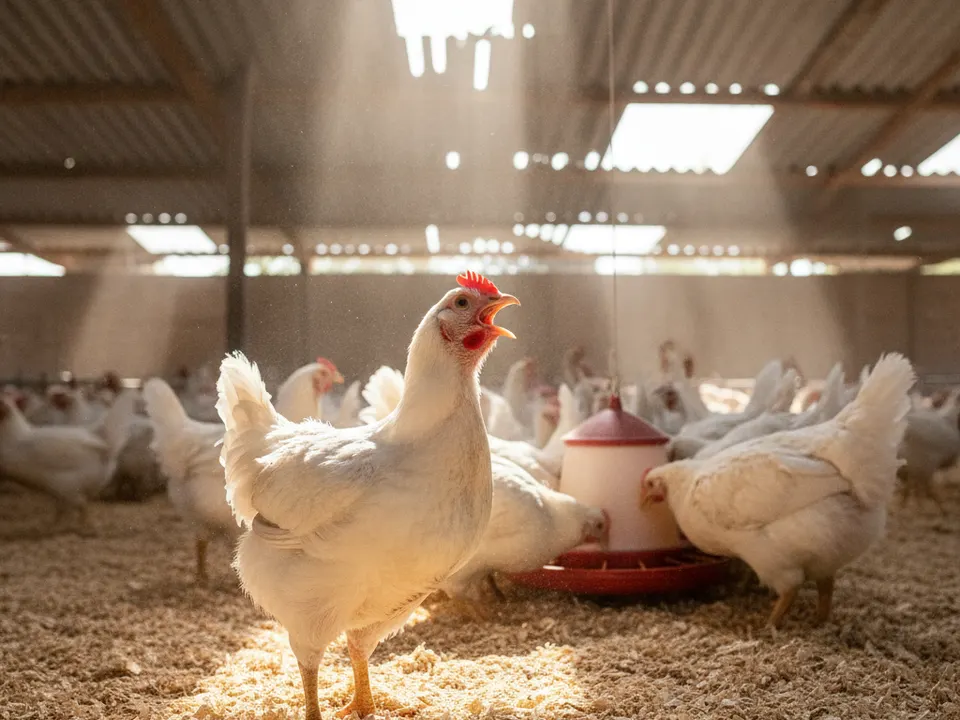
Broilers between about 2 and 6 weeks old are most at risk, with many outbreaks around 3 to 4 weeks, when growth is fastest and coccidia challenge is high. Layer pullets and kienyeji or improved kienyeji chickens on deep litter can also be affected, as can turkeys. Risk is highest in deep-litter houses with high stocking density, poor ventilation and wet bedding, which is common in the long and short rains when humidity rises and litter stays damp. Flocks that recently had coccidiosis, Gumboro or a feed change are at special risk. Farms that use high-fishmeal home-mixed rations, buy feed of uncertain quality, or reuse old litter without cleaning are also more exposed. Free-range birds are less often affected, but it can still happen where they share damp, crowded night shelters.
Signs to look for
Early signs
- A sudden rise in deaths in birds that looked healthy the day before, sometimes the first and only sign.
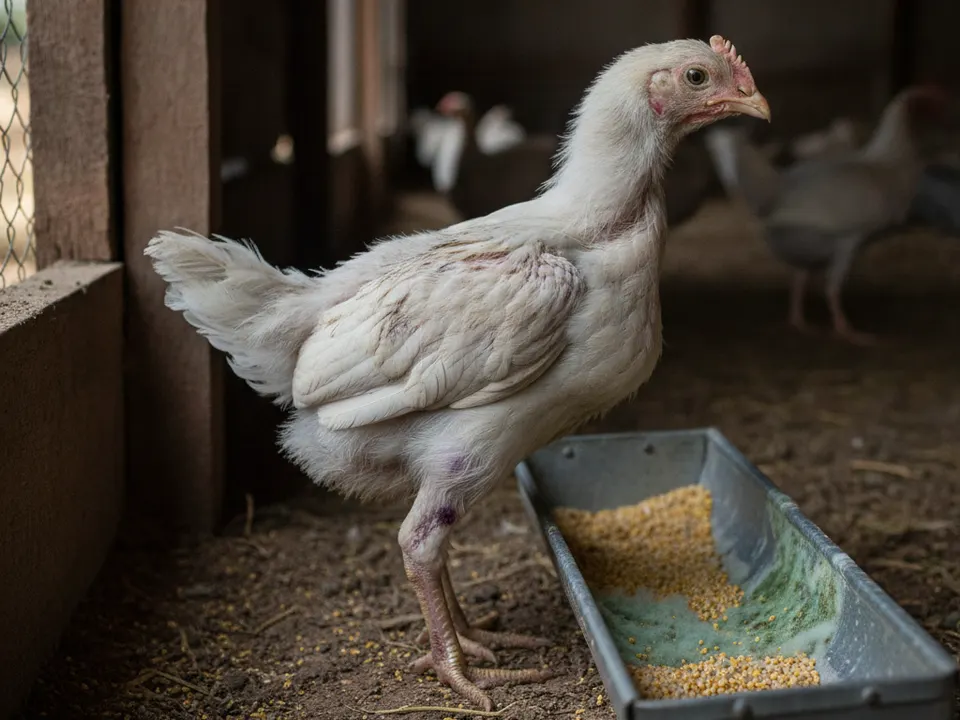
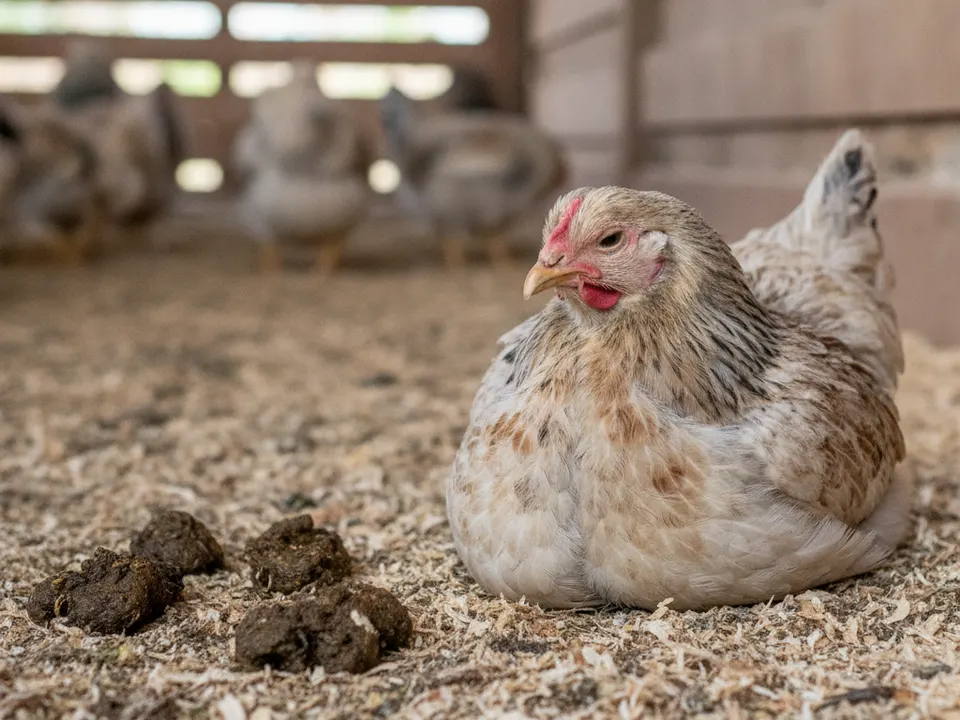
- Birds sitting hunched and quiet with ruffled feathers and half-closed eyes, reluctant to move when you walk through the house.
- Reduced feed intake: feeders stay fuller than usual and birds crowd less at feeding time.
- Droppings that are darker than normal, brown to black, sticky or tarry, sometimes with a reddish tint.
- A stronger, rotten smell in the house than usual and patches of wet, caked litter.
- In the hidden form, the flock simply grows slower and eats more feed per kilo of weight gained, with uneven bird sizes.
As it gets worse
- Many birds lying down, unable or unwilling to stand, with dull combs and dehydrated, shrunken appearance.
- Diarrhoea that is very dark, watery or foamy and foul-smelling, staining the vent feathers.
- Deaths rising quickly over a few days, with dead birds often still in good body condition.
- Dead birds swelling and decomposing faster than normal because of gas-forming bacteria in the gut.
- When a vet opens a bird, the small intestine is thin, ballooned with gas, fragile and lined with a yellow-green or brown crusty layer, with a very bad smell.
- At slaughter, livers may be enlarged, pale or spotted and get condemned, even in birds that seemed to recover.
What to do right now
- Collect dead birds immediately, at least twice a day, so healthy birds do not peck them and pick up more bacteria; keep a few fresh ones cool for the vet and dispose of the rest by deep burial or burning away from water sources.
- Call your vet or County Veterinary Officer the same day, because this disease can move fast and the right treatment depends on a proper diagnosis.
- Separate clearly sick, dull birds into a clean, dry pen with fresh bedding, clean water and feed close by so they do not have to walk far.
- Remove wet, caked litter around drinkers and feeders, add fresh dry bedding, and fix leaking drinkers so the floor stays dry.
- Give plenty of clean, fresh drinking water and wash drinkers daily, since sick birds lose fluid through diarrhoea.
- Do not make any more sudden feed changes while waiting for the vet, and stop feeding any feed that smells musty or looks mouldy; keep a sample for testing.
- Improve ventilation by opening curtains on the side away from the wind, while avoiding cold draughts on the birds.
- Wear boots and overalls only for that house, wash hands well after handling birds, and keep visitors out to avoid carrying spores to other houses.
- Record daily deaths, feed and water use and bird age, which will help the vet decide on treatment and withdrawal timing.
How it spreads
- Clostridium perfringens is already present on almost every poultry farm, so the disease is mostly triggered by stress on the gut rather than brought in from outside.
- Coccidiosis is the most common trigger, because the parasites damage the gut wall and open the door for the bacteria.
- A sudden change of feed, for example switching from starter to grower overnight or changing feed brands, upsets gut bacteria and can set off an outbreak.
- Diets very high in protein, especially fishmeal (including omena-based feeds) or rich animal protein, feed the clostridia.
- Feeds with a lot of wheat, barley or bran fibre can make gut contents sticky and slow-moving, which favours bacterial overgrowth.
- Wet, caked litter and dirty drinkers allow spores (tough, long-lasting resting forms of the bacteria) to build up, and birds pick them up by pecking.
- Mouldy feed containing mycotoxins (poisons produced by fungi) and immune-damaging diseases such as Gumboro (IBD) weaken the bird's defences.
- Spores survive for a long time in litter, soil and equipment, so a house with past outbreaks carries a higher risk for the next flock.
Could it be something else?
Coccidiosis
Coccidiosis often causes fresh red blood or bloody, mucus-like droppings, especially caecal coccidiosis in young birds, and lesions are often in the caeca (blind gut pouches). Necrotic enteritis droppings are more dark, sticky and foul-smelling, and the small intestine is gassy with a crusty lining. The two often occur together, so a vet post-mortem and a smear test are needed.
Newcastle disease
Newcastle usually shows breathing problems (gasping, coughing), nervous signs such as twisted necks and paralysis, greenish diarrhoea, and a sharp drop in eggs in layers. It spreads fast to birds of all ages, including free-range kienyeji flocks. Necrotic enteritis does not cause nervous or breathing signs and is mostly linked to gut stress in growing broilers. Newcastle is notifiable, so report any suspicion.
Fowl typhoid and other Salmonella infections
Fowl typhoid often causes greenish-yellow diarrhoea, pale combs and deaths in older birds and layers, and the vet finds an enlarged, bronze-coloured liver. Necrotic enteritis mainly damages the small intestine and gives dark, sticky droppings. Lab culture separates them.
Gumboro disease (IBD)
Gumboro usually hits 3 to 6-week-old birds with whitish watery droppings, pecking at the vent, and trembling. At post-mortem the bursa (a small gland near the vent) is swollen or bloody and leg muscles may show bleeding. Gumboro can also trigger necrotic enteritis by weakening immunity, so both may be present.
How it is diagnosed
A vet usually suspects necrotic enteritis from the flock history (age, recent coccidiosis or feed change, sudden deaths) and confirms it by post-mortem. Opening fresh birds shows the typical thin, gassy, fragile small intestine with a dead, crusty lining. The vet or lab may take a smear from the gut lining and see large numbers of rod-shaped bacteria under the microscope, grow the bacteria in culture, and check for coccidia at the same time. Liver samples may be examined, and feed may be tested for mycotoxins if mouldy feed is suspected. In Kenya, your private vet, County Veterinary Officer or a regional veterinary investigation laboratory can help, and the Central Veterinary Laboratories at Kabete handle more detailed tests. To help, keep two to four birds that died within the last few hours, or sick live birds, in a cool box or plastic bag in a cool place, but do not freeze them because freezing spoils the gut lesions. Write down the bird age, number of deaths per day, feed type and any recent feed change, vaccination dates, any past coccidiosis treatment, and any drugs already given. Keep a sample of the current feed.
Treatment
Necrotic enteritis is a bacterial disease, so a vet will usually prescribe an antibiotic that works against clostridia, given in the drinking water for a set number of days. Drug groups commonly used include penicillins such as amoxicillin, as well as tylosin, lincomycin or bacitracin, depending on what is registered and available in Kenya and on any lab sensitivity results. Because coccidiosis is often the trigger, the vet may also prescribe an anticoccidial drug such as amprolium or toltrazuril, or adjust the coccidiosis control programme. The vet will also look at feed, litter and water management, because drugs alone will not stop repeat outbreaks. Only a vet should choose the drug and the dose; never guess the amount or use leftover medicine. Birds that are badly affected may still die even with treatment, but deaths usually slow down within a few days if the cause is correct. Every antibiotic and anticoccidial has a withdrawal period, which is the time after the last dose before meat or eggs are safe to sell or eat. Broilers are often close to slaughter when this disease hits, so plan sale dates with your vet and never sell treated birds early. Use antibiotics only when prescribed and finish the full course. Overuse and underdosing help bacteria become resistant (antimicrobial resistance), which makes future treatment harder for animals and people.
Medicines must be prescribed and dosed by a vet. Always respect milk and meat withdrawal periods, and finish the full course of any antibiotic.
How Agrikima products can help
These support the animal alongside — never instead of — your vet's treatment, vaccination and good management.
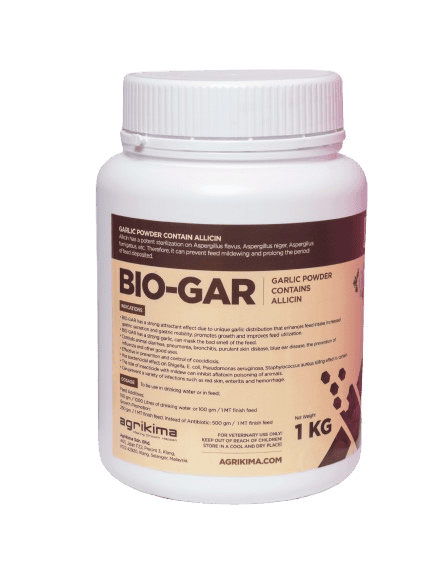
BIO-GAR
A probiotic that helps build up beneficial gut bacteria and supports coccidiosis prevention, which reduces the gut damage that lets Clostridium perfringens take over. Use it as part of prevention and during recovery alongside vet treatment, coccidiosis control and dry litter, not as a cure; ask your vet about timing if antibiotics are being given in the water.
View product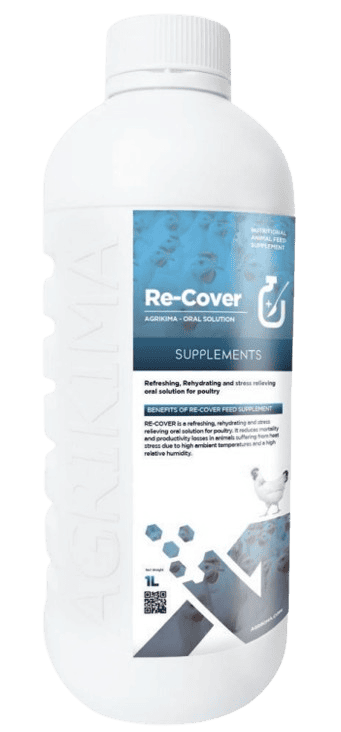
RE-COVER
An oral rehydration solution that helps sick and recovering birds replace fluid and salts lost through diarrhoea and keeps them drinking. It supports comfort and recovery while the vet-prescribed treatment works, but it does not treat the infection itself.
View productPrevention
- Control coccidiosis well, using a coccidiosis vaccine for chicks or an anticoccidial programme in feed or water as advised by your vet, because preventing gut damage from coccidia is the single most important step.
- Keep litter dry and loose: use enough wood shavings or rice husks, turn the litter regularly, fix leaking drinkers, and avoid overcrowding, especially during the long and short rains.
- Change feeds gradually over three to five days by mixing the old and new feed, rather than switching from starter to grower or between brands overnight.
- Buy balanced feed from trusted mills and avoid rations with too much fishmeal or poor-quality animal protein; if you mix your own feed, follow a proper formulation from an extension officer or nutritionist.
- Store feed dry, off the floor and away from walls, and never feed mouldy or caked feed, since mycotoxins weaken the gut and immunity.
- Vaccinate against Gumboro, Newcastle and other diseases according to your vet or hatchery schedule, because a healthy immune system resists clostridial overgrowth.
- Between flocks, remove all old litter, clean and disinfect the house and equipment, and leave the house empty for at least two weeks to reduce the build-up of spores.
- Support a healthy gut with good-quality water, clean drinkers, and gut-health aids such as probiotics or acidifiers used as advised, alongside good management rather than in place of it.
Risk to people
The necrotic enteritis strains of Clostridium perfringens mainly harm chickens, but other strains of the same bacterium are a well-known cause of food poisoning in people, usually from meat that is cooked and then left warm for hours. Never eat or sell birds that died or were sick, and dispose of carcasses safely. Cook chicken thoroughly, eat it soon after cooking, and refrigerate leftovers quickly. Wash hands with soap after handling birds, droppings or litter. The main human risk on farms is drug residues: if birds were treated with antibiotics or anticoccidials, strictly observe the meat and egg withdrawal periods given by your vet so that residues do not reach consumers.
Impact on your farm
On a Kenyan broiler farm, necrotic enteritis can be costly because it usually strikes when birds have already eaten most of their feed and are only days or weeks from sale. Sudden deaths mean lost birds that were nearly ready for market. Survivors often grow unevenly and eat more feed for each kilo of weight, which cuts profit when feed is the biggest expense. The hidden form may never be noticed but steadily lowers weights and raises feed costs batch after batch. Treatment costs money, and withdrawal periods can delay sale, upsetting agreements with buyers, hotels or brokers. Livers may be condemned at slaughter, and wet litter raises ammonia and breast blisters, lowering carcass quality. Repeat outbreaks in the same house can make broiler keeping unprofitable until hygiene and coccidiosis control are improved.
Outlook and recovery
Outlook depends on how fast the problem is recognised and treated and whether the trigger is removed. With early vet diagnosis, correct antibiotic treatment and control of coccidiosis, deaths usually fall within a few days and most remaining birds recover. Birds that are already lying down and badly dehydrated often do not survive. Recovered birds may stay smaller and less efficient because the gut lining takes time to heal, and some may have liver damage. If litter stays wet, coccidiosis is not controlled or feed problems continue, outbreaks often return in the same or next flock. Good management between flocks greatly improves the chances of avoiding it next time.
Common questions
My broilers looked fine yesterday and today several are dead. Could it be necrotic enteritis?
It could be. Sudden deaths in well-grown broilers, especially around 3 to 5 weeks, with dark sticky droppings and wet litter, are typical. But Newcastle, Gumboro, coccidiosis, heat stress and poisoning can also cause sudden deaths. Keep two or three fresh dead birds cool, not frozen, and get a vet to do a post-mortem the same day so you treat the right disease.
Can I just buy an antibiotic at the agrovet and put it in the water?
Please do not treat on guesswork. The wrong drug, wrong dose or a short course may not work, wastes money, leaves residues in meat and eggs, and helps germs become resistant. Many antibiotics also have withdrawal periods that may clash with your sale date. Let a vet confirm the cause and prescribe the drug, dose and length of treatment.
Why does necrotic enteritis keep coming back after coccidiosis?
Coccidia damage the gut wall and cause it to leak protein, which feeds Clostridium perfringens and lets it multiply. If coccidiosis is not well controlled, necrotic enteritis often follows within days. Work with your vet on a coccidiosis vaccine or anticoccidial programme and keep litter dry, because wet litter helps coccidia spread.
Is it safe to sell my broilers after they recover?
Only after the full withdrawal period of every drug they received has passed, as told by your vet or written on the drug label. Selling earlier risks drug residues in the meat, which is unsafe and illegal. Never sell or eat birds that are sick or died of the disease.
Can probiotics or herbal products replace antibiotics for this disease?
No. Once birds are sick and dying, they need a vet diagnosis and usually prescribed treatment. Probiotics, acidifiers and good nutrition can support gut health and help prevent future problems, but they do not cure an active outbreak. If the vet prescribes an antibiotic in the water, ask when to give a probiotic, because antibiotics can kill the helpful bacteria in the product.
Do I need to change my feed to stop this disease?
Not always, but feed matters. Avoid sudden changes, use balanced feed from a trusted supplier, and be careful with rations very high in fishmeal or poor-quality protein. Never feed mouldy feed. If outbreaks repeat, ask your vet or an extension officer to check your ration and keep a feed sample for testing.
A guide, not a diagnosis. This page is general information to help you recognise problems early. Always confirm with a vet or animal health worker before treating.