What it is
The main cause is the bacterium Staphylococcus aureus, a germ that normally lives on the skin of birds and people and in dust and litter. Other bacteria such as E. coli, Streptococcus and Pseudomonas may also be involved. These germs cannot easily get through healthy skin. Trouble starts when the foot pad is damaged by a splinter, sharp stone, wire, rough or very narrow perch, a hard landing from a high perch, or skin that has gone soft and cracked from standing on wet, ammonia-rich litter. Once inside, the bacteria multiply and the body walls them off. Birds do not make runny pus like mammals. Their pus is thick and cheese-like, and it forms a firm core, sometimes called the 'kernel' or 'plug', under the scab. As the infection grows, the foot swells and becomes painful. In long-standing cases the infection can spread into the tendon sheaths, the toe and leg joints and even the bone, which is much harder to treat. In rare severe cases bacteria can get into the blood and make the bird very ill.
Which animals are most at risk
Heavy birds are most at risk: broilers near market weight, heavy dual-purpose breeds, and adult cockerels and roosters. Laying hens jumping down from high perches or nest boxes are also often affected. Kienyeji chickens on free-range are generally less affected than confined birds, but they still get it from thorns, sharp stones and rough night perches. Deep-litter houses with poor ventilation, leaking drinkers or overcrowding are high risk, especially in the rainy seasons when litter stays wet. Birds kept on wire floors, concrete or hard bare ground, older birds, and birds fed poorly balanced homemade rations are also more likely to develop it. Ducks and geese kept on hard, dry ground away from water can get a similar foot problem.
Signs to look for
Early signs
- The bird limps slightly, shifts weight between feet, or stands on one leg more than usual.
- The bird is slow to get onto the perch or prefers to sit on the floor.
- When you turn the foot over, the pad looks slightly red, shiny or swollen, or has a small brown or dark spot.
- The pad may feel a little warmer than the other foot.
- Small cracks or rough calloused skin on the bottom of the foot.
As it gets worse
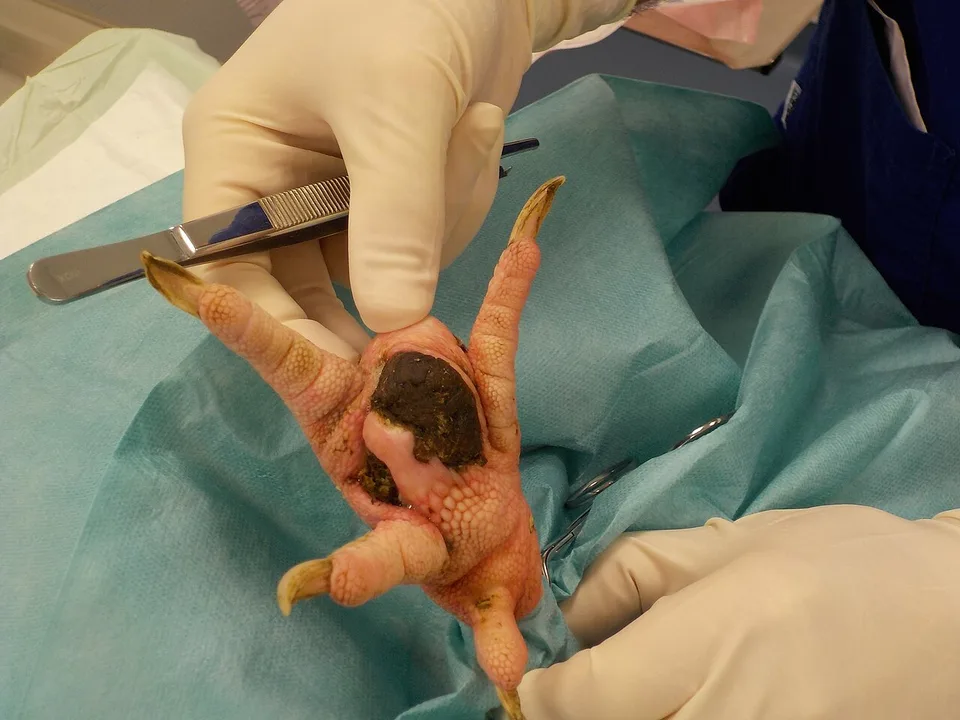
- A clear round swelling in the centre of the foot pad, sometimes extending between the toes, feeling firm or hard.
- A hard, dark brown or black scab in the middle of the swelling, which covers a core of thick, yellow-white, cheese-like pus.
- Obvious limping, refusing to walk or stand, and spending most of the time sitting.
- Swollen toes or a swollen hock (ankle) joint if the infection has spread.
- Reduced eating and drinking because the bird does not want to walk to the feeder, leading to weight loss.
- Laying hens drop in egg production and cockerels stop mating because of pain.
- In very advanced cases, a bad smell from the foot, an open draining sore, a fluffed-up dull bird, and toes that stay bent or stiff.
What to do right now
- Separate the lame bird into a small clean pen or box so it does not compete for feed and so pus does not contaminate the main house.
- Give it soft, clean, dry bedding such as fresh wood shavings or dry grass, and a low perch or none at all so it does not have to jump.
- Place feed and clean water right next to the bird so it can eat and drink without walking far.
- Wear gloves when handling the foot and wash your hands well with soap afterwards, because Staphylococcus can infect cuts on human skin.
- Gently wash the foot with clean warm water and dry it well to see the problem clearly, but do not cut, squeeze or pick off the scab yourself, as this can push infection deeper and cause heavy bleeding.
- Check the feet of all the other birds, especially cockerels and heavy birds, and note how many show early redness or swelling.
- Look around the house for the cause: sharp objects, rough or high perches, broken wire and wet litter, and fix them straight away.
- Record the bird's details, date and what you see, then call your vet or animal health officer, especially if the swelling is large, the bird stops eating, or toes and joints are swollen.
How it spreads
- Small cuts, punctures and splinters from rough timber perches, broken wire floors, nails, glass or sharp stones in the run let bacteria into the foot.
- Wet, caked litter, especially during the long and short rains or around leaking drinkers, softens the skin and burns it with ammonia, causing cracks where germs enter.
- Perches that are too high make heavy birds land hard on their feet, bruising the pad again and again.
- Perches that are too thin, round metal pipes or smooth plastic make birds grip hard and put pressure on one spot of the pad.
- Being overweight, as in broilers and heavy cockerels, puts extra pressure on the feet and raises the risk.
- Poor nutrition, especially low vitamin A or biotin (a B vitamin), weakens the skin of the feet so it cracks more easily.
- It is not usually passed from bird to bird like a flu, but pus from a burst abscess contaminates litter and perches, raising the germ load for other birds with damaged feet.
Could it be something else?
Scaly leg mite
Mites lift and thicken the scales on the shanks and toes, which look rough, crusty and chalky. The foot pad itself is usually not swollen with a single black scab, and several birds are often affected.
Infectious synovitis (Mycoplasma synoviae) or joint infection
The swelling is mainly in the hock joints and the joints of the toes rather than the middle of the foot pad. Often many birds in the flock are lame at once, and some may have breathing signs or greenish droppings.
Articular gout
Joints of the toes and legs become swollen with white, chalky deposits that can be seen under the skin. It is linked to kidney damage, excess protein or calcium, or poor water intake, and there is no central black scab on the pad.
Marek's disease
Young birds become lame or paralysed, often with one leg stretched forward and the other back, but the feet look normal with no swelling or scab. The eyes may turn grey and birds may waste away.
How it is diagnosed
Most cases are recognised by careful examination. The vet or animal health officer will pick up the bird, compare both feet, feel for heat, swelling and pain, and check the toes and hock joints to see how far the infection has gone. Bumblefoot is often graded from mild (a red or calloused pad) to severe (deep abscess with joint or bone involvement), which guides treatment. If the bird needs antibiotics, or if several birds keep getting it, the vet may take a swab of the pus for culture and sensitivity testing at a county, KALRO or private laboratory. This shows which bacteria are present and which drugs will work, which is important because Staphylococcus can be resistant to some antibiotics. In valuable birds, an X-ray may be used to check the bone. If birds die or many are lame, a post-mortem at a veterinary laboratory can rule out other causes such as Mycoplasma or gout. To help, note how many birds are lame and for how long, describe the perches, floor and litter, mention any recent rains or leaks, bring a sample of the feed label or ration recipe, and list any medicines already given.
Treatment
Treatment depends on how deep the infection is. Very mild cases with only redness or a small callus may improve simply by correcting perches and litter and keeping the foot clean and dry, under advice from your vet. For a true abscess with a black scab, the vet usually cleans and disinfects the foot, softens the scab, then carefully opens the swelling and removes the scab and the whole cheese-like core. Leaving part of the core behind is a common reason for the problem coming back. The wound is flushed with an antiseptic such as diluted povidone-iodine or chlorhexidine, sometimes packed with a wound dressing, and bandaged with padding to take pressure off the pad. Bandages are usually changed every few days until the wound heals, which can take a few weeks. The bird should stay in a clean, soft, dry pen during this time. Pain relief may be given. Antibiotics are not needed for every case. A vet may prescribe them, either applied to the wound or given by mouth or injection, when the infection is deep, spreading into joints, or the bird is unwell, ideally guided by a culture result. Commonly used drug groups include penicillins, tetracyclines, sulphonamide combinations and others chosen by the vet; never use antibiotics without a prescription, and never give doses based on guesswork. Using antibiotics wrongly helps bacteria become resistant, making future infections in birds and people harder to treat. Any antibiotic or other drug comes with a withdrawal period: eggs and meat from treated birds must not be sold or eaten until the time stated on the label or by your vet has passed. Severe cases where bone or joints are badly damaged may not heal well, and the vet may advise culling for welfare reasons.
Medicines must be prescribed and dosed by a vet. Always respect milk and meat withdrawal periods, and finish the full course of any antibiotic.
How Agrikima products can help
These support the animal alongside — never instead of — your vet's treatment, vaccination and good management.
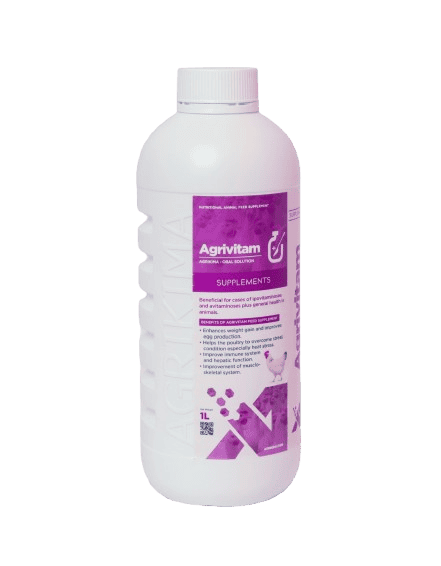
AGRIVITAM
A liquid vitamin and mineral supplement that can help a bird recovering from bumblefoot keep up its condition while it is eating less and coping with the stress of handling and bandaging. It supports recovery alongside the vet's foot treatment and improved housing; it does not treat the infection.
View product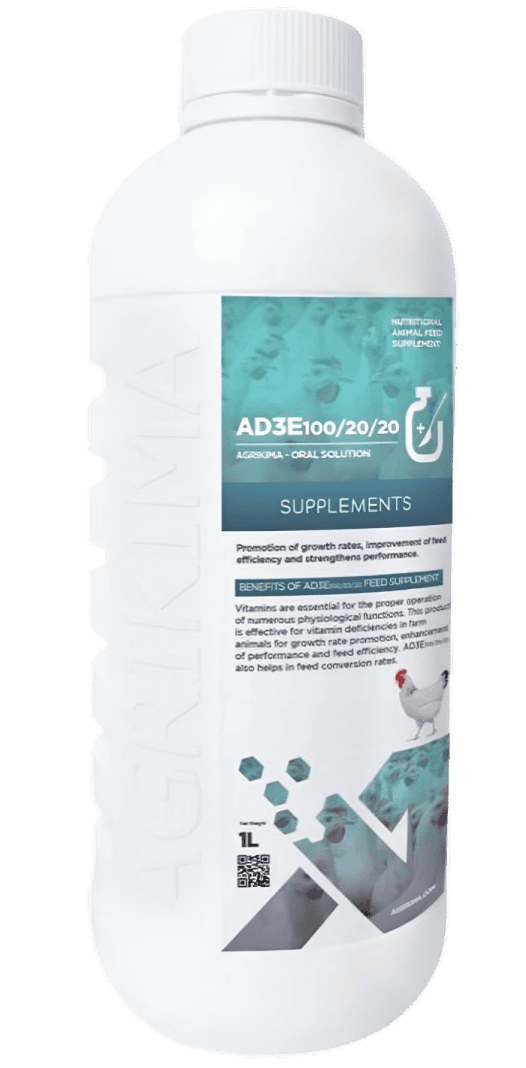
AD3E 100/20/20
Supplies vitamin A, which helps keep skin, including the foot pads, healthy, plus vitamins D3 and E. It can help where the ration may be short of these vitamins, as one part of preventing cracked, weak foot skin. Use it alongside a balanced feed, dry litter and good perches, not as a cure.
View productPrevention
- Use perches made of smooth, rounded natural wood that is wide enough for the bird to rest its whole foot on, roughly the width of a broom handle or wider for heavy breeds, and sand down splinters.
- Keep perches and nest boxes low, especially for heavy breeds and broiler breeders, so birds do not land hard on their feet.
- Keep litter dry and loose: fix leaking drinkers and roofs, raise drinkers on a platform, turn the litter regularly and remove wet, caked patches, especially during the long and short rains.
- Make sure the house has good ventilation to remove moisture and ammonia, without strong cold draughts on the birds.
- Walk through the house and run regularly to remove nails, wire, broken glass, thorns and sharp stones, and repair broken wire floors.
- Avoid overcrowding, because crowded houses get wet litter quickly and birds injure each other's feet.
- Feed a well-balanced commercial or properly formulated ration with enough vitamins (especially vitamin A and biotin), minerals and protein, and avoid letting heavy birds become overweight.
- Check the feet of your birds every few weeks, especially cockerels and heavy birds, so problems are caught early when they are easy to fix.
- Clean and disinfect the house, perches and equipment between batches, and put in fresh dry litter for each new flock.
Risk to people
Staphylococcus aureus, the main germ in bumblefoot, can also infect people, causing skin boils or infected wounds, and some strains are resistant to common antibiotics. Always wear gloves when handling or cleaning an infected foot, cover any cuts on your hands, and wash your hands well with soap and water afterwards. Burn or bury used bandages and pus-soaked material. If a bird has been treated with antibiotics or other drugs, do not eat or sell its eggs or meat until the withdrawal period given by your vet or on the label has ended, to avoid drug residues that harm people and encourage antibiotic resistance.
Impact on your farm
Bumblefoot rarely kills birds directly, but it quietly costs money. A lame bird eats and drinks less, so broilers grow slowly and reach market weight later, and layers lay fewer eggs. Cockerels with painful feet stop mating, which lowers fertility and hatchability in breeding and kienyeji flocks. Treatment takes time, bandages and vet visits, and severe cases may have to be culled. Where many birds are affected, it is a warning sign that litter, perches or nutrition are wrong, and those same problems also raise the risk of coccidiosis, breast blisters and respiratory disease. In broiler flocks, damaged foot pads also lower carcass quality and can reduce the value of birds and chicken feet sold to buyers.
Outlook and recovery
The outlook is good when bumblefoot is caught early, while it is only redness, a small callus or a shallow scab, and the housing problem is fixed. Most such birds recover fully. Once a deep abscess has formed, recovery is still possible with proper cleaning, core removal and bandaging, but it takes weeks and the problem often comes back if perches and litter stay the same. When the infection has spread into joints, tendons or bone, healing is slow and uncertain, and the foot may stay stiff or misshapen. Heavy birds, older birds and birds that keep standing on wet or hard surfaces recover more slowly.
Common questions
Can I cut out the black scab myself at home?
It is better to let a vet or trained animal health officer do it. The foot has a good blood supply and can bleed heavily, and if part of the cheese-like core is left behind, the infection usually comes back. Cutting with dirty tools can also push germs deeper into the joints. What you can do safely is isolate the bird, keep it on soft clean bedding, wash and dry the foot, and call for help.
Is bumblefoot contagious to my other chickens?
It does not spread like Newcastle disease or a cold. However, pus from a burst abscess adds germs to the litter and perches, and any other bird with a cut or cracked foot can pick them up. When several birds have it, the real cause is usually shared: rough or high perches, sharp objects or wet litter. Fixing the house protects the whole flock.
Can I eat eggs from a hen with bumblefoot?
Bumblefoot itself does not make eggs unsafe, as long as you handle the bird with clean hands and keep eggs clean. The concern is medicines. If the vet has given antibiotics or other drugs, do not eat or sell the eggs or meat until the full withdrawal period has passed. Ask your vet what that period is for the specific product.
Will putting antibiotics in the drinking water cure it?
Usually not, and it is not a good idea to do this without a vet. The pus in bumblefoot is walled off in a hard core that drugs reach poorly, so the core usually needs to be removed. Treating a whole flock through the water for one lame bird wastes money, leaves residues in eggs and meat, and helps bacteria become resistant. Only use antibiotics when a vet prescribes them for that case.
Why does bumblefoot keep coming back in my flock?
Repeated cases almost always point to the environment or diet. Check that perches are smooth, wide and low, that litter is dry and not caked, that there are no nails, wire or sharp stones, and that birds are not overcrowded or overweight. Also make sure the ration is balanced, because lack of vitamins such as vitamin A and biotin weakens foot skin. In treated birds, the infection can also return if part of the core was left behind.
Do free-range kienyeji chickens get bumblefoot?
Yes, though less often than heavy confined birds. Kienyeji chickens can injure their feet on thorns, sharp stones, broken glass or rough night perches in the kitchen or store where they sleep. Check their feet when you catch them, give them a smooth wooden perch at night, and keep the sleeping area dry and clean.
A guide, not a diagnosis. This page is general information to help you recognise problems early. Always confirm with a vet or animal health worker before treating.