What it is
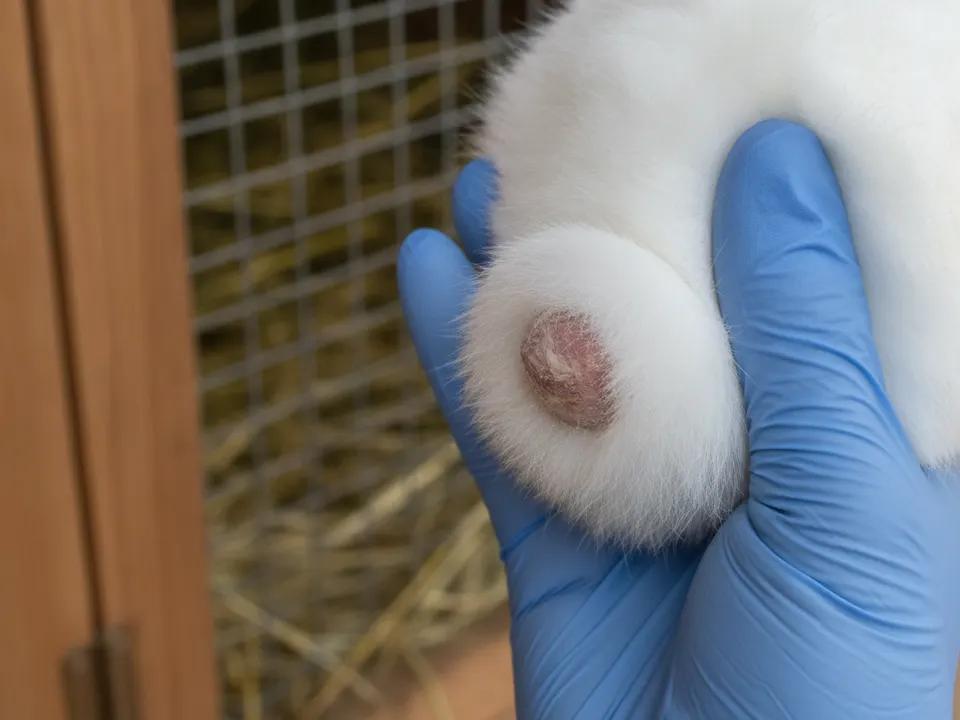
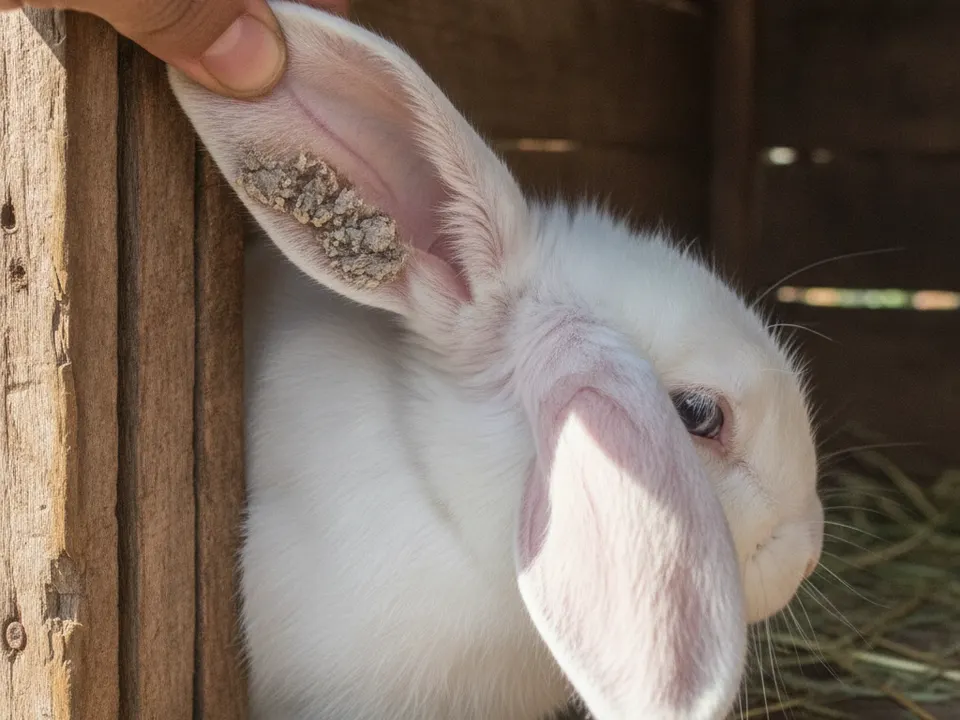
Ear canker is caused by a mite called Psoroptes cuniculi. A mite is a very small relative of ticks and spiders, just visible to the naked eye as a pale moving dot. This mite does not burrow into the skin. It lives on the surface of the skin inside the ear and feeds on tissue fluid. Its feeding and droppings irritate the skin badly. The ear becomes inflamed (red, hot and swollen) and oozes fluid. That fluid dries together with dead skin, mites and mite droppings, building up thick layered grey-brown crusts. The crusts are very itchy and painful, so the rabbit scratches and shakes its head and can wound itself with its hind claws. Bacteria then get into the damaged skin and cause a smelly secondary infection. If the infection travels deeper into the middle and inner ear, it can damage balance and cause a head tilt. In heavy cases the mites spread beyond the ear to the head, face, neck, feet and around the genitals. The whole mite life cycle, from egg to adult, takes roughly three weeks, which is why treatment usually has to continue long enough to kill mites that hatch later.
Which animals are most at risk
Any rabbit of any breed or age can get ear mites. They are seen most in crowded hutches, colony housing and units that buy stock often without quarantine. Young rabbits around and after weaning, pregnant and nursing does, old rabbits and rabbits that are thin or already sick tend to get heavier infestations. Lop-eared breeds may hide early crusts because the ear canal is harder to see. Meat breeds kept in large numbers, such as New Zealand White, Californian, Chinchilla and Flemish Giant crosses, are commonly affected in Kenyan commercial units simply because of the close contact. Cases often rise during the cool, damp months of the long and short rains, when hutches stay wet and mites survive longer in bedding. Wooden hutches with cracks and corners that are hard to clean also hold mites and crusts.
Signs to look for
Early signs
- Frequent head shaking and flapping of the ears, more than normal grooming.
- Scratching at the ears with the hind feet, sometimes followed by the rabbit licking or chewing its feet.
- A small amount of light brown or grey waxy flakes at the base of the ear canal when you gently look inside.
- Ears that feel warmer than normal and the rabbit pulling away or flinching when you touch them.
- Slight hair loss or redness on the inside of the ear flap.
As it gets worse
- Thick, dry, grey-brown crusts in layers that fill the ear canal and spread up the inside of the ear flap.
- One or both ears drooping or held at an odd angle because of weight of crusts, pain and swelling.
- Scratch wounds, scabs and hair loss around the ears, face and neck from the rabbit's own claws.
- A bad smell or moist discharge from the ear, suggesting a secondary bacterial infection.
- Crusts and hair loss spreading to the head, face, neck, feet or genital area in heavy infestations.
- Weight loss, poor appetite, dullness and does that stop breeding or rear weak litters.
- Head tilt, circling, rolling or loss of balance if infection has reached the middle or inner ear.
What to do right now
- Move the affected rabbit to a separate, clean, dry hutch away from the others so mites do not spread further.
- Check the ears of every other rabbit, especially those that shared a hutch, nest box or buck, and write down which ones show crusts or head shaking.
- Do not pull or scrape off the crusts; the skin underneath is raw and will bleed and hurt, and this does not cure the mites.
- Keep the rabbit calm, warm and out of draughts and rain, with fresh clean water and good hay and greens so it keeps eating.
- Remove and burn or bury soiled bedding, scrub the hutch, feeders and nest boxes with soapy water, dry them in the sun, and leave the hutch empty if you can.
- Wash your hands and change or brush down clothes after handling an affected rabbit, and handle healthy rabbits first and sick ones last.
- Do not use dog, cat or livestock sprays, powders, used engine oil, paraffin or home mixtures in the ear; some, such as fipronil sprays sold for dogs and cats, can kill rabbits.
- Call your vet, County Veterinary Officer or a trained agrovet animal health officer for a correct diagnosis and a treatment plan for the whole group.
How it spreads
- Direct contact between rabbits is the main route, for example when rabbits share a hutch, when a doe feeds her kits, or during mating.
- Newly bought rabbits from markets, neighbours or other farms often bring mites into a clean unit, even when they look healthy at first.
- Mites and crust flakes can survive off the rabbit for some days to a few weeks, especially in cool, damp conditions, so dirty bedding, hay, nest boxes and hutch corners can reinfect rabbits.
- Shared equipment such as feeders, carry boxes, grooming brushes and transport cages can carry mites and crusts from one hutch to another.
- Farmers' hands and clothes can move crust flakes between hutches if they handle an affected rabbit and then a healthy one without washing.
- Overcrowding, stress, poor nutrition and other illnesses weaken the rabbit's defences and allow mite numbers to build up quickly.
- Some rabbits carry a few mites without signs; stress such as kindling, weaning, transport or a cold wet spell can then trigger an outbreak.
Could it be something else?
Bacterial ear infection or head tilt (often Pasteurella, or the parasite Encephalitozoon cuniculi)
These can cause head tilt and loss of balance, but there are usually no thick layered brown crusts in the outer ear. A bacterial ear infection may show creamy pus deep in the canal. A vet may need to examine the ear closely and sometimes run tests to tell them apart, and ear mites can also lead on to a deep infection.
Ringworm (a fungal skin infection)
Ringworm causes round, dry, scaly patches of hair loss, often on the face, nose, around the eyes and on the feet, rather than crusts packed inside the ear canal. It can infect people, so wear gloves and get a vet to check it.
Fur mites (Cheyletiella, sometimes called 'walking dandruff')
Fur mites cause white, dandruff-like scale over the back and shoulders, not crusts in the ear. The flakes may seem to move. They can cause itchy spots on people, unlike ear mites.
Normal ear wax or dirt
A little light-coloured wax is normal and the rabbit is not bothered. With ear mites the material is thick, layered and crusty, keeps building up, and the rabbit shakes its head, scratches and resents handling.
How it is diagnosed
In most cases a vet or animal health officer can recognise ear canker by looking into the ear and seeing the typical layered brown crusts together with head shaking and scratching. To confirm, they may take a small sample of loose crust from the surface and look at it under a magnifying glass or microscope, where the mites are easy to see. If you place a flake on dark paper in a warm spot you may yourself see tiny pale dots moving. If the rabbit has a head tilt, a smelly discharge or is very ill, the vet will check for deeper ear infection and other diseases, and may take a swab for bacteria. To prepare, keep the rabbit in a clean box, do not remove or wash out the crusts before the visit, note how many rabbits are affected and in which hutches, when signs started, any new rabbits bought recently, and whether rabbits are kept for meat, breeding or both, because this affects which drug is chosen.
Treatment
Ear mites are usually treated with anti-parasite drugs from the avermectin family, such as ivermectin, selamectin or moxidectin, given by injection, by mouth or as a spot-on product, depending on what the vet judges safest for the rabbit. Treatment is normally repeated over several weeks to cover the mite life cycle, because eggs hatch after the first dose. Only a vet should choose the drug and the dose, because rabbits are small and sensitive, and products made for dogs, cats or cattle can easily be overdosed or are simply unsafe for rabbits. All rabbits in contact should usually be treated at the same time, even those without signs, or the problem keeps coming back. The vet may also give pain relief and, if the ear is infected and smelly, an antibiotic or ear treatment. Antibiotics do not kill mites; they are only for a confirmed or strongly suspected bacterial infection, and should be used exactly as prescribed to avoid antimicrobial resistance (bacteria learning to survive the drug). As the mites die, the crusts loosen and fall away over one to two weeks; the vet may gently soften them with a safe oil but you should not force them out. For meat rabbits, ask the vet for the meat withdrawal period, which is the time after treatment before a rabbit can safely be slaughtered for food, and keep records of each treated rabbit.
Medicines must be prescribed and dosed by a vet. Always respect milk and meat withdrawal periods, and finish the full course of any antibiotic.
Prevention
- Quarantine every new rabbit in a separate hutch for at least three to four weeks, check its ears often, and only mix it with your stock when it is clear.
- Check the ears of all your rabbits regularly, for example once a week when you feed or clean, so you find the first flakes before crusts build up.
- Avoid overcrowding; give each adult rabbit enough space and keep breeding does in their own hutches where possible.
- Keep hutches dry, well ventilated and raised off the ground, with a roof that keeps out rain during the long and short rains.
- Clean hutches and nest boxes regularly, change bedding often, and scrub and sun-dry hutches thoroughly between litters or before bringing in new rabbits.
- Do not share carry boxes, feeders or grooming equipment between farms, and clean them well if they must move between hutches.
- Check bucks and does before mating and do not mate a rabbit with crusty ears until it has been treated.
- Feed a balanced diet with plenty of good hay, fresh greens and a quality rabbit pellet or mash, with clean water at all times, so rabbits stay strong and resist parasites.
- When one case appears, ask your vet whether to treat the whole unit to stop mites moving quietly through the stock.
Risk to people
The rabbit ear mite Psoroptes cuniculi is not considered a risk to people and does not set up infestation in human ears or skin. Still, wear gloves or wash your hands well after handling crusty ears, because some lookalike conditions such as ringworm and fur mites can infect people. If your rabbits are treated with anti-parasite drugs or antibiotics, follow the meat withdrawal period your vet gives you before slaughtering any treated rabbit for eating or sale, so drug residues do not end up in the meat.
Impact on your farm
Ear canker rarely kills rabbits directly, but it quietly eats into farm income. Itchy, sore rabbits eat less and grow slowly, so meat rabbits take longer to reach market weight and fetch lower prices. Breeding does may stop accepting the buck, kindle smaller litters or neglect their kits, and they pass mites on to them. Rabbits with crusty ears, drooping ears or a head tilt are hard to sell as breeding stock, and buyers may avoid a farm that has a reputation for sick rabbits. Treatment costs, vet visits and extra labour add up when the whole unit must be treated, and some severely affected rabbits with permanent balance problems may have to be culled. For a smallholder with a few dozen rabbits, an untreated outbreak can wipe out a season's profit.
Outlook and recovery
The outlook is good when ear mites are caught early and treated properly. Most rabbits stop scratching within days of the first treatment, and the ears heal over a few weeks once crusts fall away. Recovery is slower when crusts are thick, the skin is badly wounded or a bacterial infection has set in. If infection has reached the middle or inner ear and caused a head tilt, some rabbits recover with vet care but others keep a permanent tilt, though many still eat and live comfortably. The biggest reasons for failure are stopping treatment too early, treating only the rabbit with signs and not its companions, and not cleaning the hutch, which all allow mites to come back.
Common questions
Can I just clean the crusts out of the ear myself?
No. The crusts are stuck to raw, inflamed skin, and pulling them off is very painful, causes bleeding and does not kill the mites hiding in the ear. Once the vet's treatment kills the mites, the crusts loosen and fall off by themselves over one to two weeks. If the vet advises it, they may show you how to soften them gently, but never force them.
Can I use the dog or cattle spray from the agrovet on my rabbits?
Not without a vet's advice. Some products made for dogs, cats and livestock are dangerous to rabbits; fipronil sprays, for example, have killed rabbits. Even safe ingredients can be overdosed in a small rabbit if you guess the amount from a cattle or dog product. Ask your vet for a rabbit-safe product and the correct dose.
Only one rabbit has crusts. Do I need to treat the others?
Usually yes. Mites spread easily through contact, bedding and nest boxes, and other rabbits may already carry mites without showing signs yet. If you treat only one rabbit, it often gets reinfected from its companions. Your vet will advise whether to treat just the hutch mates or the whole unit, but treating in-contact rabbits together is the normal approach.
How long until I can sell or slaughter a treated rabbit?
That depends on the drug used. Many anti-parasite drugs and antibiotics have a meat withdrawal period, a set number of days when the rabbit must not be slaughtered for food. Ask your vet for the exact period for the product they use, write the treatment date on a record card, and keep those rabbits back until the time is over.
My rabbit now has its head tilted to one side. Is that still ear mites?
It can be. If ear mites are left untreated, infection can spread deep into the ear and affect balance. But head tilt can also come from other infections, such as Pasteurella bacteria or the parasite Encephalitozoon cuniculi. Keep the rabbit in a small, well-padded space so it does not fall and hurt itself, help it reach food and water, and call the vet quickly.
Will my rabbits get ear mites again after treatment?
They can, if mites are brought back in or survive in the hutch. To lower the risk, clean and sun-dry hutches and nest boxes, change bedding, quarantine new rabbits for a few weeks, check ears every week, and avoid overcrowding. Rabbits do not become fully immune, so good routine management is the best long-term protection.
A guide, not a diagnosis. This page is general information to help you recognise problems early. Always confirm with a vet or animal health worker before treating.