What it is
Rabbits have no foot pads like cats or dogs. Instead, a thick layer of fur on the underside of the foot acts as a cushion. When a rabbit sits for long hours on a hard, thin or uneven surface such as wire mesh, the pressure squeezes the skin between the floor and the small bones of the foot. Blood cannot flow well to that skin, so the fur wears away and the skin becomes thin, red and inflamed. Wet floors soaked with urine and droppings soften the skin and burn it with ammonia, making the damage faster. Heavy or overweight rabbits press harder on the same small area. Once the skin cracks, bacteria from the floor and the rabbit's own skin get in. Staphylococcus aureus is the most common germ involved, but others can join. The infection forms pus and abscesses (pockets of pus under the skin). If it is not stopped, it spreads deeper to the tendons (the cords that move the toes) and the bones, a condition called osteomyelitis (bone infection). At that stage the foot may stay damaged for life and the infection can spread through the blood.
Which animals are most at risk
Any rabbit can get sore hocks, but some are more at risk. Heavy breeds such as Flemish Giant, New Zealand White and Californian, and rabbits that are overweight, carry more weight on their feet. Rex rabbits are especially prone because their short, thin fur gives little cushion on the feet. Adult breeding bucks and does are affected more than young growers because they stay in cages for many months or years, and older rabbits with stiff joints sit still more. Rabbits in raised hutches with bare wire floors, which are common in Kenyan backyard and commercial units, are at the highest risk, as are rabbits on floors that are rarely cleaned. The problem often gets worse in the long and short rains, when hutches stay damp and bedding does not dry. Rabbits that cannot move much because of small cages, arthritis or other illness also develop sores faster.
Signs to look for
Early signs
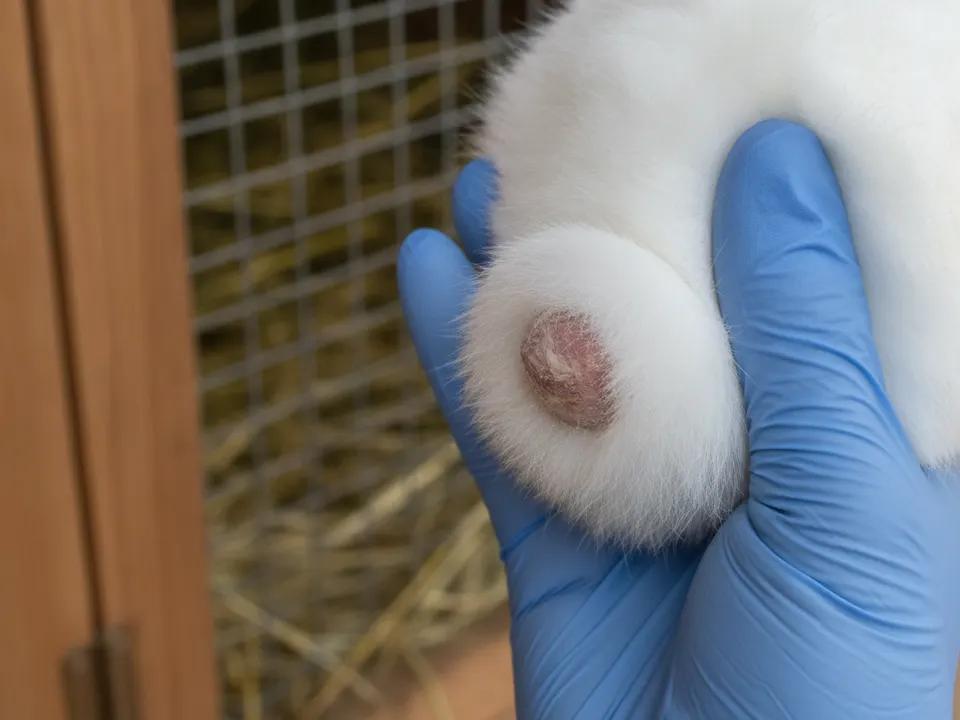
- Thinning fur or a small bald patch on the underside of the back feet, usually at the heel area that touches the floor when the rabbit sits.
- Pink or red skin in the bald patch, sometimes dry, flaky or slightly thickened like a callus.
- The rabbit shifts its weight from foot to foot, or sits leaning forward onto its front feet to take weight off its heels.
- The rabbit moves less around the cage, lies stretched out more than usual, or hesitates to hop.
- Fur on the feet looks stained yellow or brown from urine and is damp or matted.
- The rabbit flinches or pulls the foot away when you gently touch the sole.
As it gets worse
- Open sores or ulcers on the heel, often covered with a dark scab that may crack and bleed a little.
- Swelling of the foot or heel, and thick yellow or white pus under a scab or coming out of the sore.
- A bad smell from the feet, especially when infection is deep.
- Clear lameness, refusing to stand on the foot, or the rabbit sitting hunched in one corner.
- Reduced appetite, weight loss and a rough, poor coat because of pain and infection.
- The toes look twisted or the foot sits at an odd angle, which can mean the tendon has slipped or the bone is infected.
- Breeding bucks refuse to mount does, and does lose condition or neglect their litters.
- In very severe cases the rabbit becomes weak and dull because infection has spread through the body.
What to do right now
- Move the affected rabbit straight away onto a clean, dry, soft surface, such as a smooth wooden board or solid plastic floor covered with plenty of dry hay, straw or wood shavings.
- Gently look at both back feet and both front feet, then check every other rabbit in the unit, because rabbits housed the same way often have the same problem.
- If the feet are dirty, wipe them gently with clean, lukewarm boiled water and pat them dry with a clean cloth; do not soak the rabbit or leave the fur wet.
- Wear gloves or wash your hands well with soap before and after touching sores, and keep rabbits with pus-filled sores in a separate clean cage.
- Put feed, hay and water where the rabbit can reach them without hopping far, and make sure it keeps eating, because rabbits that stop eating can become seriously ill quickly.
- Do not apply human creams, used engine oil, paraffin, salt or other home remedies, and do not wrap the foot tightly yourself, as tight bandages can cut off blood flow.
- Do not give any antibiotic or medicine without a vet, because several common antibiotics can kill rabbits by upsetting their gut.
- Write down which rabbits are affected and how bad each foot looks, and call your vet or animal health assistant if there is an open sore, pus, swelling, lameness or poor appetite.
How it spreads
- Sore hocks are not mainly a contagious disease; they are caused by poor floors and management, so many rabbits in the same unit often get them at the same time.
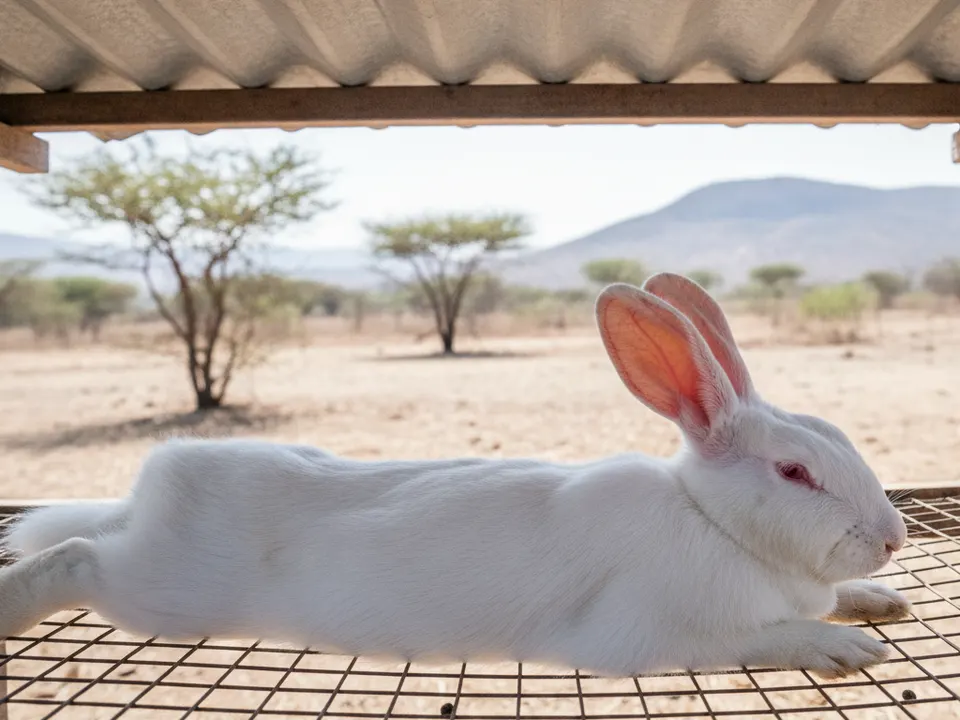
- Bare wire mesh floors, especially thin wire, wide gaps or rusted and sagging mesh, put constant pressure on a small part of the foot.
- Wet bedding and floors soaked with urine soften the skin and burn it with ammonia, so it breaks more easily.
- Overweight rabbits and large heavy breeds press harder on their heels and wear the fur away faster.
- Small cages where the rabbit cannot move around keep the weight on the same spot for most of the day.
- Rabbits that stamp their feet a lot because of stress, noise, dogs or predators near the hutch damage their heels more quickly.
- Long, overgrown nails push the weight back onto the heel instead of the toes, increasing pressure on the sore area.
- Once a sore is open, bacteria from dirty floors, pus from other infected rabbits and dirty hands or tools can make the infection worse.
Could it be something else?
Ringworm (fungal skin infection)
Ringworm gives round, scaly, bald patches mainly on the head, ears, nose and around the paws, not only on the weight-bearing heel. It does not usually form deep pus-filled sores. It can spread to people, so a vet should check any scaly bald patches.
Mange mites (Sarcoptes or Notoedres)
Mange causes thick, grey-white crusts on the nose, lips, ears and toes, and the rabbit scratches and shakes intensely. Sore hocks are on the underside of the heel, are painful rather than itchy, and match where the rabbit sits on the floor.
Urine scald
Urine scald causes red, sore, wet skin around the genitals, belly and inner back legs from sitting in urine. It often happens together with sore hocks in dirty hutches, but the main damage is higher up the legs, not on the heel itself.
Leg injury, fracture or splay leg
A broken leg or dislocation gives sudden severe lameness, often after a fall or rough handling, and the leg may hang or move abnormally. Splay leg is seen in young kits whose legs stick out sideways. The heels look normal unless sore hocks are also present.
How it is diagnosed
Most cases are diagnosed by a vet or animal health assistant simply by looking at and feeling the feet. They usually grade how bad it is, from mild hair loss and red skin to deep infection with bone involvement, because this guides treatment and the decision to treat or cull. If there is pus, the vet may take a swab for culture and sensitivity, a lab test that finds which bacteria are present and which antibiotics will work. If the foot is swollen or deformed, an X-ray may be suggested to check whether the bone is infected; this is not always available on farm, so the vet may judge from the look and feel of the foot. The vet will also check the rabbit's weight, teeth, nails and general health, because overweight rabbits, overgrown nails and arthritis all make sore hocks worse. To help, the farmer should record when the problem was first noticed, how many rabbits are affected, the type of floor and bedding, how often the hutch is cleaned, the diet, and any treatment already tried. Clear photos of the feet and of the cage floor are very useful.
Treatment
Treatment depends on how severe the sores are, and every treatment must be prescribed by a vet. In mild cases, where there is only hair loss and redness, the main treatment is fixing the housing: soft, dry, clean flooring, weight control and nail trimming. The vet may show you how to clean the feet with a mild antiseptic and apply a soothing dressing. For open or infected sores, the vet will clip the fur, clean the wound, remove dead tissue and pus, and may apply a padded dressing or bandage that must be checked and changed regularly. Pain relief is important because sore hocks hurt; vets commonly use anti-inflammatory painkillers such as meloxicam. If infection is deep, the vet may prescribe antibiotics, ideally chosen after a culture and sensitivity test. Rabbits are very sensitive to some antibiotics: penicillins and amoxicillin given by mouth, and lincomycin or clindamycin, can destroy the good gut bacteria and cause fatal diarrhoea, which is why you must never treat rabbits with antibiotics bought for other animals. Vets often choose rabbit-safe options such as enrofloxacin or trimethoprim-sulfonamide combinations. Use antibiotics only when prescribed, complete the full course, and do not use them to cover up bad housing, because misuse breeds antimicrobial resistance (germs that drugs no longer kill). If you keep rabbits for meat, ask your vet about the withdrawal period, the time you must wait after the last treatment before slaughter, and follow it strictly. Severe cases with bone infection or a slipped tendon may need surgery, long treatment over many weeks, or humane culling if the rabbit cannot be kept free of pain. Healing is slow, often taking weeks, and sores return if the floor is not changed.
Medicines must be prescribed and dosed by a vet. Always respect milk and meat withdrawal periods, and finish the full course of any antibiotic.
Prevention
- Give every rabbit a solid resting area covering part of the cage floor, such as a smooth untreated wooden board, plastic slatted panel or rubber mat, so it can take its weight off the wire.
- If you use wire floors, choose strong, flat, smooth mesh that does not sag, replace rusted or broken wire, and never keep heavy breeds on thin wire with wide gaps.
- Keep floors dry: clean droppings and wet bedding daily, make sure urine drains away from the rabbit, and replace bedding more often during the long and short rains.
- Provide dry, clean bedding such as hay, straw or wood shavings, and avoid hard, rough or sharp materials on the floor.
- Control body weight by feeding plenty of good hay and fresh greens and limiting pellets, maize bran and other energy-rich feeds, especially for adult breeding stock.
- Give rabbits enough space to move, stretch and hop, and where possible let them exercise on grass or soft ground in a safe run.
- Check the underside of each rabbit's feet at least once a week, and act as soon as you see thinning fur or pink skin.
- Trim overgrown nails regularly, keep the hutch away from dogs, noise and predators that cause stamping, and avoid breeding from rabbits with thin foot fur or repeated sore hocks.
Risk to people
Sore hocks themselves do not spread to people, but infected sores often contain Staphylococcus aureus and other bacteria that can infect cuts on human hands. Wear gloves or wash your hands well with soap and water after handling sores, dressings and bedding, and cover any cuts on your hands. Burn or bury used dressings safely. If a rabbit has been treated with antibiotics, do not slaughter it for food until the withdrawal period your vet gives you has passed, to avoid drug residues in the meat.
Impact on your farm
Sore hocks are rarely a sudden killer, but they quietly cost Kenyan rabbit farmers money. Painful rabbits eat less, so growers take longer to reach market weight and meat rabbits lose value. Breeding bucks with sore feet often refuse to mate, and does in pain may lose condition, produce fewer or weaker litters, or neglect their kits, which reduces the number of rabbits you can sell. Severe cases need vet visits, dressings and medicines, and some valuable breeding animals end up culled early. Damaged fur and scarred feet also lower the value of pelts and of breeding stock sold to other farmers. Because the same housing affects all rabbits, one neglected unit can see many animals affected at once, and poor animal welfare can harm a farm's reputation with buyers.
Outlook and recovery
The outlook is good when sore hocks are caught early, at the stage of hair loss and red skin, and the housing is fixed straight away. Many of these rabbits recover fully, although the fur may grow back thin. Once there are open sores with infection, healing is slower and takes weeks of careful nursing and vet treatment, but many rabbits still improve. If the infection has reached the tendons or bone, the outlook is guarded to poor, and the foot may stay painful or deformed; culling may then be the kindest choice. Recovery is better in rabbits of healthy weight, with trimmed nails, on soft, dry floors. The biggest reason for failure is returning the rabbit to the same wire floor or wet hutch, because sores very often come back.
Common questions
Do I have to stop using wire floors completely?
Not always, but bare wire on its own is a major cause of sore hocks. Many farmers keep wire floors so droppings fall through, but add a solid resting board or plastic mat over part of the floor so each rabbit can sit off the wire. Make sure the wire is strong, flat and smooth, and replace sagging or rusted mesh. Heavy breeds and Rex rabbits especially need more solid or bedded floor space.
Is sore hocks contagious to my other rabbits?
The sores themselves are caused by pressure and dampness, not by catching them from another rabbit. However, pus from infected sores contains bacteria that can infect other rabbits with broken skin, so keep rabbits with pus-filled sores separate and clean their cages carefully. If several rabbits have sore hocks at the same time, it is a sign that the housing or management needs changing for the whole unit.
Can I treat sore hocks with salt, paraffin or a cream from the shop?
It is best not to. Salt and paraffin can burn damaged skin, and some creams are toxic if rabbits lick them. Gently wiping the feet with clean, lukewarm boiled water and drying them, then moving the rabbit to a soft dry floor, is safe. For open or infected sores, ask your vet which antiseptic and dressing to use. Never give antibiotics without a vet, because some common ones can kill rabbits.
Why are my breeding bucks and big does affected more than the young rabbits?
Adult breeding rabbits stay in the same cage for months or years, are heavier, and often move less, so the same small part of the foot carries their weight day after day. Young growers are lighter and are usually sold before the damage builds up. Giving breeding stock solid resting areas, more space, exercise and careful weight control greatly reduces the problem.
Should I cull a rabbit with sore hocks?
Most rabbits with early sore hocks do not need culling; they recover when the housing is fixed. Culling may be the kindest and most practical choice if the infection has reached the bone, the foot is deformed, the rabbit remains in pain despite treatment, or it keeps getting sores again. Discuss this with your vet, and avoid breeding from rabbits that repeatedly develop sore hocks or have very thin fur on their feet.
Can I eat or sell a rabbit that has sore hocks?
A rabbit with mild sores that is otherwise healthy and has not been given medicines can usually be slaughtered for food in the normal way. Do not slaughter a rabbit that is sick, weak, thin or has spreading infection, and ask your vet first. If the rabbit has had antibiotics or other drugs, wait until the full withdrawal period your vet gives you has passed before slaughter.
A guide, not a diagnosis. This page is general information to help you recognise problems early. Always confirm with a vet or animal health worker before treating.