What it is
Rabbits are built for cool conditions. They have no useful sweat glands and a thick coat. Their main way to lose heat is through the large blood vessels in their ears, plus faster breathing. Rabbits feel most comfortable at roughly 15–21 °C. As the air around them warms towards 28–30 °C, especially when the air is humid or still, these cooling methods stop being enough. Body heat then builds up. The rabbit breathes faster and faster, loses water, and its blood thickens. If its body temperature keeps rising, the heat starts to damage the brain, heart, liver, kidneys and gut. This causes weakness, fits (convulsions), collapse and death. Even rabbits that survive can suffer gut slowdown (gut stasis, when the gut stops moving food along), and bucks may become temporarily infertile because heat damages sperm production.
Which animals are most at risk
Any rabbit can suffer heat stress, but some are at much higher risk. These include does in late pregnancy and nursing does, very fat rabbits, and young kits in nest boxes full of fur and bedding. Heavy and thick-coated breeds such as Flemish Giant, New Zealand White, Californian, Chinchilla and long-haired Angora suffer more than small, lean local rabbits. Breeding bucks are at risk of heat-related infertility. Old or sick rabbits, especially those with breathing problems, cope poorly. In Kenya, risk is highest in hot lowland areas such as the Coast, the Lake Basin, lower Eastern (Machakos, Makueni, Kitui) and North Eastern, and during heat waves anywhere, including the highlands. Rabbits kept in metal cages, under iron sheets, in small backyard hutches with no shade, or transported during the day are the most vulnerable.
Signs to look for
Early signs
- Faster breathing than normal, with the nose and sides moving quickly.
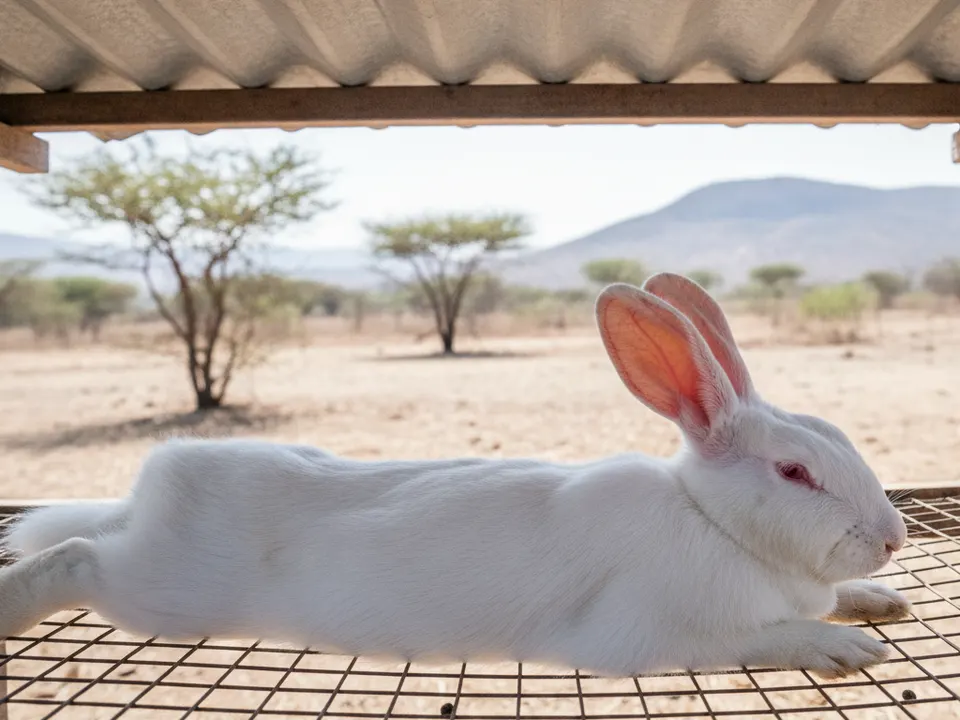
- Lying stretched out flat, often on the side or belly, trying to press against a cool floor.
- Ears feel hot to the touch and look red or pink because blood is rushing to them to lose heat.
- Less feeding, especially during the day, and drinking much more water than usual.
- Dull, quiet behaviour and not wanting to move or be handled.
- Damp fur around the mouth and chin from drooling or licking.
As it gets worse
- Breathing with the mouth open. Rabbits normally breathe only through the nose, so this is a very serious warning sign.
- Wet chin, nose and front paws from heavy drooling.
- Weakness, wobbling, falling over or being unable to stand.
- Bluish tinge to the lips or inside of the ears in some cases.
- Shaking, fits (convulsions) or twitching of the head and legs.
- Not responding when touched, collapse and, without quick help, death.
- In nursing does and kits, sudden deaths in the nest box on hot afternoons.
What to do right now
- Move the rabbit immediately, gently and calmly, into the coolest shaded place you have, such as a cool room, under a tree or on a shaded cement floor with moving air.
- Wet the ears with cool water using a damp cloth or sponge, because the ears are the rabbit's radiator. You can also dampen the fur lightly. Do not plunge the rabbit into cold or ice water, as this can send it into shock.
- Offer clean, cool drinking water in a shallow dish. If the rabbit cannot drink by itself, do not force water into its mouth, because it may choke or breathe it into the lungs.
- Improve airflow with a fan, or by fanning gently by hand. A plastic bottle of frozen water wrapped in a cloth placed beside the rabbit can help, as long as the rabbit can move away from it.
- Stop cooling once the rabbit is breathing more slowly, the ears feel only slightly warm and it starts to respond, so you do not chill it too much.
- Call your vet or animal health officer straight away, especially if the rabbit is breathing with its mouth open, cannot stand or is having fits. Rabbits can seem to recover and then get worse hours later.
- Check all the other rabbits at once. Give extra water, shade the hutches and reduce crowding, because if one rabbit is overheating others are likely close behind.
- Write down what happened: time, weather, number affected and any deaths. Do not give any medicines or home remedies unless your vet tells you to.
How it spreads
- Heat stress is not infectious and does not spread from rabbit to rabbit. It is triggered by hot conditions and poor management.
- Hot weather is the main trigger, especially in the hot dry months before the long and short rains and in hot lowland areas.
- Hutches under bare iron sheet (mabati) roofs with no insulation or ceiling get very hot by midday.
- Poor airflow, such as closed boxes, solid walls, or hutches crowded against a wall, traps heat and moisture.
- Overcrowding raises the temperature inside each cage because every rabbit gives off body heat.
- Running out of water, or water that is warm, dirty or hard to reach, quickly makes heat stress worse.
- Carrying rabbits to market or between farms in sacks, closed boxes or car boots in the sun is a common cause of sudden deaths.
- Handling, chasing, mating or weighing rabbits during the hottest hours of the day adds extra heat and stress.
Could it be something else?
Snuffles (Pasteurella respiratory infection)
Snuffles causes sneezing, thick white or yellow nose discharge and matted front paws. It lasts days or weeks and does not depend on the weather. Heat stress comes on during hot hours and usually improves quickly when the rabbit is cooled.
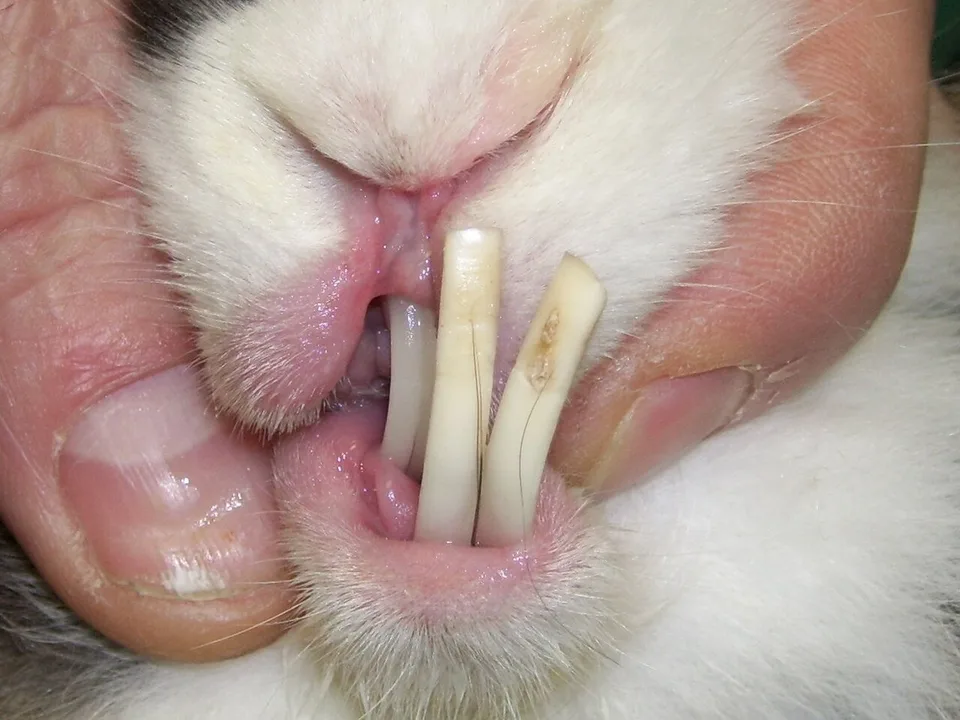
Dental disease (overgrown teeth, 'slobbers')
Overgrown teeth also cause a wet chin, but the rabbit drops food, loses weight over weeks and may have lumps on the jaw. Breathing and ear temperature are normal. Heat stress gives a wet chin together with fast breathing and hot red ears on a hot day.
Gut stasis or bloat (enteritis)
A rabbit with gut problems sits hunched, grinds its teeth, produces few or no droppings, or has diarrhoea, and the belly may be swollen or tight. Heat-stressed rabbits lie stretched out and breathe fast. Gut stasis can also follow heat stress, so both may occur together.
Poisoning or nervous disease (such as Encephalitozoon, which causes head tilt)
Poisoning or nervous disease can cause fits, but they occur regardless of temperature. There may be a history of new plants, sprayed feed or rat poison, or a slow-developing head tilt. Heat-related fits happen during hot weather together with very fast breathing and hot ears.
How it is diagnosed
A vet diagnoses heat stress mainly from the history and examination. They will want to know the weather, the housing, water supply, recent transport or handling, and how quickly signs started. They check the body temperature with a thermometer. A healthy rabbit is roughly 38.5–40 °C, and readings clearly above this, along with fast breathing and hot ears, point to overheating. The vet listens to the heart and lungs, checks the gums for dehydration and shock, and looks for other diseases that could make the rabbit less able to cope. There is no single lab test. Blood tests may be used in a clinic to check for organ damage. If rabbits die, a post-mortem can show congested (blood-filled) lungs and organs and help rule out infections such as pasteurellosis or viral haemorrhagic disease. To help the vet, write down when signs began, the temperature in the hutch if you have a thermometer, how many rabbits are affected and their ages, and whether they had water. Keep any dead rabbits cool and covered for examination.
Treatment
Treatment aims to cool the rabbit safely, replace lost fluids, support the organs and prevent complications. The vet will continue controlled cooling while checking the temperature so the rabbit is not overcooled. They often give fluids by injection under the skin or into a vein to treat dehydration and shock. Some clinics may give oxygen to rabbits struggling to breathe. Depending on the case, the vet may use anti-inflammatory pain relief, which they will choose carefully because of the risk to dehydrated kidneys. They may also use medicines that help the gut start moving again and supportive feeding, because gut stasis is a common problem after heat stroke. Antibiotics do not treat heat stress. A vet will only use them if there is a real secondary infection, and using them without need adds to antimicrobial resistance (germs becoming resistant to medicines). All treatment must be prescribed by a vet. If any drugs are used in meat rabbits, follow the withdrawal period (the waiting time before the meat is safe to eat) the vet gives you. Mildly affected rabbits often improve within hours. Severely affected rabbits may need close care for a day or more and can still die from organ damage despite good treatment.
Medicines must be prescribed and dosed by a vet. Always respect milk and meat withdrawal periods, and finish the full course of any antibiotic.
Prevention
- Give every hutch good shade all day. Plant trees or creepers, put up shade net, or build under a grass-thatch or makuti roof. Avoid placing hutches where the afternoon sun hits them directly.
- Insulate iron sheet roofs with a ceiling, a layer of grass thatch, or sacks on top, and leave a gap for hot air to escape. In very hot spells, wetting sacks on the roof or walls cools the house as the water evaporates.
- Make sure there is plenty of airflow. Use wire-mesh sides, raise hutches off the ground, keep openings facing the breeze, and avoid closed wooden boxes or hutches pushed against hot walls.
- Provide clean, cool water at all times and check it several times a day in hot weather. Rabbits drink much more in heat. Use more than one drinker or heavy clay pots that stay cool and do not tip over, and keep nipple drinkers in the shade so the water does not heat up.
- Avoid overcrowding. Give each rabbit enough space, reduce numbers per cage in the hot season and separate growers early.
- Feed concentrates in the cool early morning and evening when rabbits eat best, and offer fresh, clean, juicy greens that add water. Do not feed wilted or mouldy forage.
- Do all handling, mating, weighing and transport in the early morning or late evening. Transport rabbits in ventilated, shaded crates, never in sacks or closed car boots, and never leave them parked in the sun.
- Plan breeding so that late pregnancy and kindling (giving birth) avoid the hottest months where possible. Keep breeding bucks in the coolest part of the rabbitry, and keep nest boxes clean with only as much bedding as needed.
- Keep rabbits at a healthy body condition, because fat rabbits overheat faster. Groom or clip long-haired breeds like Angora before the hot season.
- Hang a simple thermometer in the rabbit house. When it rises towards 28–30 °C, start extra cooling such as wet sacks, more water and frozen water bottles in the cages.
Impact on your farm
Heat stress can wipe out profit on a rabbit farm quickly. A single hot afternoon can kill several rabbits, often the most valuable pregnant does, nursing does and heavy growers. Kits in nest boxes are especially likely to die. Rabbits that survive eat less, so growers take longer to reach market weight and feed is wasted. Does conceive less often, may lose pregnancies, produce less milk and give smaller litters. Bucks can become temporarily sterile, and fertility may take several weeks to return after the weather cools, which leaves gaps in the breeding calendar. Deaths during transport to market or to buyers are a common and costly loss in Kenya. For smallholders who rely on regular sales of meat rabbits or breeding stock, these losses can mean missed income for months.
Outlook and recovery
The outlook depends on how hot the rabbit got, for how long, and how quickly it was cooled. Rabbits caught early, with fast breathing and red ears but still alert, usually recover well once moved to shade and given water. Rabbits breathing with an open mouth, unable to stand or having fits are in serious danger, and many die even with treatment. Survivors may have kidney, liver or gut problems in the following days, so watch their eating and droppings closely. Bucks may take several weeks to regain full fertility. Pregnant does that survive may still lose their litter. Good housing and water management prevent most cases, which makes heat stress one of the most preventable causes of rabbit death.
Common questions
Can I dip my rabbit in a bucket of cold water to cool it quickly?
No. Putting a rabbit into cold or ice water can cause shock and can make it too cold, and wet fur dries slowly. Instead, wet the ears and lightly dampen the fur with cool water, put the rabbit in shade with moving air, and offer drinking water. Stop cooling once it is breathing more slowly and responding.
Why are my does not getting pregnant during the hot months?
Heat affects both sexes. Bucks exposed to high temperatures can become temporarily infertile, and this may last several weeks after the heat passes. Does under heat stress may not conceive, may lose pregnancies or may produce small litters. Keep bucks in the coolest part of the rabbitry, mate in the early morning or evening, and plan breeding around the hottest months where possible. If problems continue in cool weather, ask your vet to check for other causes.
Is it okay to keep rabbits under an iron sheet roof?
It can work, but bare iron sheets get very hot by midday and can push the temperature inside past what rabbits can tolerate. Add insulation such as a ceiling, a layer of grass thatch or sacks, leave space above the cages for hot air to escape, and keep the sides open with wire mesh. In very hot weather, wet sacks on the roof help cool the house.
Should I give antibiotics to a rabbit that collapsed in the heat?
No, not on your own. Heat stress is caused by high temperature, not germs, so antibiotics do not treat it. Using them without need wastes money and helps create resistant germs. The rabbit needs cooling, water and vet care. A vet may decide on other medicines such as fluids or pain relief, and will only use antibiotics if there is a real infection.
How can I keep rabbits cool if I have no electricity for fans?
Use shade from trees, shade net or thatch, and keep hutches raised with open mesh sides facing the breeze. Hang wet sacks on the roof or sides so evaporation cools the air. Freeze plastic bottles of water overnight if you or a neighbour has a fridge, or use clay pots of water, and place them in the cages for rabbits to lie against. Always give plenty of clean, cool water, and avoid handling rabbits in the afternoon.
My rabbits die when I take them to market. What am I doing wrong?
Transport is one of the most common causes of heat deaths. Rabbits packed in sacks, closed boxes or car boots, or left in the sun at a market or stage, overheat very quickly. Travel in the early morning, use ventilated crates with space for each rabbit, keep them shaded and out of direct sun, avoid long waits, and do not overcrowd.
A guide, not a diagnosis. This page is general information to help you recognise problems early. Always confirm with a vet or animal health worker before treating.