What it is
In rabbits, ringworm is mostly caused by a fungus called Trichophyton mentagrophytes. Less often, Microsporum canis, the type often carried by cats and dogs, is involved. These fungi are called dermatophytes, which means 'skin plants'. They feed on keratin, the tough protein that makes up hair, the outer layer of skin and claws. The fungus produces tiny seeds called spores. When spores land on skin that is slightly damaged, damp or belongs to a rabbit with weak defences, they grow into the hair shafts and the top layer of skin. The infected hairs become weak and break off close to the skin, leaving a bald patch. The skin reacts by producing scales and crusts. The infection spreads outwards in a ring, which is why the patches are often round and may look healthier in the middle. Some rabbits carry spores in their fur without showing any signs at all. These 'silent carriers' are a common reason why ringworm keeps coming back on a farm. If the rabbit scratches or the skin cracks, bacteria can enter and cause a secondary infection with pus, redness and pain.
Which animals are most at risk
Young rabbits, especially weanlings between about one and four months old, are most often affected because their immune systems are still developing and they are usually kept in groups. Does that are nursing, old rabbits and rabbits with other illnesses, poor nutrition or heavy mite burdens are also at higher risk. Any breed can get ringworm, including New Zealand White, California, Chinchilla and local crosses. Problems are more common in crowded rabbitries, in wooden hutches that are hard to disinfect, and in houses that are damp and poorly ventilated. In Kenya, cases often increase during the long and short rains when humidity is high and hutches stay damp. Farms that buy breeding stock frequently, use shared transport baskets, or let cats and dogs into the rabbit house face a higher risk of introducing the fungus.
Signs to look for
Early signs
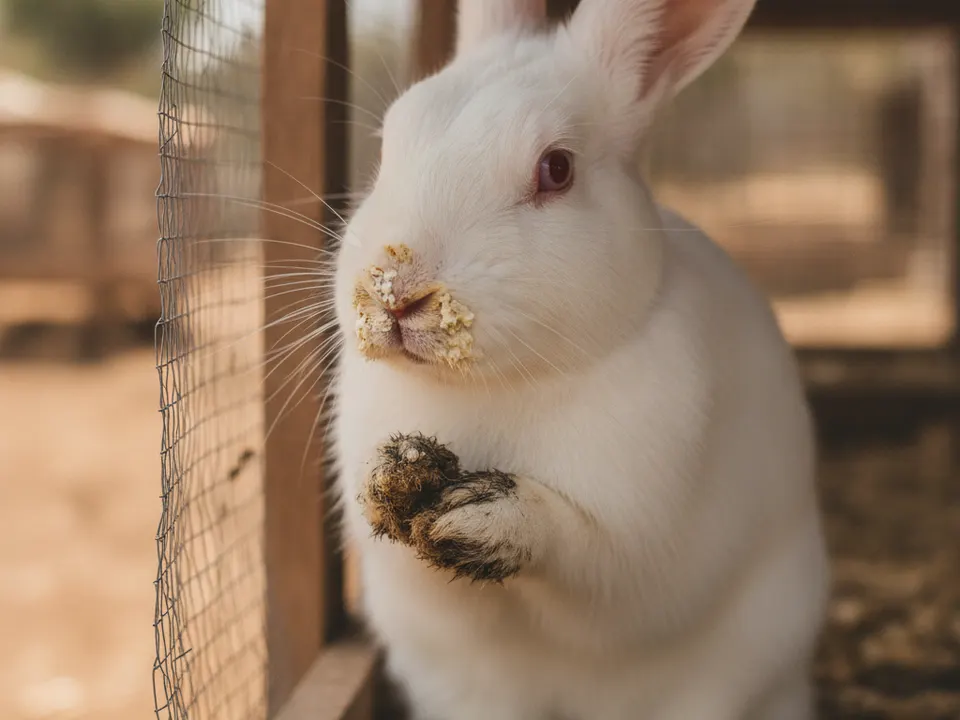
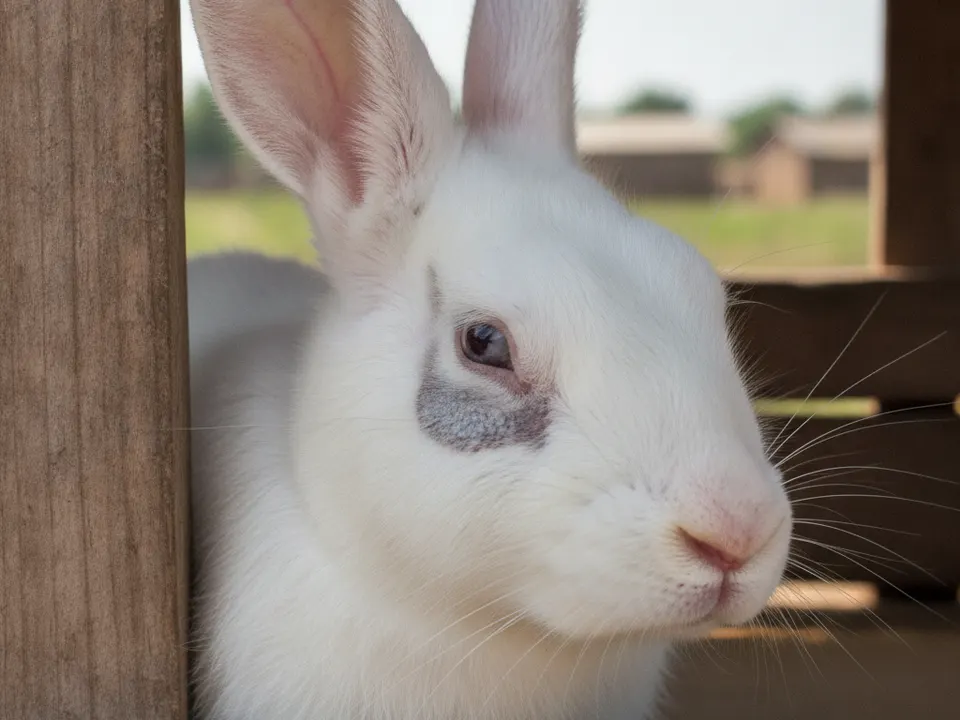
- One or a few small, round patches of thinning or missing fur, often around the eyes, the base or tips of the ears, the nose or the muzzle.
- Fine grey or white flakes like dandruff on and around the patch, sometimes with broken, stubby hairs at the edges.
- Slightly reddened or pinkish skin where the fur has fallen out.
- Mild scratching or rubbing of the face with the front paws, though many rabbits are hardly itchy at all.
- Fur that comes away easily when you gently touch the edge of the patch.
- The rabbit usually stays bright, active and eating normally, which makes the problem easy to overlook.
As it gets worse
- Patches that grow larger and join together, covering much of the face, ears, neck or body.
- Thick yellowish or grey crusts, sometimes raised and lumpy, over the bald areas.
- Infection of the front paws and around the nails, with scaly, crusty skin and occasionally misshapen claws.
- Moist, sore or pus-filled areas where bacteria have entered scratched skin, often with a bad smell.
- More intense scratching and restlessness if the skin becomes infected or very inflamed.
- Several rabbits in the same cage or row showing similar patches, and sometimes red, itchy ring-shaped rashes on the farmer or family members.
- Poor growth and weight loss in young rabbits with widespread disease, usually when another illness or poor feeding is also present.
What to do right now
- Wear gloves, or at least wash your hands well with soap and water, every time you handle an affected rabbit, and handle healthy rabbits first and sick ones last.
- Move the affected rabbit, and any rabbits sharing its cage, to a separate cage away from the main rabbitry, ideally one that is easy to clean such as a wire cage.
- Check every rabbit on the farm carefully in good light, looking at the face, ears, paws and back, and note which ones have patches.
- Remove and burn or bury soiled bedding, loose fur and hay from the affected cage, and keep the cage as dry and well ventilated as possible.
- Stop selling, buying or lending rabbits, especially breeding stock, until a vet has checked the herd, so you do not spread the fungus to other farms.
- Keep a separate brush, gloves and feeding container for the isolated rabbits, and do not share clippers or transport baskets.
- Keep children away from the affected rabbits, and if anyone in the family develops a red, itchy, ring-shaped rash, take them to a health facility.
- Avoid home remedies such as used engine oil, paraffin, strong disinfectants or crushed tablets on the skin, as these can burn the skin, poison the rabbit and delay proper treatment, then call your vet or County veterinary office for advice.
How it spreads
- Direct contact between rabbits, for example when young rabbits share a cage, when does nurse kits, or during mating.
- Spores left on hutches, cages, nest boxes, feeders, bedding, hay and wooden surfaces, where they can survive for many months, often longer than a year.
- Shared equipment such as brushes, nail clippers, carrying baskets, gloves and sacks used to move rabbits to market.
- People's hands and clothes, when a farmer handles an infected rabbit and then touches healthy ones without washing.
- Newly bought rabbits, especially from markets or other farms, that may be silent carriers with no visible patches.
- Cats, dogs and rodents around the rabbitry, which can carry ringworm fungi and bring them into the hutches.
- Damp, overcrowded, poorly ventilated housing, which allows spores to build up and makes the skin easier to infect.
- Stress from weaning, transport, poor feeding or another illness, which weakens the rabbit's natural defences and lets a carrier infection flare up.
Could it be something else?
Ear mites (ear canker, Psoroptes cuniculi)
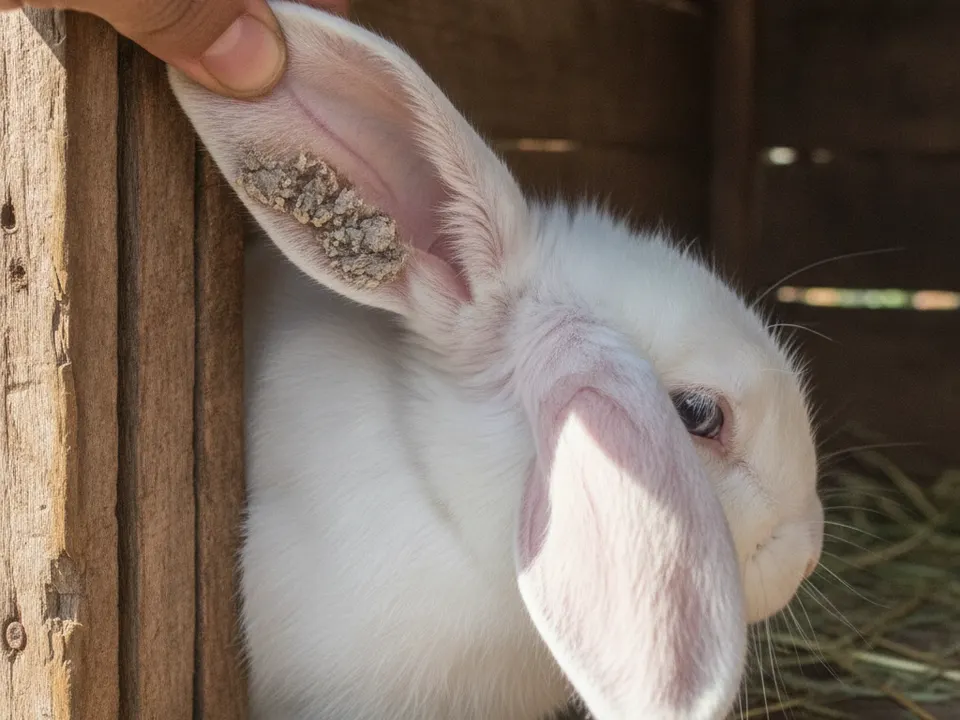
Ear mites cause thick, brown-grey, flaky crusts packed inside the ear canal and ear flap, with strong head shaking, ear scratching and sometimes drooping ears. Ringworm patches are usually on the outside of the ear, the face and paws, and the rabbit shakes its head much less.
Fur mites (Cheyletiella, 'walking dandruff')
Fur mites cause lots of dandruff and thin fur mainly along the back, between the shoulders and at the base of the tail. If you look closely in good light, some of the 'dandruff' may move. Ringworm patches are more clearly round and are usually on the head, ears and feet.
Mange (Sarcoptes or Notoedres mites)
Mange is usually very itchy. The rabbit scratches constantly and develops thick crusts on the nose, lips, eyelids, ears and toes, often spreading quickly with thickened, cracked skin. Ringworm is usually only mildly itchy. Because both can affect the face and paws, a vet's skin scraping is the safest way to tell them apart.
Fur chewing (barbering) or rabbit syphilis (treponematosis)
With barbering, rabbits chew each other's fur, leaving short, cut hair over normal-looking skin with no scales or crusts, often on the back or flanks. Rabbit syphilis causes crusty sores mainly on the nose, lips, eyelids and genital area, and is passed on during mating. Ringworm causes scaly, round, bald patches with broken hairs, and the genitals are usually not the main site.
How it is diagnosed
A vet will first examine the rabbit closely, looking at the shape and position of the patches and checking the ears, back and feet to rule out mites. They may use a special ultraviolet torch called a Wood's lamp. Some Microsporum infections glow green under this light, but the more common Trichophyton type usually does not glow, so a negative result does not rule ringworm out. The vet may pluck a few hairs and scrape a little scale from the edge of the patch to look at under a microscope for fungal spores. The most reliable test is a fungal culture, where hairs and scales are placed on a special growth medium in a laboratory. This can take one to three weeks to give a result. Some laboratories can also run faster DNA-based tests. A skin scraping for mites is often done at the same time because mites and ringworm can occur together. Before the vet arrives, write down when you first saw the patches, how many rabbits are affected, their ages, any new rabbits bought recently, whether cats or dogs visit the rabbit house, and whether anyone in the family has an itchy skin rash. Do not wash, clip or apply anything to the patches before the visit, because this can make the tests less accurate.
Treatment
Treatment depends on how many rabbits are affected and how severe the patches are, and it must be prescribed by a vet. For a few small patches, the vet may recommend topical treatment, meaning medicine applied to the skin, such as antifungal creams, shampoos or rinses containing drugs like miconazole or enilconazole. Fur around the patches may be gently clipped to help the medicine reach the skin, with the clippings safely destroyed. For widespread disease or a whole group of rabbits, the vet may prescribe an antifungal medicine given by mouth, such as griseofulvin or itraconazole. Griseofulvin can harm unborn kits, so it must never be used in pregnant does or breeding bucks unless the vet decides otherwise. Treatment usually lasts several weeks and should continue until the vet confirms the rabbit is clear, often with a repeat culture, because patches can look healed while spores are still present. Antibiotics do not kill ringworm fungus. They are only useful if a bacterial infection has developed in scratched or broken skin, and should be used only when a vet prescribes them, at the full course given, to reduce the risk of antimicrobial resistance. Many antifungal medicines are not approved for meat animals, so if you keep rabbits for meat, ask your vet about the withdrawal period, which is the time you must wait after treatment before slaughtering for food, and do not sell or eat treated rabbits before it has passed. The vet will also advise on cleaning the environment, because treating the rabbit without cleaning the hutch often leads to reinfection. Expect new hair to start growing back within a few weeks of effective treatment, although full recovery of a heavily affected herd can take one to three months.
Medicines must be prescribed and dosed by a vet. Always respect milk and meat withdrawal periods, and finish the full course of any antibiotic.
Prevention
- Quarantine every new rabbit for at least three to four weeks in a separate cage, checking the face, ears and paws regularly, before mixing it with your herd.
- Buy breeding stock from known, reputable breeders and inspect rabbits closely in good light before paying, rejecting any with scaly or bald patches.
- Avoid overcrowding, especially of weaners, and give each rabbit enough space so that skin-to-skin contact and stress are reduced.
- Keep the rabbit house dry and well ventilated, with a sound roof, raised hutches and good drainage, paying extra attention during the long and short rains.
- Clean cages regularly, removing droppings, fur and old bedding, and disinfect them between batches with a product your vet or agrovet confirms is effective against fungal spores, such as a diluted household bleach solution on surfaces that can tolerate it.
- Use wire or smooth, easy-to-clean materials where possible, since old, cracked wooden hutches hold spores and are very hard to disinfect.
- Do not share brushes, clippers, gloves, sacks or carrying baskets between rabbits or farms without cleaning them first.
- Feed a balanced diet of good-quality pellets or a well-planned mix of fresh forage, hay and clean water, and control mites and other illnesses, so rabbits have strong natural defences.
- Keep cats, dogs and rodents out of the rabbit house as much as possible, since they can carry ringworm fungi.
Risk to people
Ringworm is a zoonosis, which means it can pass from animals to people. Children, the elderly and people with weak immune systems are most likely to be infected. In people it usually shows as a red, itchy, slightly raised ring-shaped rash, often on the hands, arms, neck or face, and sometimes as scaly bald patches on a child's scalp. To protect yourself, wear gloves when handling affected rabbits or cleaning their cages, wash your hands well with soap and water afterwards, and change and wash clothes after working in the rabbitry. Do not let children cuddle or play with rabbits that have patches. Keep affected rabbits out of the house. If anyone develops a suspicious rash, visit a health facility and mention that your rabbits have ringworm, as human ringworm is treated with medicines prescribed by a health worker. If meat rabbits are treated, observe the withdrawal period your vet gives so that drug residues do not reach people who eat the meat.
Impact on your farm
Ringworm rarely kills rabbits, but it costs Kenyan rabbit farmers money in several ways. Rabbits with visible patches are hard to sell, especially as breeding stock, and buyers at markets or other farms may refuse them or pay much less. A farm that becomes known for skin problems can lose its reputation as a source of breeding animals. Young rabbits with heavy infections may grow more slowly, delaying the time they reach sale weight. Pelts from affected rabbits are damaged and of little value. Treatment takes time and money, because medicines, vet visits, laboratory tests and thorough cleaning of hutches all add up, and treated meat rabbits may need to be held back during the withdrawal period. Because the spores survive for a long time, a poorly controlled outbreak can keep returning batch after batch. There is also the cost and discomfort of family members or workers catching ringworm.
Outlook and recovery
The outlook is good for most rabbits. Ringworm is uncomfortable but rarely life-threatening, and some mild cases in healthy adult rabbits clear up on their own over weeks to a few months. With vet-guided treatment, most rabbits regrow their fur within a few weeks to a couple of months. Recovery is slower and less certain in very young rabbits, in rabbits with other illnesses or poor nutrition, and when bacterial infection has set in. The biggest reason for failure is reinfection from a contaminated hutch or from silent carriers in the herd. Farms that combine treatment with thorough cleaning, less crowding, dry housing and quarantine of new stock usually bring the problem under control.
Common questions
Is ringworm really caused by a worm?
No. Despite the name, ringworm is caused by a fungus, a tiny mould-like organism that lives on skin and hair. The name comes from the round, ring-like shape of the patches. Dewormers will not help, so do not waste money on them for this problem.
Can I catch ringworm from my rabbits?
Yes. Ringworm spreads easily from rabbits to people, especially children. It usually causes a red, itchy ring-shaped rash on the skin. Wear gloves when handling affected rabbits, wash your hands with soap afterwards, and keep children away from them. If someone in the family develops a rash, take them to a health facility for treatment.
Will the patches go away without treatment?
Some mild cases in strong, healthy adult rabbits do heal on their own over several weeks or months. However, during that time the rabbit keeps shedding spores that infect other rabbits, the hutch and people. Young rabbits and heavily affected ones may get worse. It is better to have a vet confirm the problem and advise on treatment and cleaning so the whole herd is protected.
Can I eat or sell a rabbit that has ringworm?
Ringworm affects the skin, not the meat, but affected rabbits should not be sold live because they will spread the infection to other farms. If your rabbit has been treated with antifungal medicine, you must wait until the withdrawal period given by your vet has passed before slaughtering it for food. Handle the carcass with gloves and dispose of the skin and fur safely, as they carry spores.
How do I clean a hutch after ringworm?
First remove all bedding, droppings, fur and leftover feed and burn or bury them. Scrub the hutch with soap and water to remove dirt, because disinfectants do not work well on dirty surfaces. Then apply a disinfectant that works against fungal spores, such as a diluted bleach solution or a product your vet or agrovet recommends, and leave it to dry fully in the sun if possible. Repeat cleaning regularly during treatment. Old, cracked wooden hutches are very hard to clean and may need repair or replacement.
Why does ringworm keep coming back on my farm?
The usual reasons are spores left in hutches and on equipment, rabbits that carry the fungus without showing signs, and conditions that weaken the rabbits, such as damp housing, overcrowding and poor feeding. New rabbits bought without quarantine, and cats or dogs visiting the rabbit house, can also bring it back. Treating all in-contact rabbits as your vet advises, cleaning thoroughly and improving housing usually breaks the cycle.
A guide, not a diagnosis. This page is general information to help you recognise problems early. Always confirm with a vet or animal health worker before treating.