What it is
The cause is a bacterium called Pasteurella multocida, sometimes with other germs such as Bordetella bronchiseptica or Staphylococcus joining in. Many healthy-looking rabbits carry Pasteurella deep in the nose without showing signs; these are called carriers. When the rabbit's defences drop, from ammonia fumes from urine, dust, poor ventilation, crowding, heat, cold draughts, transport, kindling (giving birth) or weaning, the bacteria multiply and inflame the lining of the nose and sinuses. This causes sneezing and pus-like discharge. Because the nose connects to the tear ducts, the middle ear and the windpipe, the infection can travel to the eyes (sticky, weepy eyes), the ear (head tilt and loss of balance), and the lungs (pneumonia). The bacteria can also be carried in the blood or through bites and wounds to form abscesses under the skin, in the jaw, or in the reproductive organs, causing womb infections in does and swollen testicles in bucks. Rabbit pus is very thick, like cream cheese, so abscesses do not burst and drain easily. Once a rabbit has had snuffles, the germ often stays hidden in its sinuses for life and can flare up again.
Which animals are most at risk
All rabbits can get snuffles, but the highest risk is in weaners (just after weaning), does around kindling and while nursing, and older breeding stock that have carried the germ for a long time. Rabbits kept in closed, poorly ventilated houses or hutches where urine collects and smells of ammonia are at great risk, as are units that are overcrowded or mix rabbits from different sources. Cases often rise during the cold, damp long and short rains when farmers close up houses and air goes stale, and during hot dry spells under iron roofs. Farms that buy breeding stock from markets or several different breeders, and those without a quarantine hutch, see more outbreaks. Both meat breeds such as New Zealand White and California and local crosses are affected; no breed is truly resistant.
Signs to look for
Early signs
- Sneezing, often several times in a row, and snorting or snuffling sounds when breathing.
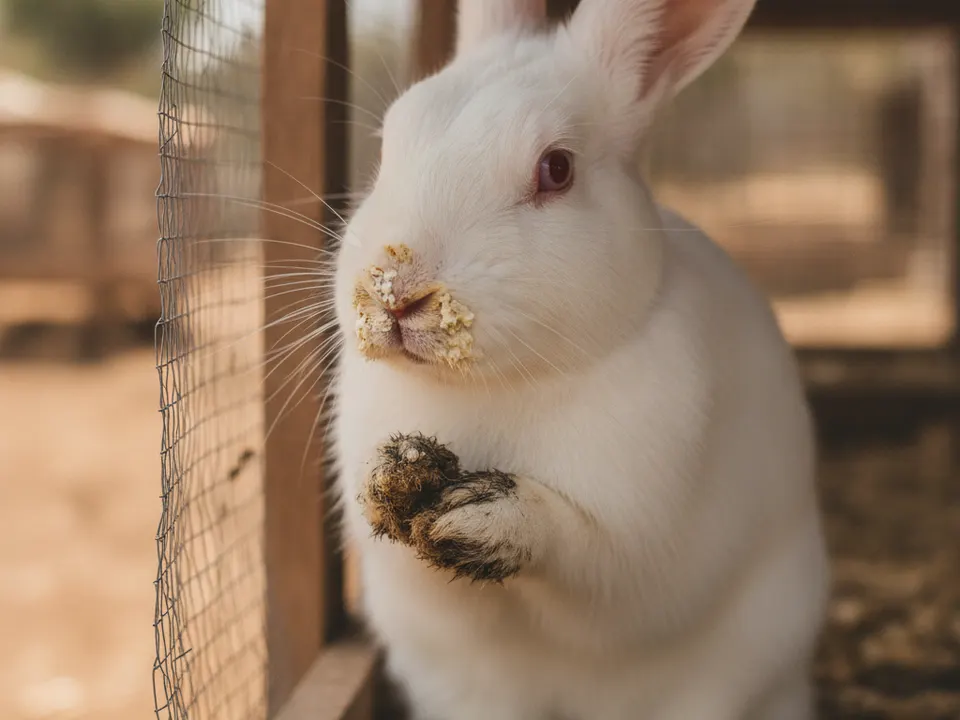
- Clear watery nasal discharge that soon becomes thick, white, cream or yellow.
- Wet, matted or crusty fur on the inner side of the front paws and legs, because rabbits wipe their nose with their paws.
- Watery or sticky eyes, sometimes with white pus in the corner of the eye and wet fur below it.
- Rubbing the face against the cage wire or floor.
- Slightly reduced appetite and less interest in pellets, while still drinking.
As it gets worse
- Noisy, laboured breathing, breathing with the mouth open, or flaring nostrils, which suggests the lungs are involved (pneumonia) and is an emergency.
- Head tilt (wry neck), rolling, circling or falling over, caused by infection spreading to the middle and inner ear.
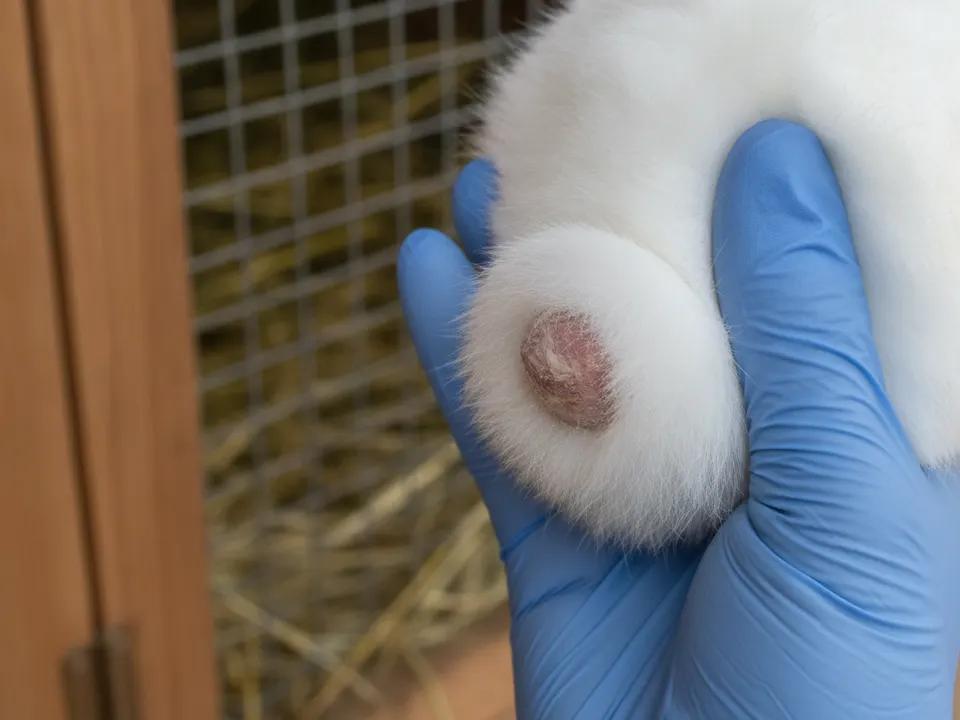
- Firm or soft lumps under the skin, on the jaw, face, neck or chest, which are abscesses full of thick pus.
- Weight loss, a bony back, dull rough coat and refusing food.
- In does, a smelly or bloody discharge from the vulva, failed pregnancies or small, weak litters; in bucks, swollen testicles.
- Sudden death with few signs, especially in young rabbits, when the bacteria reach the blood (septicaemia).
What to do right now
- Isolate every sneezing rabbit in a separate hutch, ideally in a different room or at the far end of the house, and handle it last after the healthy ones.
- Improve air flow immediately: open vents and windows during the day while avoiding cold draughts on the rabbits at night, and remove anything that blocks fresh air.
- Clean out urine trays and soiled bedding today so there is no ammonia smell, and replace dusty hay or sawdust with clean, dust-free bedding.
- Make sure the rabbit has constant clean, fresh water and its usual hay, greens and pellets; offer favourite fresh greens to keep it eating, because rabbits that stop eating can quickly develop serious gut problems.
- Gently wipe the nose and eyes with a clean cloth dipped in cooled boiled water, using a fresh piece for each rabbit, and wash your hands afterwards.
- Keep the rabbit calm, in shade, out of the sun and rain, and avoid handling, mating, transporting or selling it.
- Stop all movement of rabbits in and out of the unit, stop mating, and do not bring in new stock until the vet has advised.
- Write down which rabbits are affected, their signs, and the date, and call your vet or County Veterinary Officer; treat laboured breathing, head tilt or a rabbit that has stopped eating as urgent, and do not give any drugs until the vet has prescribed them.
How it spreads
- Direct nose-to-nose contact between rabbits, especially when they share a hutch or touch through wire walls.
- Droplets sneezed into the air, which travel short distances between hutches that are close together in a poorly ventilated house.
- Shared feeders, water bowls, nipple drinkers and hay that sick rabbits have sneezed on or soiled.
- From doe to kits around kindling and during nursing, which is why infected does often produce sickly litters.
- During mating, when bucks and does are put together; an infected buck can spread it to many does.
- Bringing in new breeding stock from markets or other farms without quarantine, since carriers look healthy.
- On the hands, clothes and equipment of people moving between hutches or farms.
- Stress triggers such as ammonia smell from dirty urine trays, dusty hay or sawdust, overcrowding, hot iron-sheet roofs, cold night draughts during the rains, and long journeys turn silent carriers into sick rabbits.
Could it be something else?
Dental disease (overgrown teeth or tooth root problems)
Rabbits with tooth problems drool, have a wet chin, drop food, lose weight and may have overgrown front teeth you can see. Long tooth roots can block tear ducts and cause eye and nose discharge on one side, but there is usually less sneezing. A vet checks the teeth and may X-ray the skull.
Dust or irritant sneezing
Sneezing after fresh dusty hay, sawdust or ammonia fumes is sudden, the discharge stays clear and watery, and the rabbit eats normally. It settles within a day or two once bedding is changed and ventilation improved. Thick white pus and matted paws point to infection instead.
Encephalitozoon cuniculi (a parasite affecting the brain and kidneys)
This parasite also causes head tilt, rolling and weakness, but usually without any history of sneezing or nasal discharge. Ear infection from Pasteurella often comes with snuffles signs or pus in the ear. A vet may need blood tests or X-rays to tell them apart.
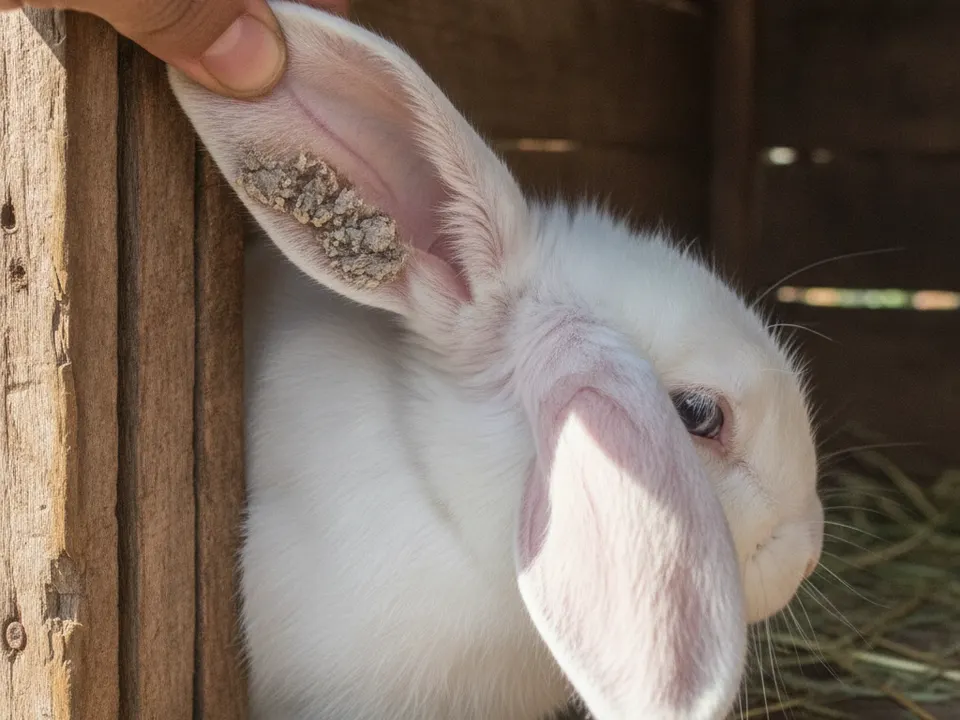
Ear mites (ear canker)
Ear mites cause thick, brown-grey, flaky crusts inside the ear flap, intense scratching and head shaking. You can see the crusts by looking into the ear. Pasteurella ear infection is deeper inside the head, so the outer ear often looks clean while the rabbit tilts its head.
How it is diagnosed
A vet usually suspects snuffles from the signs and the farm history. They will examine the nose, eyes, ears, teeth, chest and body for abscesses, listen to the lungs and check the reproductive organs. To confirm the germ and choose an antibiotic that works, the vet may take a deep nasal swab or a sample of pus for culture and sensitivity testing at a laboratory such as the Central Veterinary Laboratories at Kabete or a county or regional veterinary lab. X-rays can show pneumonia, ear damage or tooth root problems. When a rabbit dies, a post-mortem (examination of the body) is very useful for the whole herd, showing pus in the sinuses, lungs, ears or womb. To help, the farmer should note how many rabbits are sick, their ages, when signs started, recent purchases or shows, any recent stress like transport or a heat spell, and any drugs already given. If a rabbit dies, keep the body cool in a sealed bag (chilled, not frozen) and take it to the vet within a day.
Treatment
Treatment must be prescribed by a vet. Snuffles is bacterial, so the vet will usually prescribe an antibiotic, often as an injection or in water, chosen for safety in rabbits. Drugs commonly used include fluoroquinolones such as enrofloxacin, potentiated sulphonamides (trimethoprim-sulpha) and tetracyclines such as oxytetracycline, ideally guided by a culture and sensitivity test. It is very important that farmers never give rabbits antibiotics meant for other animals without vet advice: some, such as oral penicillins, amoxicillin, ampicillin, lincomycin and clindamycin, can upset the rabbit's gut bacteria and cause fatal diarrhoea. Courses for snuffles are often longer than for other animals, and stopping early or using the wrong drug encourages antimicrobial resistance, where the germs no longer respond, so finish the full course exactly as prescribed and never use antibiotics just to prevent disease. The vet may add pain relief and anti-inflammatory drugs, eye drops or ointment for infected eyes, steam or nebulisation to loosen mucus, and assisted feeding for rabbits that stop eating. Abscesses usually need surgical removal or opening and flushing by a vet, because the thick pus does not drain well, and antibiotics alone rarely clear them. Rabbits with head tilt may need long treatment and nursing, and some never fully straighten. For meat rabbits, the vet will tell you the meat withdrawal period, the time you must wait after the last dose before slaughtering, so that no drug residues reach consumers. Expect that signs may improve but the germ often stays hidden, so relapses are common; the vet may advise culling chronic or repeatedly sick breeding rabbits to protect the herd.
Medicines must be prescribed and dosed by a vet. Always respect milk and meat withdrawal periods, and finish the full course of any antibiotic.
Prevention
- Buy breeding stock only from clean, well-run farms that have no sneezing rabbits, and avoid buying from markets where rabbits from many sources are mixed.
- Quarantine every new rabbit in a separate hutch away from the main unit for at least two to three weeks, watching closely for sneezing, discharge or matted paws before mixing.
- Provide good ventilation without draughts: raise hutches off the ground, leave open mesh sides or vents high up, and avoid closing the house up tightly during the rains.
- Clean urine trays and remove droppings often, ideally daily in busy units, so the house never smells of ammonia; use slatted or wire floors and dry, dust-free bedding.
- Avoid overcrowding, keep one adult per hutch, give each rabbit enough space, and separate weaners into small groups rather than large crowded pens.
- Reduce stress: shade hutches from midday sun, insulate under iron roofs, handle rabbits gently, and plan transport for cool times of day.
- Feed a balanced diet with plenty of good hay or fodder, clean greens and quality pellets, plus constant clean water, so the immune system stays strong.
- Check every rabbit's nose, eyes and front paws weekly and before mating; never mate a sneezing rabbit, and consider culling breeding stock that keep relapsing, as they keep infecting kits.
- Clean and disinfect hutches, feeders and drinkers between occupants, and work from young and healthy rabbits to old and sick ones.
- Commercial Pasteurella vaccines for rabbits exist in some countries but are not widely available in Kenya; ask your vet about current options, and rely mainly on management and biosecurity.
Risk to people
Pasteurella multocida can occasionally infect people, usually through bites or scratches, causing a painful, swollen, red wound infection within a day or two. The risk from rabbits is low compared with cats and dogs, but children, elderly people, pregnant women and anyone with a weak immune system should take care. Wash hands with soap after handling rabbits, wear gloves when cleaning discharge or abscesses, and clean any bite or scratch well with soap and running water. See a doctor if a wound becomes swollen, hot or very painful, and mention you keep rabbits. Only slaughter meat rabbits after the drug withdrawal period has passed, so that no antibiotic residues reach your family or customers.
Impact on your farm
On a Kenyan rabbit farm, snuffles quietly eats into profits. Sick weaners grow slowly and take longer to reach slaughter weight, so feed costs rise per kilo of meat sold. Does with chronic infection may fail to conceive, abort, or produce small litters of weak kits that die young, cutting the number of rabbits for sale. Pneumonia can kill rabbits quickly, and abscesses or head tilt make rabbits unfit for sale. Buyers of breeding stock and rabbit associations often refuse rabbits with runny noses or matted paws, damaging a farm's reputation. Vet visits, drugs and the cost of replacing culled breeding stock add up, and meat cannot be sold during drug withdrawal periods. Because the germ spreads through the whole unit, one neglected case can turn into a long-running herd problem.
Outlook and recovery
The outlook depends on how early treatment starts and which parts of the body are affected. Mild, early snuffles often improves well with the right vet-prescribed antibiotic and better housing, although the rabbit may remain a carrier and flare up later under stress. Long-standing nasal infection is hard to clear completely because the germ hides in the sinus bones. Rabbits with pneumonia have a guarded to poor outlook and can die quickly, especially young ones. Head tilt may improve over weeks, and many rabbits learn to cope, but some stay tilted for life. Abscesses often return unless fully removed. Good ventilation, low stress, strong nutrition and culling chronic carriers give the herd the best long-term chance.
Common questions
Will snuffles go away on its own if I just wait?
Sometimes a very mild case seems to settle, but usually the infection keeps going and slowly spreads to the eyes, ears or lungs, and to other rabbits. Waiting often means a harder, longer treatment later. Isolate the rabbit, fix the housing and call your vet early.
Can I use the antibiotic I bought for my chickens or cows?
No, not without your vet's advice. Rabbits have a delicate gut, and some common antibiotics, especially penicillin-type drugs and some others given by mouth, can cause deadly diarrhoea in rabbits. The wrong drug or a short course also builds antibiotic resistance. Let a vet choose a rabbit-safe drug and the right course.
Why does my rabbit keep getting sick again after treatment?
Pasteurella often hides deep in the sinuses, where antibiotics cannot fully reach it, so the rabbit stays a carrier. Stress such as ammonia smell, heat, cold draughts, kindling or transport lets it flare up again. Improving ventilation, cleaning urine daily and reducing crowding helps most; repeatedly sick breeding rabbits may need to be culled.
Can I eat or sell meat from a rabbit that had snuffles?
A rabbit that has recovered can be eaten, but only after the full meat withdrawal period of any drug it received, which your vet will tell you. Do not slaughter rabbits with abscesses, fever, pneumonia or obvious illness for food. Ask your vet or meat inspector if unsure.
Is there a vaccine against snuffles in Kenya?
Pasteurella vaccines for rabbits are made in some countries, but they are not commonly available in Kenya and do not give complete protection. Ask your vet about what is currently available. For now, clean stock, quarantine, good ventilation and hygiene are the best protection.
Should I keep kits from a doe that has snuffles?
Kits from an infected doe often pick up the germ early in life. If the doe is valuable, your vet may help you plan, but many farmers choose not to keep her kits for breeding and to replace the doe with clean stock. Weaners from her can still be raised for meat if they stay healthy.
A guide, not a diagnosis. This page is general information to help you recognise problems early. Always confirm with a vet or animal health worker before treating.