What it is
A rabbit's gut is built to run on large amounts of fibre, mainly from hay and grass. Long fibre keeps the gut muscles moving, and the caecum (a large pouch at the start of the large intestine) holds friendly bacteria that ferment food. When the diet is low in fibre, for example mostly pellets, bread, maize bran, kitchen scraps or sugary vegetables, or when the rabbit is stressed, in pain, dehydrated or suddenly given a new feed, the gut slows down. Food and hair dry out inside the stomach and intestines. The balance of bacteria in the caecum changes, and harmful bacteria such as some Clostridium species can multiply, make gas and release toxins. Gas stretches the gut, which is very painful, and pain itself slows the gut further, creating a vicious cycle. In severe cases the stretched gut loses blood supply, toxins enter the blood and the rabbit goes into shock. Mucoid enteropathy in weaners is less well understood. It appears to involve disturbed gut bacteria at weaning, a low-fibre or sudden change of diet, and stress. The infectious form, epizootic rabbit enteropathy (ERE), spreads between rabbits in a unit, and its exact cause is still being studied, although bacteria are strongly suspected. In these young rabbits the large intestine fills with thick mucus, the caecum becomes impacted (packed hard with dry content) or bloated, and the rabbit stops eating and drinking. Underlying problems such as overgrown teeth, coccidiosis, a swallowed blockage or any painful illness can also trigger stasis, so it is often a sign of something else as well as a disease in its own right.
Which animals are most at risk
Weaners and growers, roughly from weaning up to about three months of age, are most at risk of mucoid enteropathy and ERE, especially in larger commercial units where many young rabbits are kept together. Adult rabbits of any breed can develop gut stasis, especially those fed mostly pellets or kitchen scraps, older rabbits with dental problems, does after kindling and rabbits recovering from other illness or surgery. Long-haired breeds such as Angora are more likely to swallow hair. In Kenya, risk often rises during the long and short rains when grass is wet and lush and hay may be scarce or mouldy, and during hot dry spells when water runs low and heat stress is common. Backyard hutches fed on sukuma wiki, cabbage and leftovers with little dry roughage, and commercial units that push pellets for fast growth, are both at risk.
Signs to look for
Early signs
- The rabbit eats less, picks only at favourite treats, or ignores pellets and hay altogether.
- Droppings become smaller, fewer, drier or misshapen, or there are no fresh droppings under the cage in the morning.
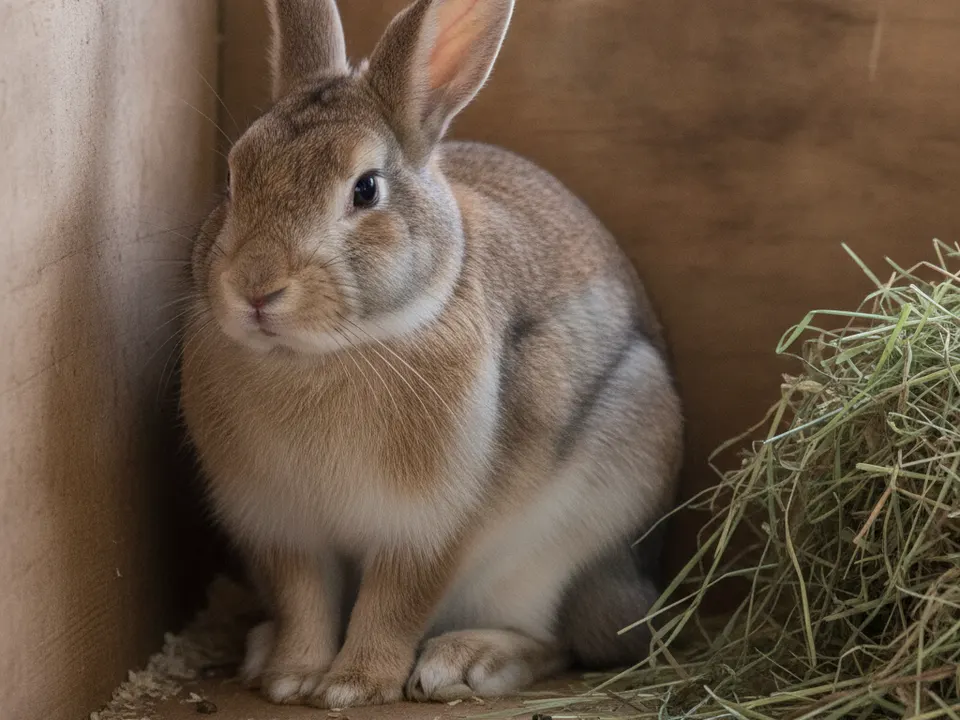
- The rabbit sits hunched and still in a corner, with half-closed eyes and less interest in its surroundings.
- Soft, quiet teeth grinding can be heard, which in rabbits is usually a sign of pain.
- The rabbit drinks less and its caecotrophs (the soft, shiny night droppings it normally eats) may be left smeared on the floor or fur.
- Gurgling gut sounds may be louder than normal at first, or the belly may be unusually quiet.
As it gets worse
- No droppings at all for many hours, or only thin strings of jelly-like clear or whitish mucus coming from the vent.
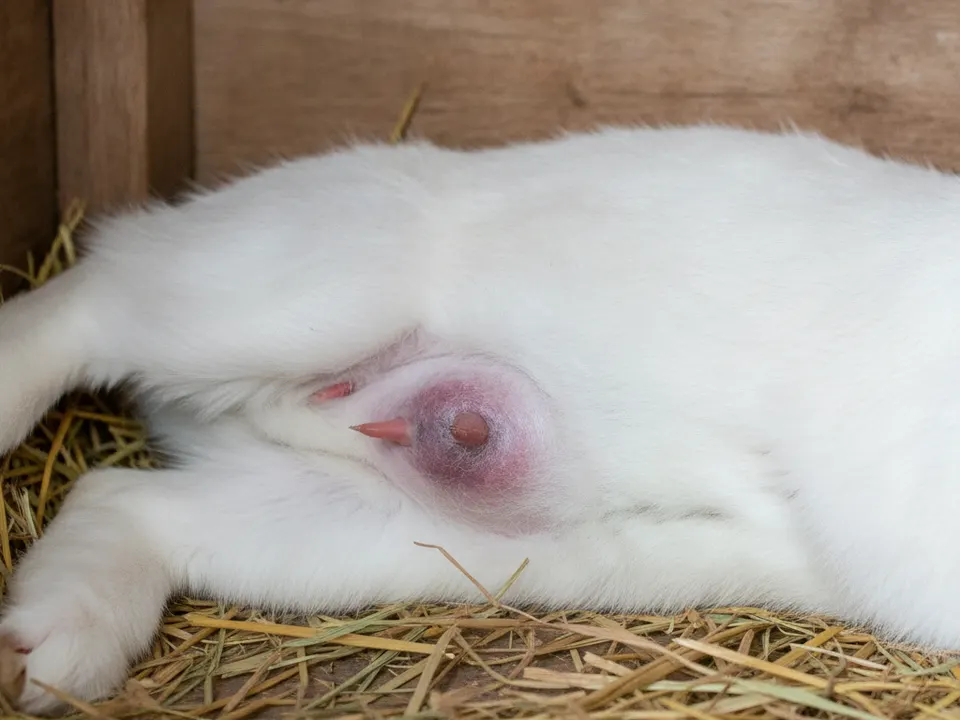
- The belly is swollen, tight or drum-like, and may slosh or feel doughy when gently touched.
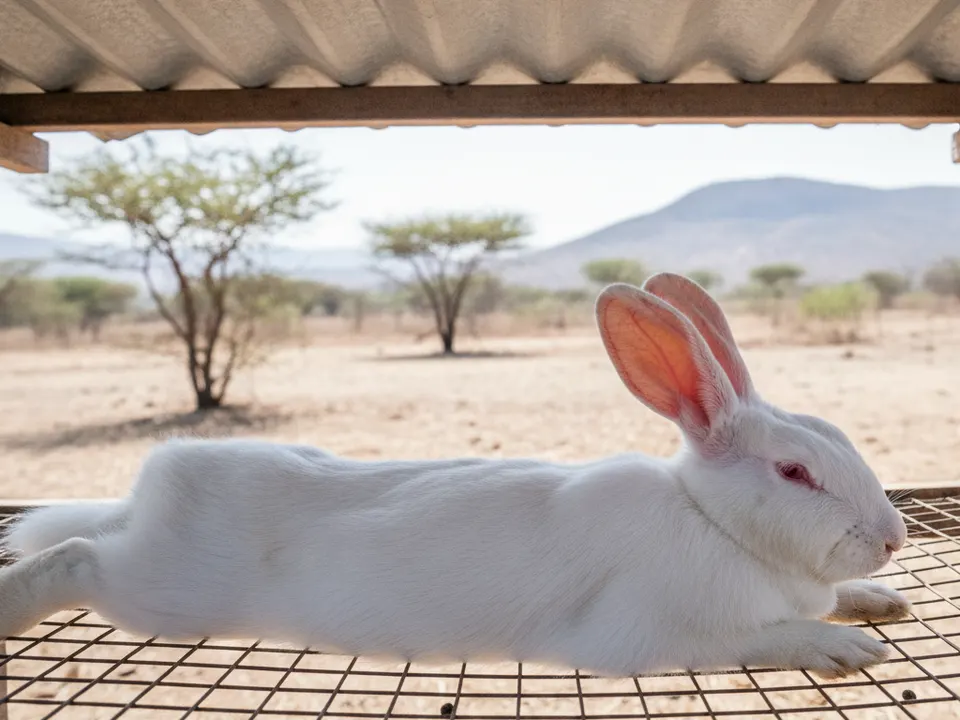
- Loud teeth grinding, pressing the belly against the floor, stretching out, or lying flat on one side because of severe pain.
- Cold ears and feet, weakness, and reluctance or inability to stand, which suggest shock and low body temperature.
- Dull, sunken eyes and skin that stays tented when gently pinched, showing dehydration.
- In weaners with mucoid enteropathy, several young rabbits in the same pen become dull, bloated and stop eating within a few days, and some may die suddenly.
What to do right now
- Check the rabbit carefully now: look under the cage for fresh droppings, see whether it is eating, and gently feel whether the belly is soft or tight and swollen.
- Call a vet or your County Veterinary Office the same day, and explain that the rabbit has stopped eating or passing droppings, because waiting even a day can be fatal.
- Keep the rabbit warm and quiet in a draught-free, shaded spot, and if its ears feel cold, give it a towel-wrapped bottle of warm (not hot) water to lie near.
- Offer plenty of good-quality, dry hay or fresh grass and clean, fresh water in both a bowl and a bottle, plus a few washed leafy greens to encourage eating and drinking.
- Stop all pellets, bread, grains, sugary treats and kitchen scraps until the vet has seen the rabbit, and do not give home remedies such as cooking oil, salt water or human medicines.
- Do not force-feed, massage hard or press on a tight, swollen belly, because a blocked or overstretched gut can be damaged; only gentle handling until the vet advises.
- If several weaners are affected, move sick rabbits to a separate clean cage, clean feeders and drinkers, and attend to healthy rabbits before sick ones.
- Wash your hands and change or clean footwear after handling sick rabbits, and write down each rabbit's age, feed, signs, when they started and any deaths.
How it spreads
- Low-fibre feeding is the most common trigger: rations based mainly on pellets, grains, maize bran, bread, chapati or kitchen waste, with little hay or grass.
- A sudden change of feed, such as switching pellet brands overnight or giving a large amount of fresh, wet or young lush greens to rabbits not used to them, upsets the gut bacteria.
- Weaning stress in young rabbits, including separation from the doe, a new cage, mixing litters and a diet change all at once, is a major trigger for mucoid enteropathy.
- The infectious form (ERE) spreads in rabbitries through droppings, contaminated cages, feeders, drinkers and the hands, boots and clothes of people moving between hutches.
- Not drinking enough, because water is dirty, warm, frozen in nipple lines, or the drinker is blocked or empty, lets gut contents dry out.
- Stress from heat, transport, dogs or predators near the hutch, loud noise, overcrowding or handling can make the gut slow down.
- Pain from overgrown or sharp teeth, injuries, urinary problems or other diseases makes a rabbit stop eating, which then leads to stasis.
- Mouldy or spoiled feed, eating hair when grooming during a moult, and swallowing carpet, cloth or sacking can contribute to slow gut and blockages.
Could it be something else?
Intestinal coccidiosis
Coccidiosis is caused by tiny parasites and is common in young rabbits on dirty floors. It usually causes watery or pasty diarrhoea, often with soiled back legs, weight loss and a pot belly over several days, rather than a sudden stop in droppings with jelly-like mucus. A vet can confirm it by finding coccidia eggs in a dung sample or gut lesions at post-mortem. The two problems can occur together.
Enterotoxaemia (Clostridium spiroforme)
This is a sudden, severe bacterial toxin disease, often after weaning, a diet change or the wrong antibiotic. Rabbits usually have brown, watery, sometimes bloody or foul-smelling diarrhoea and may die within hours to a day or two. Mucoid enteropathy and simple stasis show few or no droppings and mucus instead of watery diarrhoea. Only a vet and post-mortem can reliably separate them.
Dental disease (overgrown teeth)
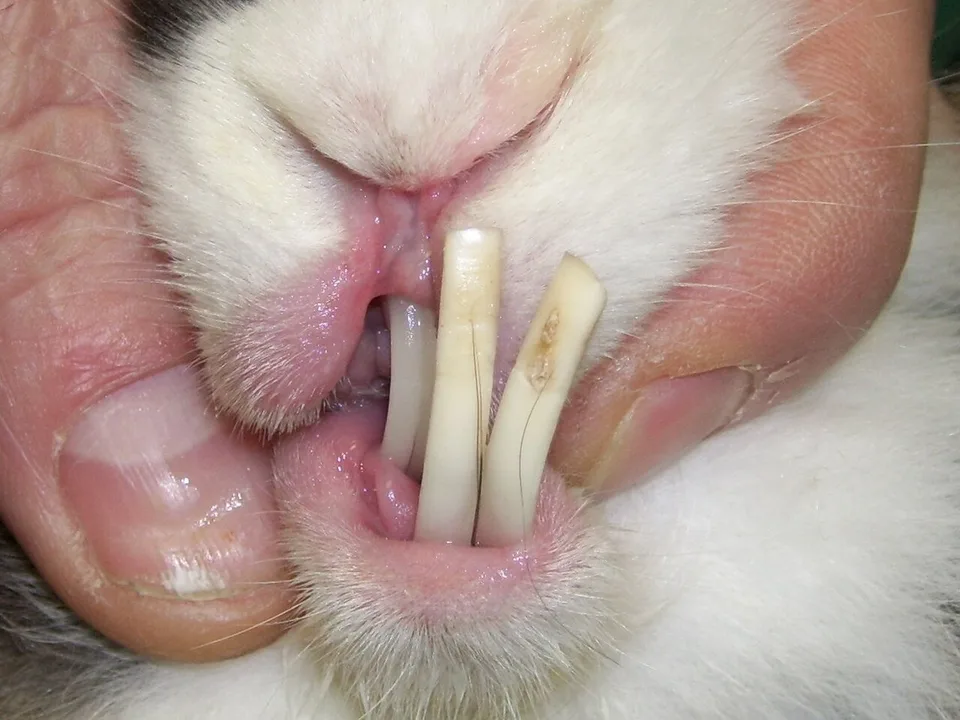
Rabbits with tooth problems may drool, have a wet chin, drop food from the mouth, pick at soft food only or lose weight slowly over weeks. They can develop stasis because they stop eating, so a vet should check the teeth in any rabbit with gut slowdown.
Intestinal blockage (obstruction)
A true blockage from a hair mat, swallowed fabric or a dried food plug often causes a very sudden onset, a rapidly swelling and very painful belly, and quick collapse. It can look like severe bloat, but it needs different treatment, so the vet will often use X-rays or careful examination to decide. Never force-feed a rabbit with a hard, swollen belly until a vet has ruled out a blockage.
How it is diagnosed
A vet starts by asking about the diet, recent feed changes, weaning, water supply and how long the rabbit has gone without eating or passing droppings. They will check body temperature, because a low temperature is a warning sign of shock, listen to the gut for sounds, gently feel the belly for gas, fluid or a hard impacted caecum, and examine the mouth and teeth. In clinics with equipment, X-rays help show whether there is gas spread through the gut or a single blockage, and blood tests can show dehydration and blood sugar levels, which help predict how serious the case is. A dung sample can be checked for coccidia. In a rabbitry where several weaners have died, a post-mortem on a fresh carcass is very valuable, because it shows mucus-filled intestines, an impacted caecum or signs of other diseases, and samples can be sent to a laboratory such as a county or national veterinary laboratory. To help the vet, note when the rabbit last ate and passed droppings, what it has been fed over the past two weeks, its age and whether others are affected, and keep any recent droppings or mucus in a clean bag. If a rabbit dies, keep the body cool, not frozen, in a sealed bag and contact the vet quickly.
Treatment
Treatment depends on whether the gut has simply slowed down, is bloated with gas, or is blocked, so a vet must examine the rabbit and prescribe everything. The main aims are to relieve pain, correct dehydration, get the gut moving again and support the rabbit's energy. Vets commonly give fluids by injection under the skin or into a vein, pain relief such as meloxicam (an anti-inflammatory) or buprenorphine (a stronger painkiller), and sometimes medicines that help the gut move, such as metoclopramide, once a blockage has been ruled out. Simethicone may be used to help break up gas, and the rabbit is kept warm. When it is safe, the vet may advise syringe feeding with a fibre-rich recovery food, and will show you how to do it. Antibiotics are not routine for simple stasis. They are used only when the vet suspects a bacterial problem, such as in ERE outbreaks or enterotoxaemia, and the choice matters greatly: some antibiotics given by mouth, including many penicillins, amoxicillin, lincomycin and clindamycin, can upset rabbit gut bacteria and cause fatal diarrhoea. Only use antibiotics a vet prescribes for rabbits, complete the course as directed and never share or reuse leftover drugs, because misuse drives antimicrobial resistance, which makes future infections harder to treat in animals and people. For outbreaks in commercial units, a vet may recommend medicated feed or water for a group alongside diet changes. Any rabbit treated with drugs and kept for meat must not be slaughtered for food until the withdrawal period on the label or set by the vet has passed. True blockages may need surgery, which carries real risk in rabbits. Expect daily checks on eating and droppings; improvement is usually seen within one to three days if treatment works.
Medicines must be prescribed and dosed by a vet. Always respect milk and meat withdrawal periods, and finish the full course of any antibiotic.
Prevention
- Make hay or dry grass the main part of the diet, available at all times, with pellets given in limited amounts rather than unlimited, because long fibre keeps the gut moving.
- Change feeds slowly over one to two weeks, mixing old and new pellets, and introduce fresh greens gradually in small amounts, especially lush, wet grass in the rains.
- Wean young rabbits gently: avoid changing the cage, the diet and the group all at once, keep weaners with litter-mates, and give plenty of hay during and after weaning.
- Provide clean, fresh water at all times, check nipple drinkers daily for blockages, and add extra drinkers and shade during hot weather.
- Store hay and pellets dry and off the floor, and throw away any feed that is mouldy, dusty, damp or smells bad.
- Keep cages clean and dry, remove droppings regularly, and clean and disinfect cages, feeders and drinkers between batches of weaners to reduce ERE and coccidiosis.
- Reduce stress by avoiding overcrowding, keeping dogs and predators away, handling rabbits calmly and providing shade and ventilation in hot spells.
- Check teeth, droppings and appetite daily, groom long-haired rabbits during moults, and quarantine new rabbits for at least two to three weeks before mixing them with the herd.
Risk to people
Gut stasis and mucoid enteropathy are not known to spread to people. However, sick rabbits may carry bacteria in their droppings, so wash your hands with soap after handling them or cleaning cages, and keep children from handling sick animals. If a vet treats rabbits kept for meat, follow the meat withdrawal period strictly so that drug residues do not end up in food, and do not eat rabbits that died of illness.
Impact on your farm
Gut stasis and mucoid enteropathy are among the most important causes of death in growing rabbits, and losses can be heavy in commercial units when ERE moves through a batch of weaners. Rabbits that survive often grow slowly, reach market weight late and use more feed for each kilo gained, which cuts into thin margins. In breeding does, illness can lead to poor milk, weak litters or lost pregnancies. Vet fees, medicines and the time spent nursing sick rabbits add costs, and meat rabbits under treatment cannot be sold until withdrawal periods end. For Kenyan smallholders who sell rabbits to hotels, butcheries or other breeders, repeated losses can damage reputation and contracts. The good news is that most prevention, such as more hay, slow feed changes, clean water and calm weaning, is cheap compared with the cost of lost rabbits.
Outlook and recovery
Outlook depends mostly on how quickly treatment starts and how sick the rabbit is when seen. Adult rabbits with mild stasis caught early, while they still have some appetite, normal body temperature and soft belly, often recover well with vet care and a high-fibre diet. Rabbits with a hard, bloated belly, low body temperature, collapse or a true blockage have a much poorer outlook, and some die despite treatment. Mucoid enteropathy and ERE in weaners carry a guarded outlook, and deaths in an affected batch are common, so prevention is far more reliable than cure. Rabbits that have had stasis once can get it again, especially if the diet or underlying cause, such as dental disease, is not corrected.
Common questions
How long can a rabbit go without passing droppings before I should worry?
A healthy rabbit produces droppings almost constantly through the day and night. If you see no fresh droppings for around 8 to 12 hours, or the rabbit has stopped eating, treat it as urgent and call a vet. Do not wait until the next day to see if it improves on its own, because rabbits can go downhill very fast.
Can I give my rabbit cooking oil or liquid paraffin to clear the gut?
No. Oils do not fix the underlying problem, can be breathed into the lungs and may make things worse, and they can hide a blockage that needs proper vet care. Offer hay, water and fresh greens, keep the rabbit warm, and let the vet decide which treatment is safe.
Why are my weaners dying with swollen bellies and jelly in their droppings?
This pattern is typical of mucoid enteropathy or the infectious form called epizootic rabbit enteropathy, which strikes rabbits around weaning. Low-fibre feeding, sudden diet changes, stress at weaning and spread between rabbits all play a part. Call a vet quickly, separate sick rabbits, clean cages and equipment, increase hay for the whole group and ask the vet about a post-mortem on a fresh carcass so the cause can be confirmed.
Are pellets bad for rabbits?
Pellets are not bad, and good-quality pellets supply useful protein, minerals and vitamins, especially for fast-growing meat rabbits. The problem comes when pellets replace hay and grass. Keep hay or dry grass available all the time, give pellets in measured amounts, and make any change of pellet brand slowly over one to two weeks.
Can I give my rabbit an antibiotic from the agrovet to be safe?
Please do not. Many common antibiotics, especially some given by mouth, can kill the helpful bacteria in a rabbit's gut and cause deadly diarrhoea. Simple gut stasis often does not need antibiotics at all. Only use antibiotics that a vet has prescribed specifically for rabbits, follow the instructions exactly and respect the meat withdrawal period.
Is sukuma wiki or cabbage safe for rabbits?
Small amounts of washed, fresh leafy greens can be part of a rabbit's diet, but they should not be the main feed, and large amounts of cabbage or wet, freshly cut greens given suddenly can upset the gut and cause gas. Build the diet on hay or dry grass, introduce greens gradually, and avoid wilted, mouldy or spoiled vegetables and leftovers.
A guide, not a diagnosis. This page is general information to help you recognise problems early. Always confirm with a vet or animal health worker before treating.