What keeps them healthy
A rabbit stays healthy when its gut, teeth, housing and stress levels are all in balance. The rabbit's digestive system is built to process large amounts of fibre, mainly from hay and grasses. Fibre keeps the gut moving, feeds the helpful bacteria in the caecum (a large pouch at the start of the large intestine where food is fermented) and wears down the teeth. A rabbit's teeth grow throughout its life, so constant chewing of rough fibre keeps them the right length. The caecum produces soft, sticky droppings called caecotrophs, which the rabbit eats straight from its bottom, usually at night or early morning, to take in vitamins and protein made by gut bacteria. This is completely normal and essential. Rabbits cannot vomit, so anything that slows the gut, such as low fibre, too much starch or sugar, sudden feed changes, stress or pain, can quickly lead to a dangerous gut slowdown. Clean, dry, well-ventilated housing protects the lungs from ammonia (the sharp smell from urine) and reduces coccidia and other germs. Shade and airflow matter because rabbits do not sweat and cope poorly with heat. Calm handling, enough space and a steady routine keep stress low, which keeps the immune system strong.
What to keep an eye on
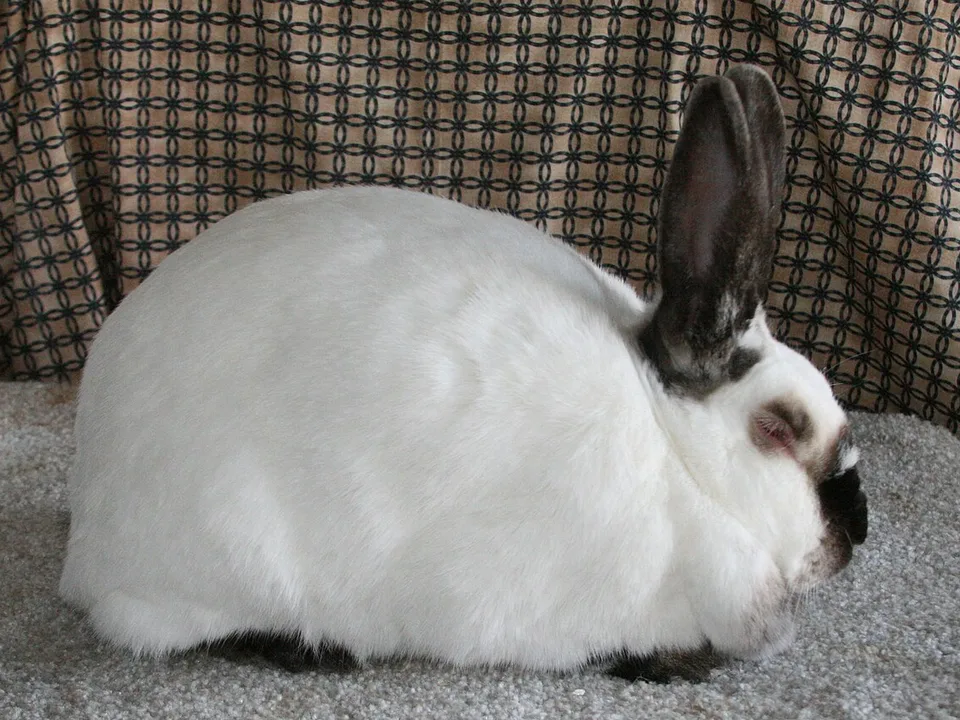
Every rabbit benefits from regular health checks, but some need closer watching. Young rabbits around weaning, usually four to eight weeks old, are the most fragile because their gut is still adapting and they are prone to diarrhoea and coccidiosis. Pregnant and nursing does need more water and good feed, and their condition can drop quickly. Older rabbits are more likely to develop tooth problems and arthritis. Heavy, thick-coated breeds such as Flemish Giant, and long-haired rabbits, suffer more in heat, while all breeds common in Kenya, including New Zealand White, Californian and Chinchilla, are sensitive to high temperatures. The hot, dry months and hot lowland areas raise the risk of heat stress, while the long and short rains bring damp hutches, wet or mouldy forage and more breathing and gut problems. Rabbits in crowded, poorly cleaned or poorly ventilated hutches, and those fed mostly on kitchen waste, wet greens or too many pellets with little hay, are at higher risk of illness.
Normal vs warning signs
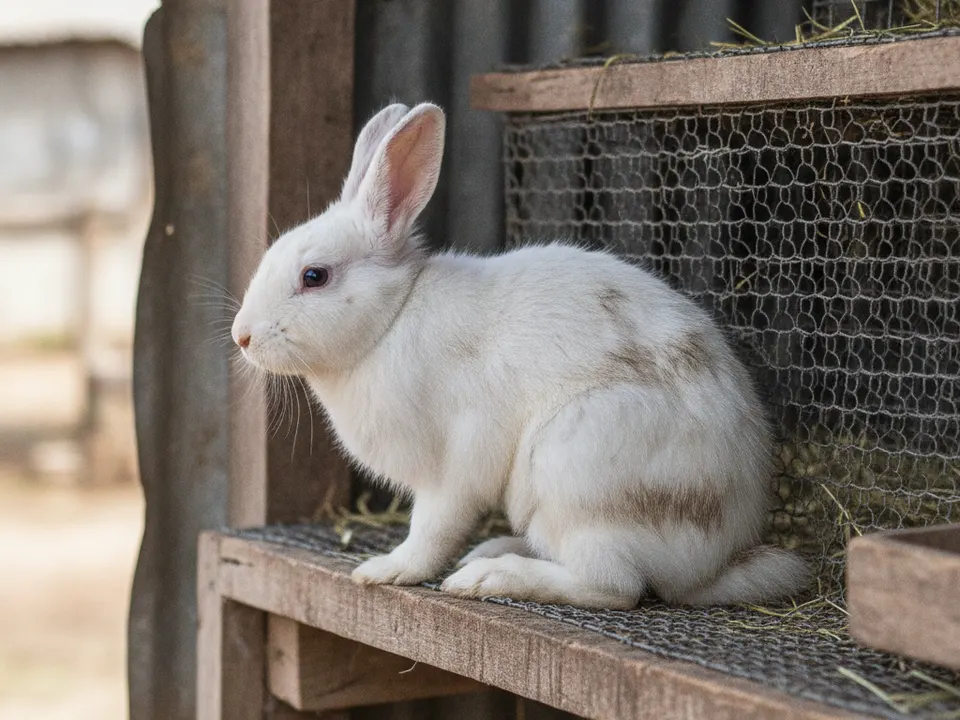
Signs of good health
- The rabbit is alert and curious, with ears moving towards sounds, and it comes forward or reacts normally when you approach the hutch.
- Eyes are bright, clear and fully open, with no discharge, crust, cloudiness or wet fur below them.
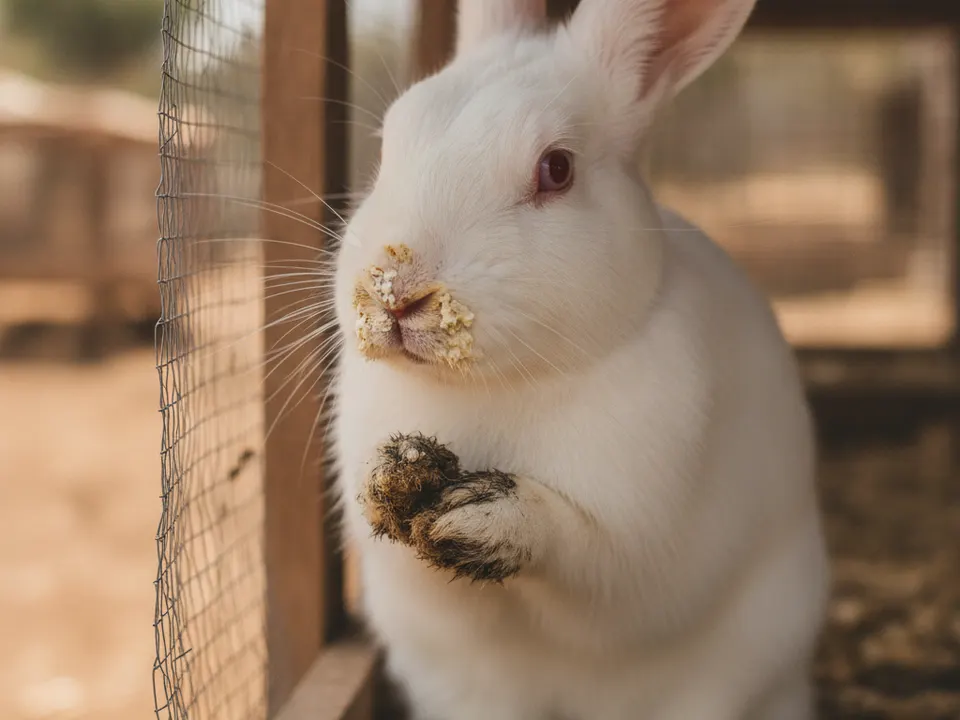
- The nose is clean and dry or slightly damp, with no white or yellow discharge and no matted fur on the inside of the front legs, which rabbits use to wipe their faces.
- The coat is smooth, clean and even, with no bald patches, crusts, dandruff or dirty, wet fur around the bottom.
- Droppings are plentiful, round, dry, fairly uniform in size and crumble when pressed; a healthy adult produces a large number each day.
- Caecotrophs, if you see them, are soft, shiny, dark clusters like a small bunch of grapes, usually eaten straight from the bottom so you rarely find them.
- The rabbit eats hay or grass on and off through the day and night, drinks regularly and chews with a steady side-to-side motion.
- Normal body temperature is about 38.5–40 °C, breathing is quiet and even through the nose, and the rabbit moves with a smooth hop, using all four legs.
First signs something is wrong
- Eating less, refusing pellets or favourite greens, or not eating at all is an urgent warning sign in a rabbit.
- Small, few, misshapen or no droppings for around 12 hours or more suggests gut slowdown, which can become life-threatening quickly.
- Sitting hunched in a corner, reluctant to move, eyes half-closed, or loud teeth grinding usually means pain.
- Runny or sticky droppings, a dirty wet bottom, or uneaten caecotrophs piling up in the hutch point to a gut or diet problem.
- Discharge from the nose or eyes, sneezing, wet fur on the front legs, or noisy or open-mouth breathing suggest infection or heat stress.
- Drooling, a wet chin, dropping food, or chewing awkwardly may mean overgrown or damaged teeth.
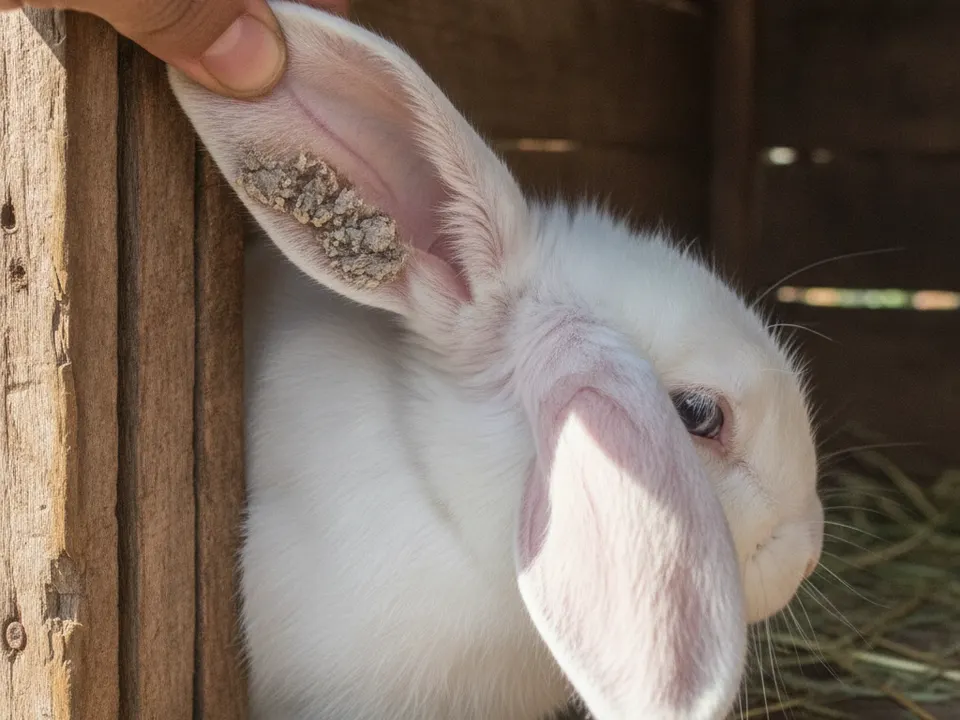
- Head tilt, losing balance, scratching ears constantly, crusty ears, bald or scabby patches, or a swollen belly all need a vet check.
- Temperature below about 38 °C or above about 40.5 °C, especially with dullness, is a serious sign; lying stretched out panting with hot ears in hot weather is heat stress.
Daily routine
- Watch each rabbit for a minute before touching it, noting appetite, alertness, posture and breathing, so you learn what is normal for that animal.
- Check droppings, leftover feed and water every day, because a drop in eating or droppings is often the very first sign of trouble.
- Move any rabbit that looks unwell into a clean, quiet, shaded hutch away from the others, with fresh hay and water close by.
- Keep the sick rabbit cool in hot weather and out of draughts and rain in cold or wet weather.
- Record the date, what you saw, the temperature if you took it, and any feed or weather changes, so the vet has clear information.
- Wash your hands after handling rabbits, especially any with skin problems or discharge, and clean equipment between hutches.
- Call your vet or animal health assistant the same day if a rabbit stops eating or passing droppings; do not give any medicines without veterinary advice.
Common risks
- Good health builds from a high-fibre diet: unlimited clean hay or dry grass forms the base, with fresh greens and a measured amount of rabbit pellets on top.
- Clean, fresh drinking water available at all times keeps digestion moving and helps the rabbit cope with heat, even when it eats plenty of greens.
- Gradual feed changes over about one to two weeks give gut bacteria time to adjust; sudden changes are a common trigger for bloat and diarrhoea.
- Dry, clean hutches with regular removal of droppings and wet bedding reduce coccidiosis, sore hocks and breathing problems.
- Good ventilation without strong draughts keeps ammonia low and protects the nose and lungs.
- Shade and cool housing during hot months and in hot lowland areas prevent heat stress.
- Quarantining new rabbits for about two to three weeks before they join the herd keeps mange, snuffles and other infections out.
- Calm, correct handling, supporting the back and hindquarters, prevents injuries and reduces fear and stress.
Often mistaken for illness
Eating caecotrophs (mistaken for a bad habit or diarrhoea)
Healthy rabbits eat soft, shiny caecotrophs straight from the bottom, usually at night or early morning. This is normal. Diarrhoea is watery or pasty, smells bad, soils the fur around the bottom and comes with fewer normal round droppings.
Red, orange or cloudy urine (mistaken for blood)
Plant pigments can turn normal rabbit urine yellow, orange, red or brown, and extra calcium can make it cloudy or chalky. A healthy rabbit with coloured urine still eats, drinks and behaves normally. Real blood often appears as spots or streaks, may come with straining or a wet bottom, and needs a vet.
Moulting (mistaken for mange or ringworm)
During a moult, fur comes out in tufts or lines, often with a visible line of new fur, and the skin underneath looks clean and smooth. Mange and ringworm cause crusts, scabs, flaky or thickened skin and itching, often around the ears, face, nose or feet.
Nest building and fur pulling by a doe
A pregnant or falsely pregnant doe carries hay in her mouth and pulls fur from her chest, belly and dewlap (the fold of skin under the chin) to line a nest, usually near kindling. She stays bright and keeps eating. Fur loss with scabs, sores or itching is a skin problem, not nesting.
Doing a health check
A home health check takes a few minutes and is best done at the same time each day, ideally at feeding. First, watch before touching: is the rabbit alert, eating, moving normally and breathing quietly? Check the feed and water from yesterday and count roughly how many droppings there are and what they look like. Then handle the rabbit calmly on a non-slip surface such as a sack on a table. Never lift a rabbit by its ears or the loose skin alone. Place one hand under the chest and the other under the hindquarters, and hold it close to your body. Rabbits can break their backs if they kick hard while unsupported. Look at the eyes, nose, ears, teeth (gently lift the lips to see the front teeth meet evenly), front legs, coat, belly, feet and bottom. Feel along the spine and hips: you should feel bones under a slight layer of flesh, not sharp bones and not thick fat. To take temperature, use a digital thermometer with a flexible tip, lubricated with a little petroleum jelly. It is easiest with two people: one holds the rabbit securely on its back or side, supporting the spine, while the other gently inserts only the tip, about 1–2 cm, into the rectum at a slight angle and waits for the beep. Normal is about 38.5–40 °C. Stop if the rabbit struggles hard. Breathing is normally about 30–60 breaths a minute at rest, faster when warm or excited. Weigh growers and breeding stock regularly on a kitchen or hanging scale and record weights. If you call the vet, have ready your records: age, breed, weight changes, feed and any recent changes, when the problem started, droppings and temperature, and how many other rabbits are affected.
Routine vet care
Routine vet care keeps a rabbit unit healthy and profitable. A vet or animal health officer can do a whole-herd health check, looking at housing, ventilation, feeding, hygiene and record keeping, and advise on improvements. They can check teeth, body condition, skin, ears and feet, and examine breeding does and bucks before mating. Coccidiosis, mange and ear mites, and snuffles (a breathing infection often linked to Pasteurella bacteria) are among the common problems on Kenyan farms, and your vet can advise on prevention plans and, if needed, prescribe treatment. Ask your vet which rabbit vaccines, if any, are available and recommended in your area, because availability in Kenya is limited and changes over time. Faecal (dung) tests help decide whether parasite treatment is needed, instead of treating blindly. Any medicine, including anticoccidials, antibiotics and anti-parasite drugs, must be prescribed by a vet, because rabbits react badly to some drugs used in other animals, and some antibiotics given by mouth can upset their gut bacteria and cause fatal diarrhoea. Using antibiotics only when truly needed also slows antimicrobial resistance, where germs stop responding to medicines. If rabbits are kept for meat, always follow the meat withdrawal period on the label or given by the vet before slaughter or sale.
Keeping them healthy
- Give unlimited clean, dry hay or dry grass every day as the main part of the diet, because fibre protects the gut and wears down the teeth.
- Add fresh greens such as clean sukuma wiki, lucerne, sweet potato vines or other safe forages, introducing anything new slowly and avoiding wet, wilted, fermenting or mouldy greens.
- Feed rabbit pellets in measured amounts rather than filling the feeder, as too many pellets and starchy kitchen waste can upset the gut and cause obesity.
- Provide clean water at all times in a drinker or heavy bowl, and clean drinkers often to stop slime and germs building up.
- Build or raise hutches off the ground in a shaded, well-ventilated spot, protect them from rain, and clean out droppings and wet bedding regularly to cut coccidiosis and ammonia.
- Avoid overcrowding, give each rabbit enough space to stretch and hop, and separate bucks and growing rabbits as needed to prevent fighting.
- Quarantine new or returning rabbits for about two to three weeks, check them for mites, discharge and diarrhoea, and buy only from healthy, reputable sources.
- Keep good records of births, weaning, weights, feed, illness and treatments, and plan regular checks with your vet or animal health officer.
Risk to people
Healthy, well-kept rabbits pose little risk to people, but good hygiene still matters. Rabbits with skin problems can sometimes carry ringworm (a fungal infection) or mites that can cause an itchy rash in people, and scratches or bites can become infected. Wear gloves when handling rabbits with skin lesions, wash hands with soap after handling rabbits, cleaning hutches or collecting manure and urine, and keep children supervised. If rabbits have been treated with medicines, follow the meat withdrawal period so no drug residues reach consumers.
Impact on your farm
Healthy rabbits grow quickly, breed well and give a reliable income from meat, breeding stock, manure and urine sold as fertiliser. Does can produce several litters a year, so a doe that stays healthy is very valuable. Because rabbits hide illness and can deteriorate within a day, small farms in Kenya often lose animals that could have been saved if a change in appetite or droppings had been noticed early. Losses at weaning from diarrhoea and coccidiosis, poor growth from bad feeding, and failed breeding from heat stress or poor condition all cut profit. A few minutes of daily checking, good feeding and clean housing usually cost far less than replacing dead stock, buying medicines, or losing a buyer's trust. Regular weighing and records also show which does and bucks perform best, helping you improve your herd over time.
Long-term health
Rabbits that are well fed, kept in clean, cool, dry housing and checked daily usually stay healthy and productive for several years. The main danger is that rabbits hide illness, so problems are often found late. When a change such as reduced eating, fewer droppings, discharge or hunching is noticed early and a vet is called promptly, the chances of recovery are much better. Rabbits that go a day or more without eating or passing droppings, or that are badly heat stressed, have a much poorer outlook. Knowing what normal looks like for each of your rabbits is the single best way to protect them.
Common questions
Is it normal for my rabbit to eat its own droppings?
Yes. Rabbits eat special soft droppings called caecotrophs, usually at night or early morning, straight from the bottom. These carry vitamins and protein made by gut bacteria and are essential for health. The hard, round droppings you see in the hutch are not normally eaten. If you find lots of uneaten soft droppings stuck to the bottom or lying in the hutch, the diet may have too little fibre or the rabbit may be too fat or sore to reach, so check feeding and ask your vet.
My rabbit's urine is red or orange. Is it bleeding?
Often not. Pigments from plants and some greens can turn normal rabbit urine yellow, orange, red or brown, and extra calcium can make it cloudy. If the rabbit is eating, drinking and behaving normally, it is usually fine. Call the vet if you see clear blood spots or clots, straining, a wet or burnt-looking bottom, or if the rabbit is dull or off its food.
How long can a rabbit go without eating?
Not long. A rabbit that stops eating or stops passing droppings can develop a dangerous gut slowdown within hours. If a rabbit has eaten little or nothing, or has passed few or no droppings, for around 12 hours, treat it as an emergency and call your vet the same day. Do not wait to see if it improves overnight.
How do I know if my rabbit is too thin or too fat?
Run your hand along the spine and over the hips and ribs. In a rabbit in good condition you can feel the bones under a thin, even layer of flesh. If the bones feel sharp and prominent, the rabbit is too thin. If you cannot feel the ribs or spine at all, and there are fat rolls, it is too fat. Weighing your rabbits regularly and writing it down helps you spot slow weight loss that you might not see.
Do rabbits still need water if they eat lots of greens?
Yes. Greens contain some water, but rabbits need clean, fresh drinking water at all times, especially nursing does, growing rabbits and all rabbits in hot weather. Lack of water slows the gut, reduces appetite and milk production, and makes heat stress much worse. Check drinkers twice a day, because they can block, leak or get knocked over.
How often should I check my rabbits?
Look at every rabbit at least twice a day, usually at morning and evening feeding, checking appetite, droppings, water and behaviour. Do a quick hands-on check of eyes, nose, ears, teeth, coat, feet and bottom about once a week, and weigh growers and breeding stock regularly. Ask your vet or animal health officer to visit for a herd health check from time to time, and whenever you notice a problem in more than one rabbit.
A guide, not a diagnosis. This page is general information to help you recognise problems early. Always confirm with a vet or animal health worker before treating.