What it is
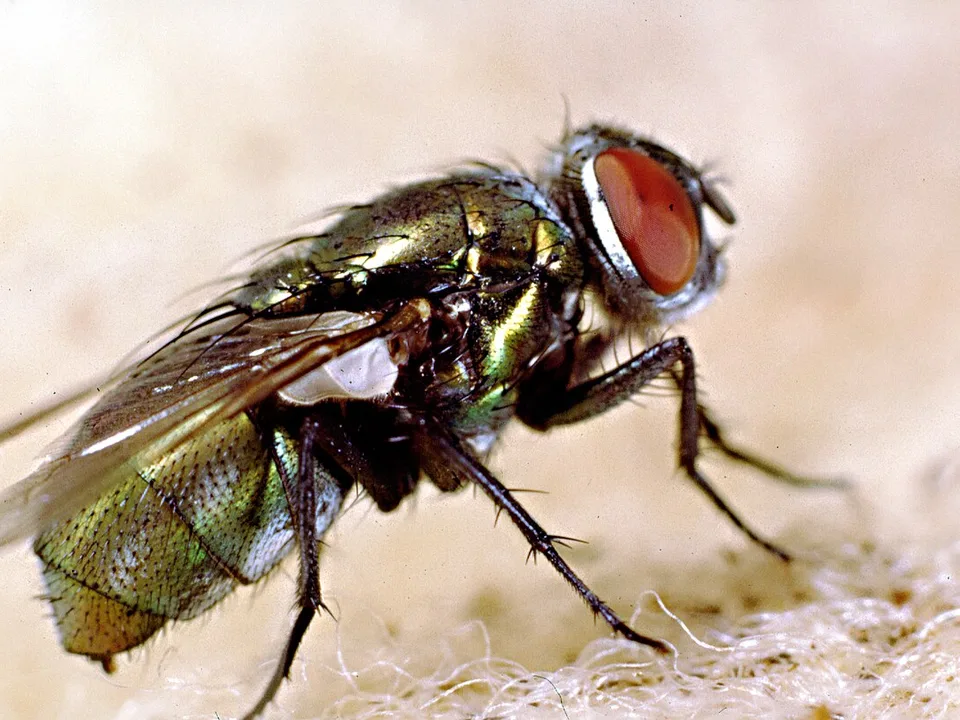
Fly strike is caused by the maggots (larvae) of certain flies. Blowflies, the shiny green, blue or bronze flies often seen around rubbish and dead animals, are attracted to the smell of wet wool soiled with dung or urine, rotting skin and wounds. They lay clusters of tiny eggs there. In warm, humid conditions the eggs hatch quickly into maggots that scrape and eat the skin, releasing digestive juices that dissolve tissue. This creates a raw, wet wound that smells even stronger and attracts more flies, so the strike spreads. In East Africa the Old World screwworm fly (Chrysomya bezziana) is also a concern: it lays eggs in fresh wounds, navels of newborn lambs, castration or docking wounds and tick-bite sores, and its maggots bore deep into healthy flesh. As maggots feed, poisons and bacteria from the damaged tissue get into the blood. This causes fever, dehydration, loss of appetite and a condition called toxaemia (blood poisoning), which is what usually kills struck sheep.
Which animals are most at risk
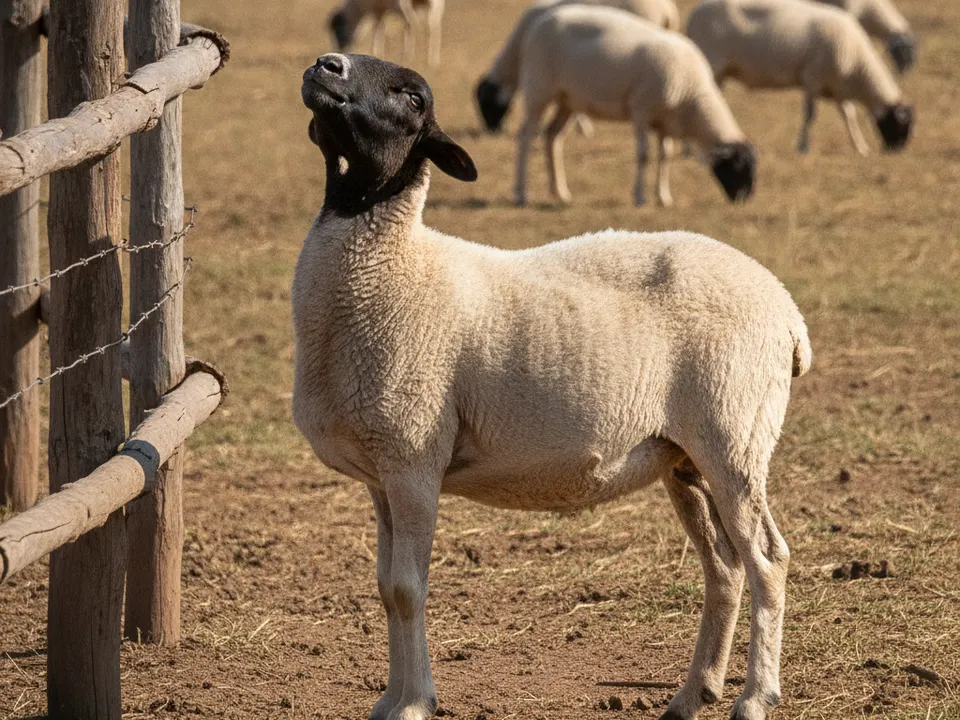
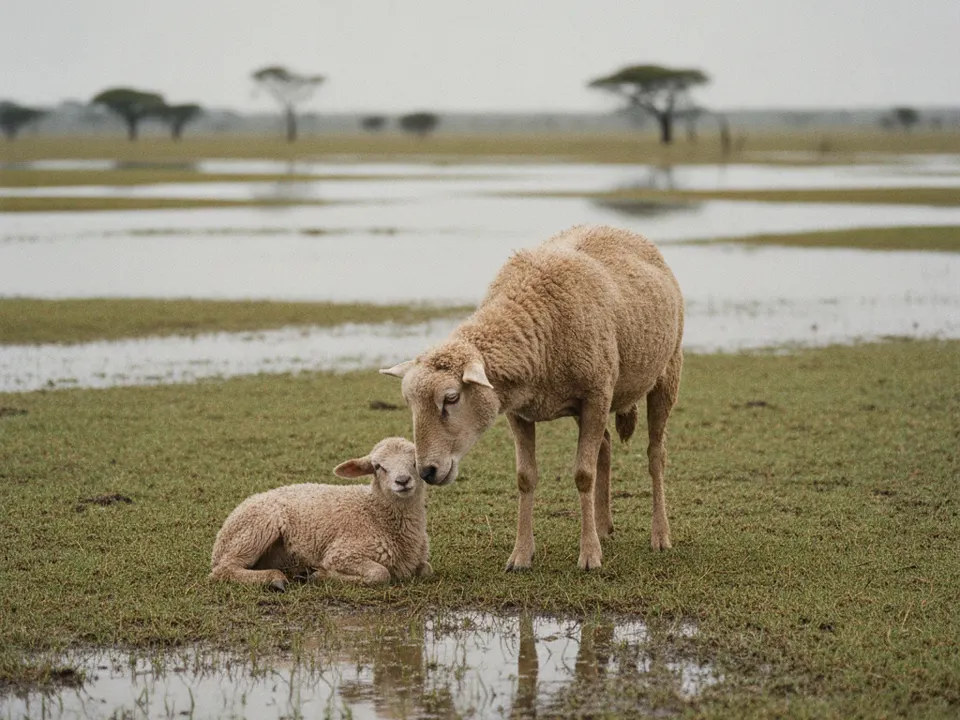
Any sheep can be struck, but risk is highest in woolly breeds and crosses such as Merino, Corriedale, Hampshire Down and Dorper crosses with long, dense wool around the breech. Hair sheep like Red Maasai and Blackhead Persian are less prone to body strike but still get wound and navel strike. Sheep with diarrhoea from worms, long undocked tails with dags (dung balls), heavy wrinkly skin, footrot, or any wound are at greatest risk. Young lambs with fresh navels, freshly castrated or docked lambs, and ewes around lambing are especially vulnerable. The danger peaks in warm, humid weather during and just after the long rains (March to May) and short rains (October to December). Zero-grazed sheep kept on wet, dirty bedding, and pastoral flocks that are not handled closely every day, are both at risk because cases can go unnoticed.
Signs to look for
Early signs
- The sheep is restless, stamps its feet, shakes its tail and keeps turning its head to bite or nibble at its tail, flank or shoulder.
- It rubs against posts, fences or other sheep and may walk away from the flock or lie down and get up repeatedly.
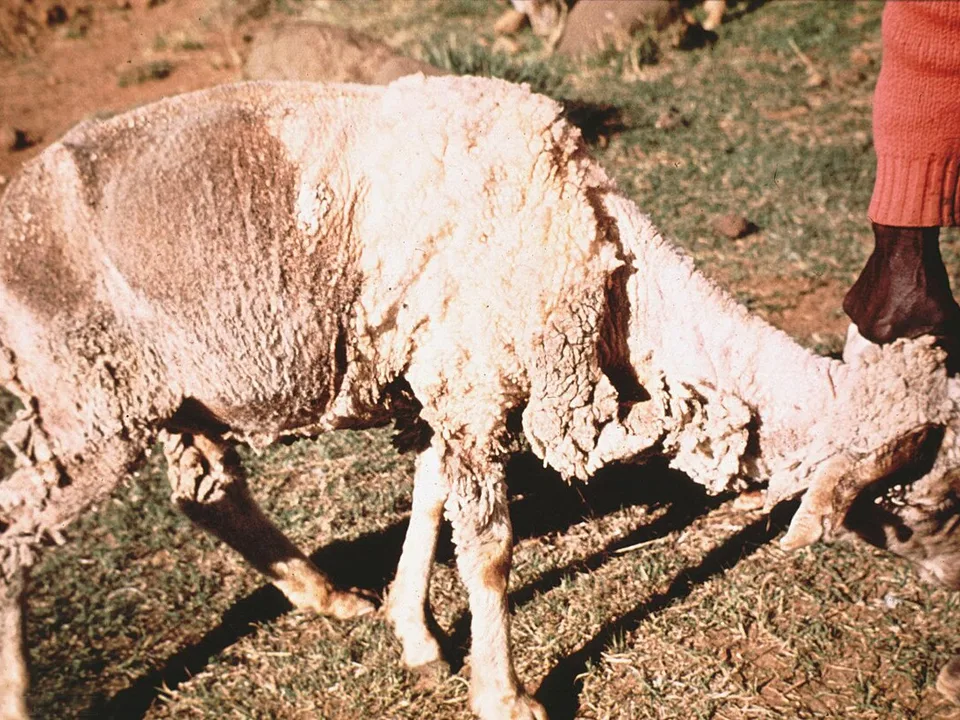
- A patch of wool looks damp, darker or yellow-brown, often around the tail and breech, along the back, at the sheath or around a wound.
- You notice a sour, rotten smell when you get close, even before you see maggots.
- Flies keep landing and buzzing around one spot on the sheep.
- When you part the wool, you see small cream maggots moving at the skin, or clusters of tiny white eggs on the wool.
As it gets worse
- A large wet, raw area with wool falling out or easily pulled away, and many maggots moving in the wound.
- A strong, foul smell of rotting flesh that can be noticed from some distance.
- Deep holes or pockets in the flesh, especially in wounds and navels, which suggests screwworm maggots burrowing in.
- The sheep stops eating and drinking, stands hunched with its head down, or lies apart from the flock.
- Fast breathing, weakness, staggering and inability to keep up with the flock.
- Sunken eyes and dry mouth from dehydration, and finally collapse and death from blood poisoning if not treated.
What to do right now
- Catch the struck sheep and separate it in a clean, shaded, fly-protected pen or shed so it can be handled and watched closely.
- Wear gloves and wash your hands well afterwards, because maggots, pus and dirty wool carry bacteria, and screwworm can also infest human wounds.
- Using clean shears or scissors, gently clip the wool well beyond the edge of the damp patch so the skin can dry and you can see how far the strike has spread.
- Pick off visible maggots and collect them with the clipped wool into a bag or tin, then burn or bury it deeply so they cannot turn into new flies.
- Do not pour diesel, kerosene, engine oil, battery acid or strong disinfectant on the wound; these burn the skin, cause pain and poisoning, and slow healing.
- Give the sheep clean fresh water and soft, palatable feed, and keep it calm and out of the sun.
- Check every other sheep in the flock the same day, especially those with dirty breeches, wounds or diarrhoea, because flies will be active across the group.
- Call your vet or animal health assistant today, record what you saw and found, and do not apply any insecticide or give any medicine until the vet advises which product is safe for sheep.
How it spreads
- Wool soiled with diarrhoea (scouring) is the most common trigger; scouring is often caused by worms, lush wet-season grazing or sudden diet change.
- Urine-stained wool around the rear of ewes, and around the sheath (pizzle) of rams and wethers, attracts flies.
- Fresh wounds from castration, tail docking, ear notching, shearing cuts, fighting rams, thorns, dog bites or barbed wire are prime sites, especially for screwworm.
- Navels of newborn lambs and the rear of ewes after lambing are attractive to egg-laying flies.
- Damp fleece after rain, or wool affected by footrot discharge or skin infections such as lumpy wool, gives flies a moist place to lay eggs.
- Dead animals, afterbirths and rubbish left lying around the farm breed large numbers of blowflies close to the flock.
- Fly strike is not contagious from sheep to sheep, but one struck sheep produces maggots that drop to the ground and become new flies, raising the risk for the whole flock.
Could it be something else?
Sheep scab or mange (mites)
Scab also makes sheep itchy, rub and lose wool, but it spreads through the flock over weeks, causes crusty, scaly skin and tufts of wool pulling out, and has no maggots or rotten smell. Fly strike is usually in one or a few sheep, comes on fast, and you can see maggots in wet wool.
Lice and keds
Lice and keds cause itching, rubbing and ragged wool, but the wool is not wet and smelly. Keds are wingless brown insects you can see crawling in the fleece; there are no maggots eating into the skin.
Lumpy wool (dermatophilosis)
This skin infection after heavy rain causes hard crusts and lumps of matted wool along the back, but no maggots and no rapid illness. However, these damp crusty areas can later be struck by flies, so check them closely.
Footrot
Footrot also has a foul smell, but it comes from the feet and the sheep is lame. If the smell is from the wool or a body wound and the sheep is biting at its body, think fly strike. Footrot discharge on the legs can itself attract flies.
How it is diagnosed
Fly strike is usually confirmed simply by finding maggots on a careful examination. The vet will catch the sheep, part and clip the wool, and check the whole body, including the breech, tail, sheath, navel, feet, horns and any wounds, because there may be more than one strike site. They will judge how deep the damage goes, check temperature, hydration and general condition, and decide whether the sheep is suffering from toxaemia. If maggots are burrowing deep into healthy flesh, the vet may collect some larvae in a small container with alcohol to identify the fly species, especially if screwworm is suspected or the case is unusual. The vet will also look for the underlying cause, such as worm-related scouring or footrot. To help, keep the sheep in a clean, shaded pen, note when you first saw the signs, record any recent castration, docking, shearing or wounds, list any products you have already applied, and be ready to show the vet other sheep in the flock.
Treatment
Treatment must be done or prescribed by a vet, who will choose products registered for sheep in Kenya. The vet first clips the wool widely around the strike, removes as many maggots as possible, and cleans the wound with a mild antiseptic. They then apply a larvicide or insecticide (a product that kills maggots) to the wound and surrounding skin. Common active ingredients used on sheep include spinosad, cyromazine, dicyclanil, ivermectin, and synthetic pyrethroids such as cypermethrin or deltamethrin; older organophosphates such as diazinon are also used in some places but are more toxic to people and animals. The vet may also apply a fly-repellent wound dressing to stop re-strike. If the sheep is weak, feverish or has deep wounds, the vet may give pain relief (an anti-inflammatory drug) and may decide antibiotics are needed to control infection and toxaemia; antibiotics should only be used when a vet judges them necessary and the full course must be completed, because misuse drives antimicrobial resistance. Very sick sheep may need fluids to correct dehydration. All of these drugs have meat and milk withdrawal periods, which are times you must wait before slaughtering or using milk; ask your vet and follow the label exactly. Expect to check and possibly re-treat the wound for several days until it is dry and healing. Severe cases with collapse may not recover, and the vet may advise humane euthanasia to prevent suffering.
Medicines must be prescribed and dosed by a vet. Always respect milk and meat withdrawal periods, and finish the full course of any antibiotic.
How Agrikima products can help
These support the animal alongside — never instead of — your vet's treatment, vaccination and good management.
Prevention
- Inspect every sheep closely at least once a day during the rains and warm weather, looking at the tail, breech, sheath and any wounds, and watching for sheep biting at themselves or standing apart.
- Control worms with a vet-guided plan, using faecal egg counts or the FAMACHA eye-colour check where possible, so sheep do not scour and soil their wool; avoid unnecessary deworming that leads to drug resistance.
- Crutch (clip the wool around the tail and breech) and remove dags before the rains, and shear on time so wool is not long and dirty in the high-risk season.
- Have tail docking and castration done correctly by a trained person, ideally in cooler, drier weather, and treat and check these wounds daily until healed.
- Treat the navels of newborn lambs with a vet-recommended antiseptic soon after birth, and keep lambing areas clean and dry.
- Ask your vet or agrovet about preventive fly-strike products registered for sheep in Kenya, such as long-acting pour-ons, and apply them before the high-risk season, respecting withdrawal periods.
- Treat wounds, footrot, skin infections and tick bites promptly, and use good tick control, since every sore is an invitation to flies.
- Bury or burn dead animals, afterbirths and slaughter waste quickly, keep manure heaps away from sheep pens, and change wet bedding often in zero-grazing units.
- Use fly traps around the sheep yard if available, and when buying breeding stock consider animals with less wool and fewer skin wrinkles around the breech.
Risk to people
Fly strike itself does not pass from sheep to people, but the same flies, especially the Old World screwworm, can lay eggs in human wounds, so cover any cuts and wear gloves when handling struck sheep, then wash your hands with soap. Maggot-infested wounds contain bacteria that can infect people, so do not touch your face while working and wash clothes afterwards. Many insecticides used on sheep, particularly organophosphates and pyrethroids, are harmful to people if they touch the skin, are breathed in or are swallowed; wear gloves and long sleeves, follow the label, and keep products away from children, food and water sources. Drug and insecticide residues can remain in meat and milk, so always respect the withdrawal period on the label or as advised by your vet before slaughtering, selling or consuming products from a treated sheep.
Impact on your farm
Fly strike causes direct losses through death of sheep, sometimes valuable breeding ewes or rams. Animals that survive lose weight and body condition quickly because of pain and poor feeding, which lowers their market price at sale or at the livestock market. Ewes may lose their lambs or produce less milk for them, and rams may be out of service for weeks. Wool from struck areas is stained and damaged, and skins can be scarred, lowering hide value. Farmers also face costs for vet visits, insecticides, wound dressings and the extra labour of daily inspections and treatments. On smallholder farms where a few sheep are an important savings bank, losing even one animal can be a serious setback.
Outlook and recovery
When fly strike is found early, while the patch is small and the sheep is still eating, the outlook is good and most sheep recover well with clipping, maggot removal and vet-advised treatment. Recovery becomes less certain as the wound gets larger and deeper, especially with screwworm maggots burrowing into flesh or strikes in several places. Sheep that have stopped eating, are weak, dehydrated or lying down have toxaemia and a guarded to poor chance of survival, even with good treatment. Recovered sheep can be struck again if the cause, such as scouring, dirty wool or an unhealed wound, is not fixed, so follow-up checks are important. Fast action is the single biggest factor in saving the animal.
Common questions
Can I use diesel, kerosene or used engine oil to kill the maggots?
Please do not. These are still commonly used in some areas, but they burn and damage the skin, cause great pain, can be absorbed and poison the sheep, and make the wound slower to heal. They also contaminate the meat. Clip the wool, remove the maggots by hand, keep the sheep clean and shaded, and get a vet to apply a proper sheep-registered larvicide.
I picked out all the maggots I could see. Is the sheep now safe?
Not necessarily. Maggots often hide deeper in the wool or burrow into pockets in the flesh, and flies will return to lay more eggs on the raw wound. Clip the area widely, look carefully again, and have the vet treat the wound with a product that kills remaining maggots and protects against re-strike. Check the sheep every day until the wound is dry and healing.
Why do the same sheep keep getting fly strike?
Repeated strikes usually point to an underlying problem, such as diarrhoea from worms, dags of dung under a long tail, urine staining, footrot, wrinkly skin or slow-healing wounds. Work with your vet to fix the cause: a proper worm control plan, crutching, good wound care and, if needed, a preventive product before the rains. Sheep that are struck again and again may be better culled from a breeding flock.
Is fly strike contagious? Should I worry about the rest of my flock?
It does not spread directly from sheep to sheep like an infection. However, the weather and flies that caused one strike are affecting all your sheep, and maggots from a struck sheep drop to the ground and become more flies. When you find one case, check every sheep the same day and destroy all removed maggots and wool by burning or deep burial.
My sheep are Red Maasai and Dorper, not woolly Merinos. Do I still need to worry?
Yes. Hair sheep and Dorpers are less likely to get body strike in soiled wool, but they still get strike in wounds, castration and docking sites, tick-bite sores, fighting injuries and the navels of young lambs, and screwworm attacks such wounds in any breed. Daily checks and prompt wound care are important for every breed.
When can I sell or eat a sheep that has been treated for fly strike?
Only after the withdrawal period of every product used has passed. Insecticides, larvicides, antibiotics and pain relief drugs all leave residues in meat and milk for a set time. Ask your vet for the withdrawal period, write down the date of the last treatment, and do not slaughter or sell before it is over, even if the sheep looks fully well.
A guide, not a diagnosis. This page is general information to help you recognise problems early. Always confirm with a vet or animal health worker before treating.