What it is
In the last six weeks of pregnancy, the lambs inside the ewe grow very quickly and take a large share of the sugar (glucose) in her blood. At the same time, the swollen womb presses on her stomach, so she physically cannot eat as much. If her feed is poor, scarce or suddenly cut, she goes into negative energy balance, meaning she uses more energy than she takes in. Her body then breaks down stored fat for fuel. The liver cannot process this flood of fat properly, so fat builds up in the liver (fatty liver) and substances called ketones are released into the blood. Ketones are acids that make the ewe feel sick and stop eating even more, which worsens the problem in a vicious circle. Low blood sugar and high ketones starve and poison the brain, which is why she becomes dull, blind and wobbly. In late stages the kidneys also suffer, the lambs may die inside her, and their decay can poison her further. The disease is not caused by a germ and is not contagious; it is caused by a mismatch between what the ewe needs and what she gets.
Which animals are most at risk
Ewes in the last four to six weeks of pregnancy are at risk, especially those carrying twins or triplets. Very fat ewes and very thin ewes are both at high risk, as are older ewes with worn teeth and first-time mothers that are still growing. Breeds and flocks that often have twins, such as Dorper and well-fed crossbred flocks, see it more often, though Red Maasai and other local breeds can be affected when feed runs short. In Kenya the danger is highest when late pregnancy falls in the dry months before the long or short rains, or during drought in pastoral areas where ewes walk long distances. Zero-grazed or semi-intensive ewes fed mainly on poor hay, maize stover or cut grass without supplements are also at risk. Goats get the same disease (pregnancy toxaemia in does).
Signs to look for
Early signs
- The ewe separates from the flock, lags behind when the flock moves, or is slow to come for feed.
- She eats less or refuses concentrates, and may pick at feed without swallowing much.
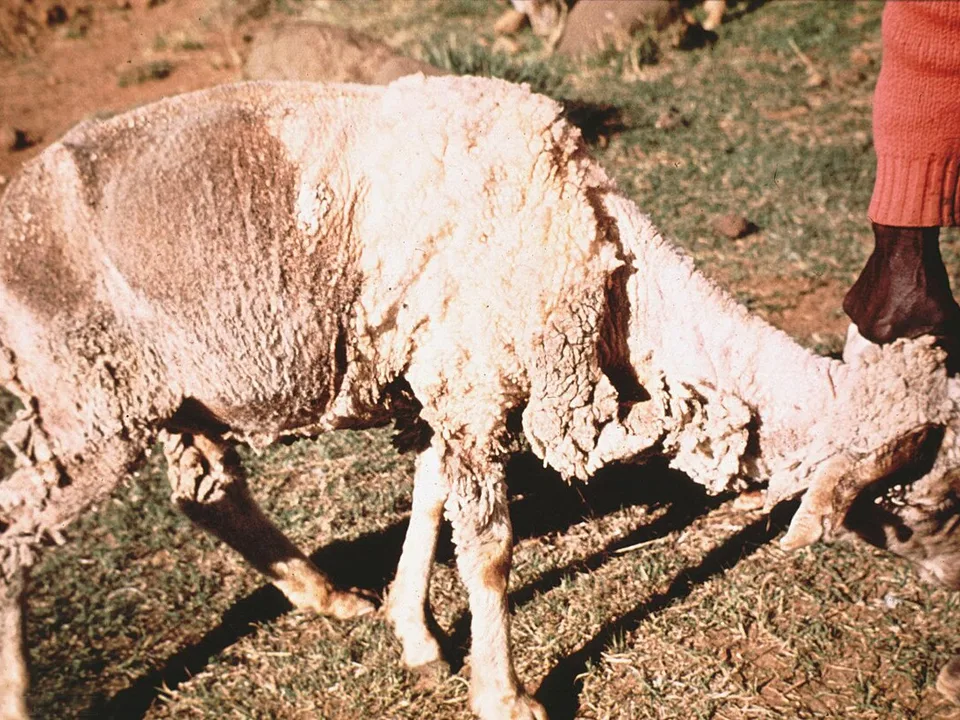
- She looks dull and sleepy, with drooping ears and head, and seems uninterested in her surroundings.
- She may seem not to see well, walking into fences, water troughs or other sheep.
- Her breath or urine may smell sweet, fruity or like nail-polish remover; this is the smell of ketones.
- Fine muscle tremors may be seen around the head, ears or lips, and she may grind her teeth.
As it gets worse
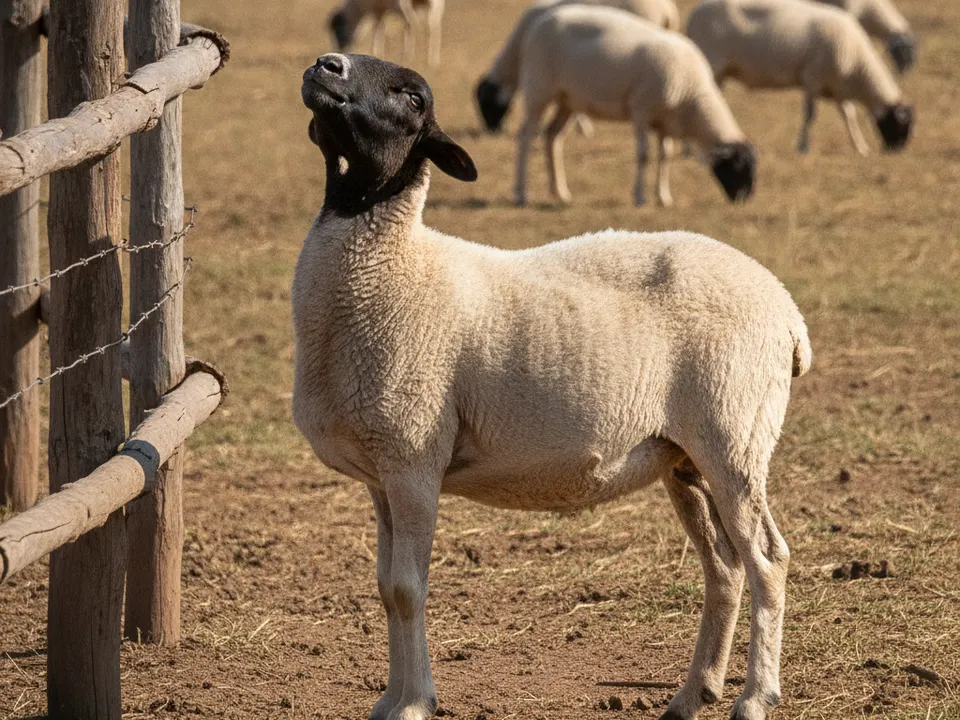
- Star-gazing: she holds her head up and back, staring at the sky, or presses her head against a wall or fence.
- Clear blindness: she does not blink or flinch when a hand moves towards her eyes.
- Staggering, walking in circles, twitching or full convulsions (fits).
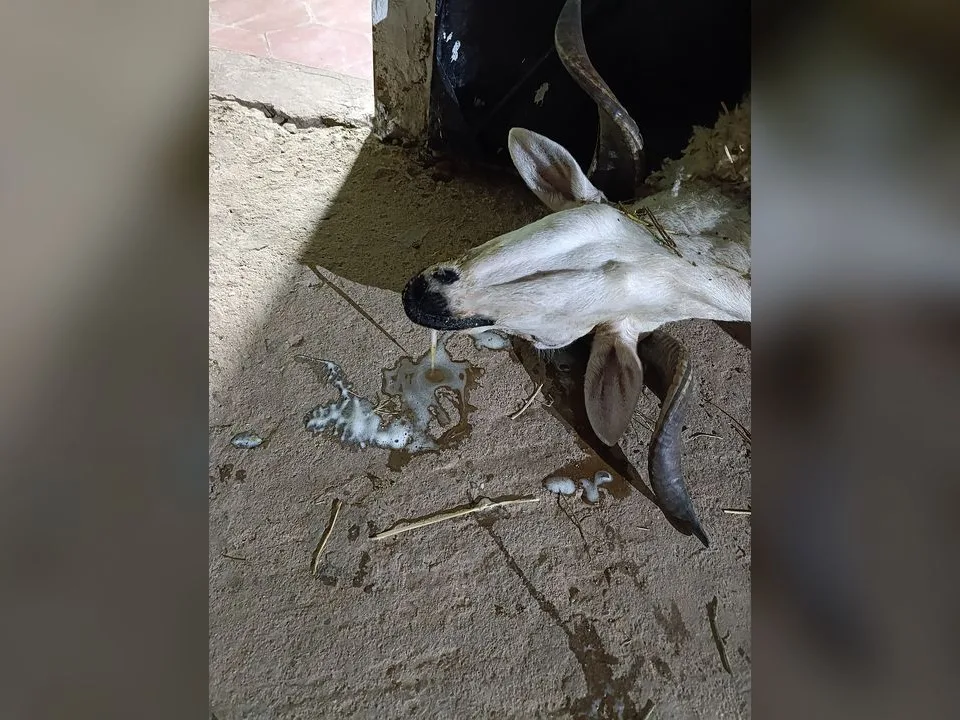
- Lying down on her chest and being unable or unwilling to stand, often with her head turned to her flank.
- Constipation with small, dry droppings, and a fast, shallow breathing pattern.
- Coma, where she lies on her side and does not respond, usually followed by death within a few days if untreated.
- The lambs may die inside her; she may abort or, if she lambs, the lambs are often weak or dead.
What to do right now
- Separate the ewe into a quiet, dry, sheltered pen close to the flock so she can still see or hear other sheep, which reduces stress.
- Offer clean, fresh water and her favourite feeds, such as fresh green grass, good hay, and a small amount of the concentrate she is used to; do not suddenly give her large amounts of grain.
- If she is lying down, prop her up on her chest with bales or sacks so she can breathe and belch properly, and turn her to the other side every few hours to prevent bloat and muscle damage.
- Call your vet or the nearest animal health officer immediately; early treatment saves far more ewes than late treatment. Ask on the phone whether to start an oral energy drench while you wait, and only give it if the vet advises and she can swallow normally.
- Do not force liquids into a ewe that cannot swallow or is lying flat, because fluid can go into her lungs and kill her.
- Check every other pregnant ewe in the flock today, look for any that are dull, slow or off feed, and improve feeding for the whole group straight away.
- Write down her expected lambing date, the signs you see and when they started, and everything she has eaten, to share with the vet.
- Prepare for a possible early or difficult lambing: have a clean, warm area, clean water and towels ready, and a way to feed colostrum (first milk) to weak lambs.
How it spreads
- It does not spread from animal to animal; several ewes falling sick at once usually means the whole flock is underfed in late pregnancy.
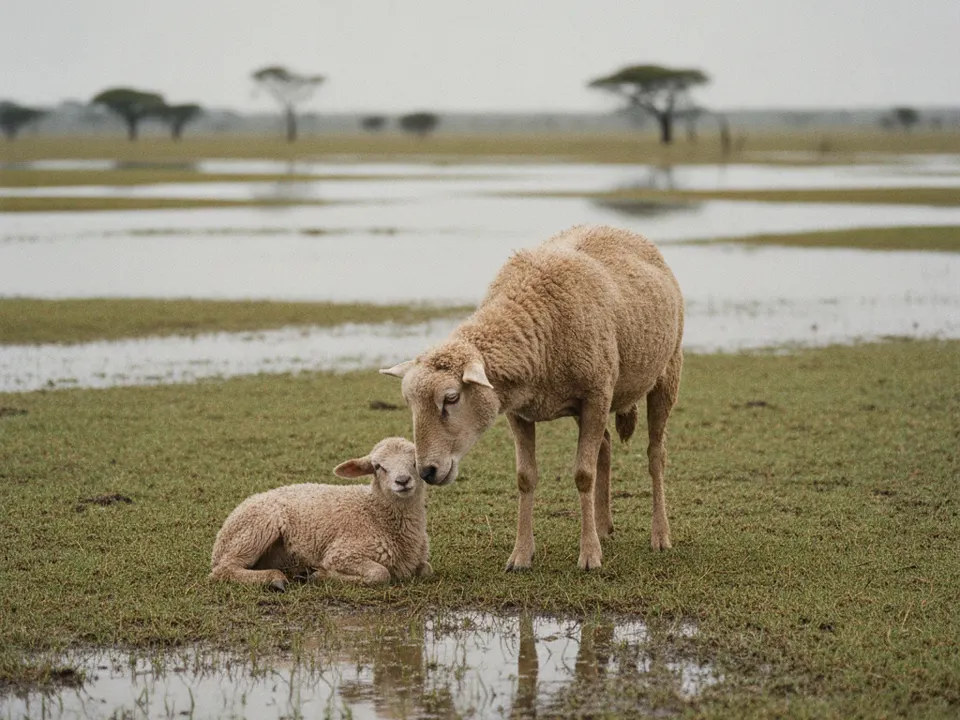
- Poor or dried-up pasture in the dry season, or during drought, is a common trigger when ewes are due to lamb at that time.
- Carrying twins or triplets greatly increases the energy demand and the risk.
- Sudden feed changes, missed feeds or a break in supplementation can tip a borderline ewe into disease within a day or two.
- Stress such as long treks to water or grazing, transport, handling, shearing, dog attacks, heavy rain and cold, or a sudden change of pen can stop a ewe eating and set it off.
- Other illness that reduces appetite, such as heavy worm burdens (especially wireworm, Haemonchus), foot rot or lameness, or bad teeth, makes it much more likely.
- Ewes that are too fat in early pregnancy and then lose condition quickly in late pregnancy are at very high risk, as are very thin ewes with no reserves.
Could it be something else?
Hypocalcaemia (milk fever in ewes)
This is low blood calcium and also hits ewes in late pregnancy, often after stress, yarding or a sudden feed change. It comes on faster, often within hours, and several ewes may go down together. Affected ewes are usually weak and wobbly rather than blind, and they respond quickly, often within an hour, to calcium given by a vet. The two conditions often occur together, which is why vets commonly treat for both.
Polioencephalomalacia (CCN, thiamine or vitamin B1 deficiency)
This also causes blindness, star-gazing and fits, but it can affect sheep of any age and sex, including young growing lambs and rams, not just pregnant ewes. It is often linked to sudden diet changes to rich concentrate feeds. Animals usually improve after a vet gives thiamine.
Listeriosis (circling disease)
This bacterial infection, often linked to spoiled silage, typically causes one-sided signs: a drooping ear, eyelid or lip on one side, drooling, and walking in circles in one direction. It can affect any sheep, and there may be fever, which is not typical of twin lamb disease.
Heartwater
This tick-borne disease, common in many parts of Kenya, causes high fever, high-stepping walk, chewing movements, fits and sudden death in sheep of any age. Ticks are usually present and the animal has a fever, whereas a ewe with twin lamb disease usually has a normal or low temperature and the problem is tied to late pregnancy.
How it is diagnosed
A vet will usually suspect pregnancy toxaemia from the history: a ewe in late pregnancy, often with twins, that has gone off feed and become dull or blind. They will examine her, check her temperature (usually normal or low), smell her breath, and feel or scan her belly for multiple lambs and check whether the lambs are alive. A simple urine or blood test can confirm high ketone levels; vets often use blood ketone meters or urine dipsticks on the farm. Blood tests may also check sugar and calcium, because low calcium often occurs at the same time. If a ewe has died, a post-mortem usually shows a pale, swollen, yellow fatty liver and two or more lambs in the womb. To help the vet, note when she was mated or when lambing is expected, how long she has been ill, what she has been fed over the last month, any recent stress or feed change, her body condition, recent deworming, and whether any other ewes are dull or eating less.
Treatment
Treatment must be prescribed and supervised by a vet, and the earlier it starts the better it works. In early cases, the vet usually gives an energy source by mouth, most commonly propylene glycol or glycerol drenches, sometimes with glucose-forming supplements, to raise blood sugar and slow fat breakdown. Many vets also give glucose (dextrose) solution into the vein, and calcium, because low calcium so often occurs at the same time. Supportive care may include B vitamins, fluids for dehydration, and an anti-inflammatory painkiller to help the ewe start eating again. The most effective way to remove the cause is often to end the pregnancy, because once the lambs are out the energy drain stops. Depending on how close she is to lambing and whether the lambs are alive, the vet may give a corticosteroid such as dexamethasone to bring on lambing within a day or two, or perform a caesarean section in suitable cases; lambs born early may be weak and need extra care and colostrum. In some cases the vet may use other hormones, such as insulin, under close supervision. Antibiotics do not treat pregnancy toxaemia itself; they are only used if the vet finds an infection, such as after a dead lamb or a caesarean, and should be used exactly as prescribed to avoid antimicrobial resistance (germs becoming resistant to medicines). Any drugs given, including corticosteroids, anti-inflammatories and antibiotics, carry milk and meat withdrawal periods, so ask your vet how long to wait before selling or eating meat or milk. Expect several days of nursing; ewes that respond usually start eating within one to three days.
Medicines must be prescribed and dosed by a vet. Always respect milk and meat withdrawal periods, and finish the full course of any antibiotic.
How Agrikima products can help
These support the animal alongside — never instead of — your vet's treatment, vaccination and good management.
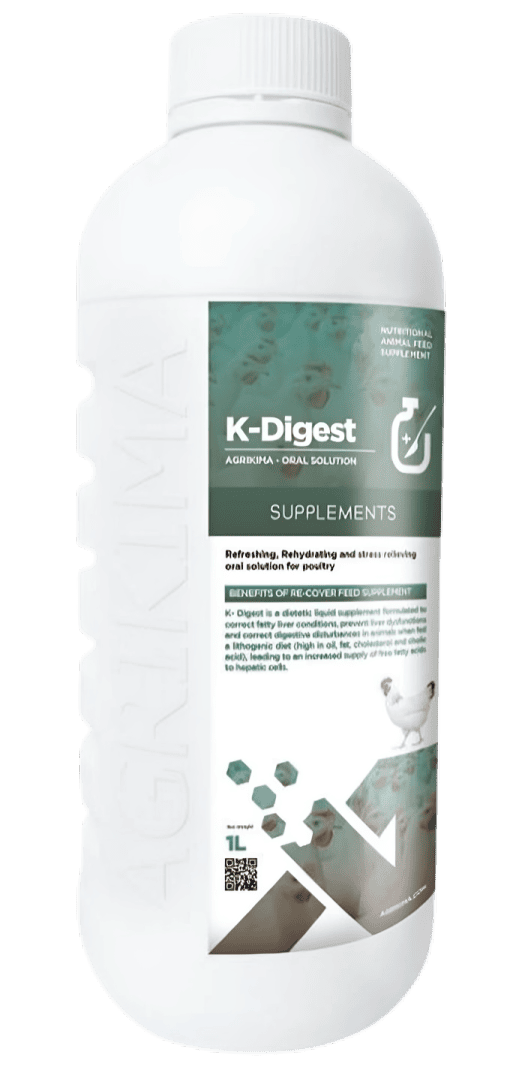
K-DIGEST
Can be used as a supportive aid for liver function and digestive stress during recovery, since twin lamb disease overloads the liver with fat; use only alongside the vet's treatment and better late-pregnancy feeding, never as a substitute for them.
View product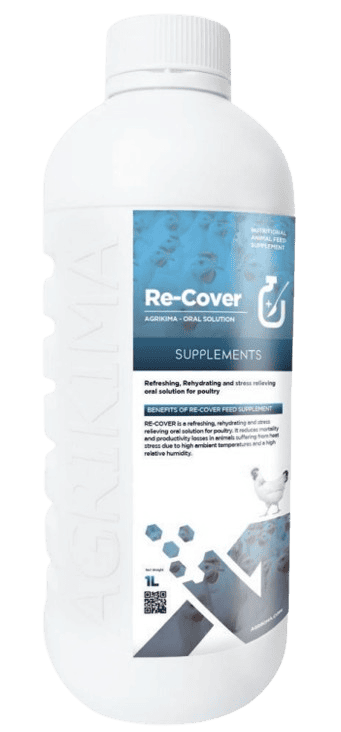
RE-COVER
An oral rehydration solution that can help keep a recovering ewe drinking and hydrated, but only if she is alert and swallowing normally and your vet agrees; it does not replace the energy, glucose or calcium treatment the vet gives.
View productPrevention
- Feed for the lambs she is carrying: raise the quality of feed steadily over the last six weeks of pregnancy, for example good hay or fresh pasture plus a gradually increasing amount of a concentrate such as sheep, dairy or ewe meal, maize germ or a protein cake like cotton seed or sunflower cake, as advised by your extension officer or vet.
- Use body condition scoring, a simple hands-on check of fat over the backbone and loin on a scale of 1 (very thin) to 5 (very fat); aim for ewes in moderate condition, around score 3, at mating and through pregnancy, and avoid both fat and thin ewes.
- Where possible, have ewes scanned by ultrasound around mid-pregnancy so twin-bearing ewes can be grouped and fed more; if scanning is not available, feed larger and older proven twin-bearers more generously.
- Plan mating so that late pregnancy and lambing fall when pasture is best, often during or just after the long or short rains, and store hay or silage for late-pregnant ewes in dry periods.
- Make changes to feed gradually over a week or more, never cut feed suddenly in late pregnancy, and give enough trough space so shy or timid ewes can eat too.
- Keep worm burdens low with a planned deworming programme guided by your vet, ideally using FAMACHA eye-colour checks for wireworm, and treat foot rot and lameness promptly so ewes can graze and reach feed.
- Reduce stress in late pregnancy: avoid long treks, rough handling, transport, shearing and dog attacks, and provide shelter from cold rain and strong wind.
- Check teeth of older ewes and cull or give softer feed to broken-mouthed ewes; provide clean water close by and a suitable sheep mineral lick.
Risk to people
Pregnancy toxaemia is not infectious and cannot pass to people. The only human concern is drug residues: ewes treated with corticosteroids, anti-inflammatories, antibiotics or other medicines must not be slaughtered for meat, or their milk used, until the withdrawal period your vet gives has passed. Do not slaughter a sick or dying ewe for home use without a meat inspector's or vet's approval.
Impact on your farm
Twin lamb disease can be very costly for a Kenyan sheep farmer because it hits the most valuable animals at the most valuable time. A heavily pregnant ewe carrying twins represents her own value plus the value of two lambs for sale or breeding. Advanced cases often die, and even when the ewe is saved the lambs may be lost or born weak. Survivors may have poor milk, reject their lambs, or take a long time to regain condition, delaying the next mating. Vet visits, drugs and nursing time add cost. When several ewes fall sick together it is a sign the whole flock is underfed, and lambing percentage, weaning weights and flock growth all suffer. In pastoral areas during drought, losses can be heavy across many households at once.
Outlook and recovery
The outlook depends strongly on how early treatment starts. Ewes treated in the early stage, while they are still standing and eating a little, often recover well, especially if lambing is close or is brought on by the vet. Once a ewe is lying down, blind, fitting or in a coma, the outlook is poor and many die even with good treatment. If the lambs have already died inside her, the risk to the ewe is higher. Removing the lambs early, by induced lambing or caesarean, usually gives the ewe the best chance, though early lambs may be weak. Ewes that recover can lamb normally in later pregnancies if they are kept in good condition and fed well in late pregnancy.
Common questions
Is twin lamb disease contagious? Will my other ewes catch it?
No, it does not spread from sheep to sheep. But if one ewe has it, others in the same group are often close to getting it, because they are usually on the same feed. Treat one case as a warning for the whole flock: check all late-pregnant ewes and improve their feeding straight away.
My ewe was fat, so why did she get it? I thought it was only thin ewes.
Fat ewes are actually at high risk. They often eat less in late pregnancy because fat inside the belly and the big womb leave little room for the stomach, and when they break down their large fat stores the liver gets overloaded. Very thin ewes are also at risk because they have no reserves. The safest ewe is in moderate condition, not fat and not thin.
Can I just give her molasses or sugar water?
Molasses and sugar may help a little as a feed for ewes that are still eating, but they are not reliable treatment for a sick ewe, and forcing liquids into a weak ewe can cause choking or pneumonia. Call your vet, who may recommend a proper energy drench such as propylene glycol and give glucose and calcium directly. For prevention, molasses can be part of a balanced late-pregnancy ration.
Will the lambs survive?
It depends on how sick the ewe is and how close she is to lambing. In early cases near term, lambs are often born alive, especially if the vet brings on lambing. In advanced cases, lambs frequently die inside the ewe. Lambs born early or from sick ewes are often weak, so keep them warm, make sure they get colostrum within the first hours, and be ready to bottle-feed if the ewe has little milk.
Do goats get the same disease?
Yes. Does (female goats) carrying twins or triplets get pregnancy toxaemia in the same way, with the same signs and the same need for fast vet treatment. The same prevention applies: good feeding in late pregnancy, moderate body condition and low stress.
Will a ewe that recovered get it again next time?
She is not immune, and a ewe that tends to carry twins may be at risk again. With good body condition, planned feeding in the last six weeks and less stress, she can lamb safely next time. Some farmers choose to cull ewes that were badly affected, had poor milk or are old with worn teeth.
A guide, not a diagnosis. This page is general information to help you recognise problems early. Always confirm with a vet or animal health worker before treating.