What it is
Sheep scab is caused by the mite Psoroptes ovis, which is barely visible to the naked eye. The mite does not burrow into the skin. Instead it lives on the surface, pierces the skin with its mouthparts and feeds on fluid. Its droppings and saliva trigger a strong allergic reaction, so the skin becomes inflamed, leaks fluid and forms yellow, wet, then crusty scabs. The mites move outwards to the healthy edge of the sore, so the patch keeps growing. The itching is so severe that sheep rub, scratch and bite until they tear out wool and damage the skin, and badly affected sheep stop grazing, lose weight and can collapse or even have fits. Lice are different. Chewing (biting) lice, mainly Bovicola ovis, feed on skin scurf and debris, while sucking lice (Linognathus species) feed on blood, mostly on the legs and face. Both irritate the skin and make sheep rub and bite. Heavy sucking-louse burdens can cause anaemia, which means too little blood. Lice damage is usually slower and less dramatic than scab, but large numbers cause poor wool, weight loss and hide damage.
Which animals are most at risk
All ages of sheep can be affected, but woolled breeds such as Merino, Corriedale, Romney Marsh, Hampshire Down and Dorper crosses with longer wool show more damage than hair sheep like the Red Maasai or Blackhead Persian, which can still carry and suffer from mites and lice. Lambs, old ewes, thin sheep and heavily pregnant or nursing ewes suffer most because they have fewer body reserves. Both scab and lice tend to build up in the cooler, wetter months, for example the cold season in the Kenyan highlands around June to August in areas like Nyandarua, Nakuru, Laikipia, Narok and Molo, when fleeces are long and sheep are kept close together. Lice increase when nutrition is poor and sheep are stressed. Flocks that share grazing, buy animals from markets without quarantine, use communal dips with poor dip strength, or have not been sheared for a long time are at higher risk.
Signs to look for
Early signs
- Sheep rub against posts, walls, trees or each other more than usual, and you see tufts of wool caught on fences and bushes.
- Sheep turn round to bite or nibble their own sides, shoulders or flanks, or scratch with a hind foot.
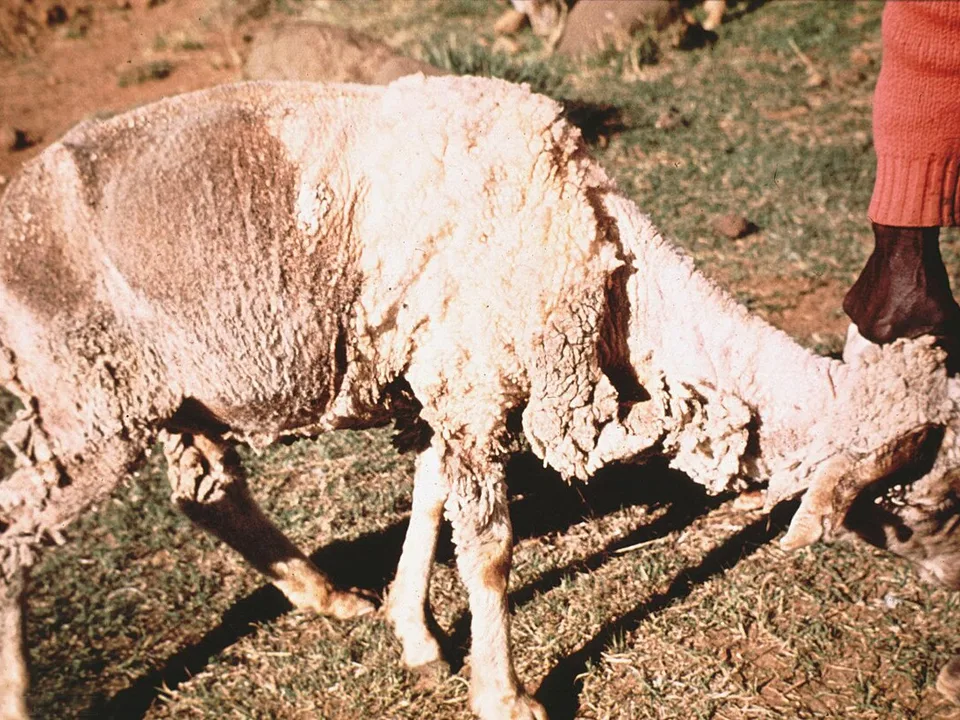
- The fleece looks slightly raised, open or ragged in small patches, often first over the shoulders, back and sides for scab.
- When you part the wool at the edge of a damaged patch with scab, the skin is red and moist, with small pale yellow crusts.
- For lice, when you part the wool in good light you can see tiny pale-brown moving insects about 1 to 2 millimetres long, or their eggs (nits) stuck to the wool fibres.
- When you scratch or rub an itchy patch, the sheep may stretch its neck, lick its lips and make nibbling movements with its mouth, called the nibble reflex.
As it gets worse
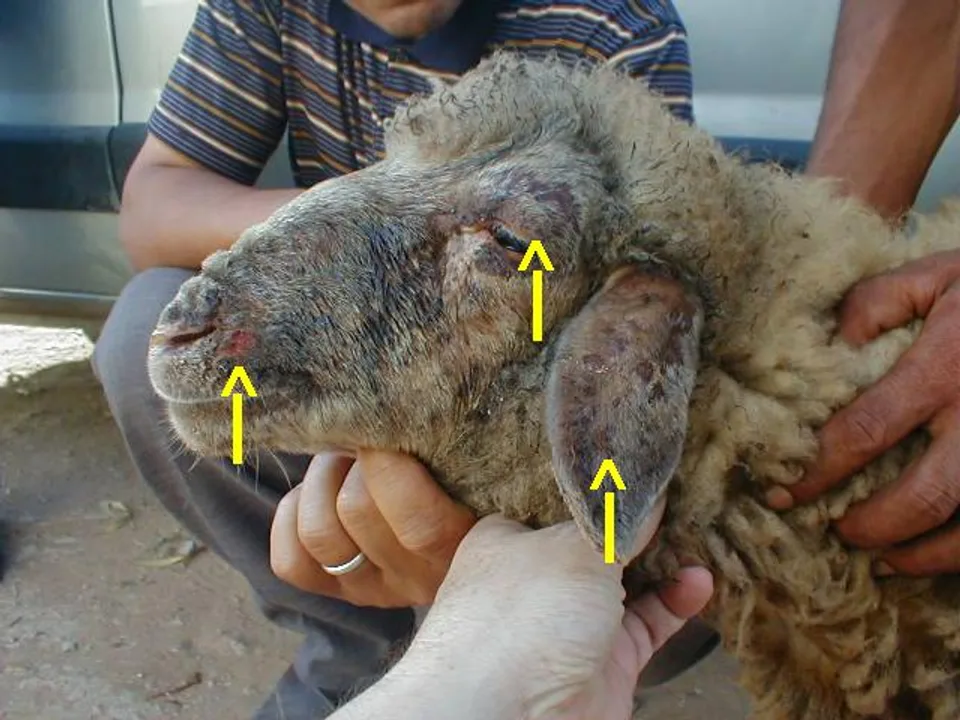
- Large bare patches of skin with thick yellow or grey crusts, cracked skin and wet, smelly areas where the skin has been damaged.
- The whole fleece becomes matted, stained and pulled out, and sheep may lose most of their wool.
- Sheep lose weight fast, stop grazing properly because they are busy rubbing, and ewes produce less milk so lambs grow poorly.
- Skin becomes thickened, wrinkled and darkened in long-standing cases.
- Very badly affected sheep may be weak, lie down a lot, shiver in cold weather and in severe scab can have fits when handled, which can look like a seizure.
- Heavy sucking lice burdens can cause pale gums and inner eyelids from anaemia, and weakness.
- Damaged skin can become infected or attract flies, leading to fly strike (maggots in the wool).
- Deaths can occur in lambs and weak sheep, especially in cold weather after losing their wool.
What to do right now
- Separate the sheep that are rubbing and biting into their own pen, away from the main flock, goats and any newly bought animals.
- Stop selling, buying, lending rams or mixing your sheep with other flocks until you know what the problem is and it has been treated.
- Check every sheep in the flock by parting the wool in several places, and write down how many are affected and where on the body.
- Give the affected sheep clean water, good feed and shelter from cold wind and rain, especially any that have lost a lot of wool.
- Wear gloves and wash your hands and arms after handling itchy sheep, and wash clothes, as mites and lice can be carried on clothing to other sheep.
- Do not buy or apply a dip, pour-on or injection before the vet has confirmed whether it is scab or lice, because the right product is different for each.
- Remove wool tufts from fences and posts and burn them, and avoid putting clean sheep in pens used by affected sheep for at least two to three weeks.
- Call your vet, animal health officer or County Veterinary Office, and tell your neighbours who share grazing or water so they can check their flocks too.
How it spreads
- Direct contact between sheep is the main route, especially when animals are crowded together in night bomas, holding pens, trucks or at markets.
- Buying in new sheep, rams or lambs that carry mites or lice is the most common way a clean flock becomes infected.
- Scab mites can survive off the sheep for around two weeks, sometimes a little longer, so shared pens, rubbing posts, fences, shearing equipment and trucks can pass them on.
- Wool tufts left on fences and thorn bushes can carry living mites to other sheep that rub on the same spot.
- Lice survive only a short time off the sheep, so they mainly spread by sheep-to-sheep contact, but shared shearing equipment and handling pens can also play a part.
- Mixing flocks at communal grazing, watering points and dips spreads both parasites, which is common in pastoral and group-ranch systems.
- Scab can also spread from sheep to goats in some cases, so mixed flocks of sheep and goats should be watched together.
- Failed or partial treatment, such as spraying only part of the flock or using the wrong product, leaves survivors that rebuild the infestation.
Could it be something else?
Sheep keds (Melophagus ovinus)
Keds are wingless flies about 4 to 7 millimetres long, much bigger than lice, reddish-brown, with six strong legs, and easy to see when you part the wool. They cause rubbing and stained wool but do not cause the wet yellow crusty spreading sores of scab.
Dermatophilosis (lumpy wool)
This is a bacterial skin infection that forms hard crusts which bind wool fibres into lumps along the back, often after long wet spells. It causes much less itching than scab, and the scabs lift off as hard clumps of wool with a moist base, without the intense rubbing and biting.
Sarcoptic or chorioptic mange
Sarcoptic mange mainly affects the face, ears and other areas with little wool, and chorioptic mange mainly the lower legs and scrotum. Psoroptic scab usually starts on the woolly areas of the body such as the shoulders, back and sides. A vet's skin scraping identifies which mite it is.
Photosensitisation or fly strike
Photosensitisation causes swelling, redness and peeling on pale, sun-exposed areas like the ears, face and eyelids after eating certain plants or with liver damage, not spreading crusts in the fleece. Fly strike shows maggots, a foul smell and wet, discoloured wool, usually around the tail, back end or wounds.
How it is diagnosed
A vet or animal health officer will first watch the flock for rubbing and biting, then handle several sheep, part the wool and look closely at damaged areas. For lice, they part the wool in about ten places on each side of several sheep and count the lice they see, which also shows how heavy the infestation is. For scab, they take a skin scraping from the moist edge of a fresh sore, where live mites gather, and look at it under a microscope to see the mites and identify them as Psoroptes. Because mites can be hard to find, several scrapings from several sheep may be needed, and a negative result does not always mean the sheep is free. In some countries a blood test can detect scab exposure, but this is not widely available in Kenya. To help, keep the itchy sheep penned so they can be examined, note when the problem started, which sheep are affected, any new animals bought in, and what dips or drugs have been used recently and when.
Treatment
Treatment depends on whether the problem is scab, lice or both, and it must be chosen and prescribed by a vet. For sheep scab, vets commonly use injectable macrocyclic lactones, such as ivermectin, doramectin or moxidectin, or a proper plunge dip with a product licensed for scab, such as some organophosphate dips. Injections may need repeating to break the mite life cycle, and they do not prevent reinfection unless the whole flock is treated and contact with untreated sheep stops. For lice, vets often recommend dips, sprays or pour-ons containing synthetic pyrethroids such as cypermethrin or deltamethrin, or insect growth regulators, usually applied soon after shearing. Many lice pour-ons do not control scab, and most injectable products do not control chewing lice well, so using the wrong one wastes money. The most important rule is to treat every sheep in the flock on the same day, and any goats in contact if the vet advises, not just the itchy ones. Dips must be mixed at the correct strength and sheep kept in long enough for the chemical to soak through the fleece, which spraying with a knapsack often fails to do. Resistance to some products is reported in other countries, so if itching continues after treatment, tell your vet instead of repeating the same product. Sheep with infected sores or fly strike may need wound care and, only where a vet judges it necessary, antibiotics, used exactly as prescribed to limit antimicrobial resistance. All these drugs have meat and milk withdrawal periods, which are the days you must wait after treatment before slaughtering or using milk. Some injectable products have long withdrawal periods, so follow the label and the vet's advice strictly. Itching usually eases over one to three weeks, and the wool takes months to regrow.
Medicines must be prescribed and dosed by a vet. Always respect milk and meat withdrawal periods, and finish the full course of any antibiotic.
How Agrikima products can help
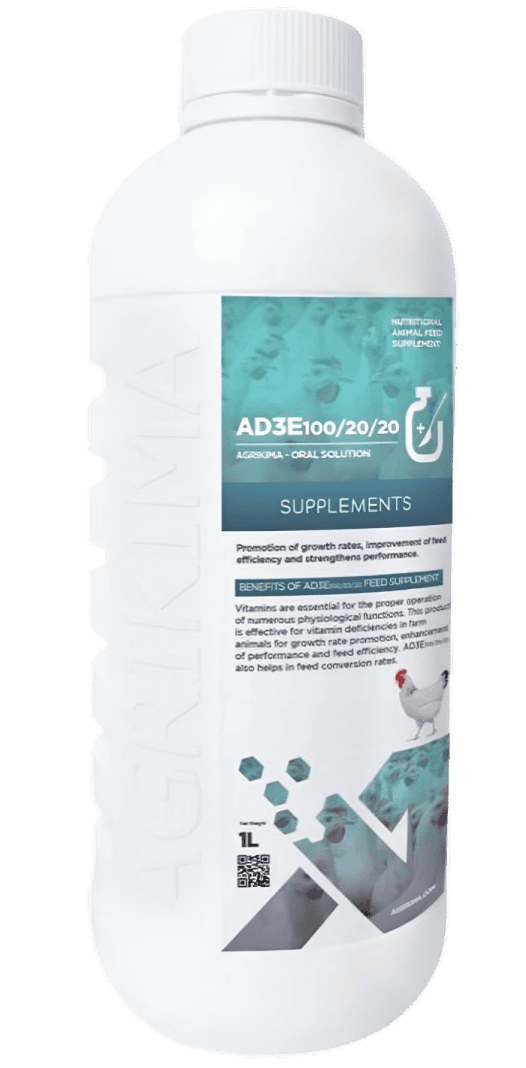
These support the animal alongside — never instead of — your vet's treatment, vaccination and good management.
Prevention
- Quarantine every new sheep, ram or goat for at least three weeks, check them carefully for rubbing and lice, and treat them as your vet advises before they join the flock.
- Shear sheep at least once a year, as shearing removes many lice and makes later treatment work much better, and clean and disinfect shearing equipment between flocks.
- Plan flock treatments with your vet, ideally treating all sheep at the same time after shearing for lice, and before the cold season in highland areas.
- If you use a communal or private dip, make sure the dip wash is the right strength and is topped up correctly, and each sheep is fully soaked including the head.
- Avoid mixing your sheep with other flocks at grazing, watering points and markets where possible, and talk with neighbours to treat at the same time so flocks do not reinfect each other.
- Keep sheep in good condition with enough feed, clean water and minerals, as well-fed sheep resist lice better and recover faster.
- Check the flock weekly for rubbing, wool tufts on fences and ragged fleece, and examine any suspicious sheep at once so a small problem does not become a flock outbreak.
- Keep a record of every treatment, the product used, the date and the withdrawal period, so you can track what works and avoid repeating failed products.
Risk to people
The sheep scab mite Psoroptes ovis and sheep lice do not live on people. They may briefly cause mild itching on the arms of people who handle infested sheep, but this is uncommon and short-lived. The bigger human risk comes from the chemicals used to treat them. Some dips, especially organophosphates, can poison people through the skin or by breathing spray mist. Always wear gloves, long sleeves, boots and eye protection when mixing or using dips, never eat, drink or smoke while dipping, wash well afterwards, keep children away, and dispose of old dip wash safely away from rivers, wells and boreholes. Observe the meat and milk withdrawal periods on every product so residues do not reach your family or customers.
Impact on your farm
On a Kenyan farm, scab and lice cost money in several ways. Sheep spend time rubbing instead of grazing, so they lose weight and grow slowly, and ewes give less milk so lambs are lighter at weaning. Wool yield and quality drop sharply, which matters greatly for wool farmers in Nyandarua, Laikipia and other highland areas, and damaged skins fetch lower prices at tanneries. Scabby sheep look poor at the market and sell for less, and buyers may avoid a flock known to have scab. Severe scab can kill lambs and weak sheep, especially in the cold season. On top of this come the costs of dips, drugs, labour and repeated treatments if the first round fails, plus lost sales during withdrawal periods.
Outlook and recovery
Most sheep recover well when the problem is identified correctly and the whole flock is treated properly with the right product. Itching eases within a few weeks and the fleece regrows over the following months, although badly damaged skin may stay thickened. Outcomes are worse for lambs, old or very thin sheep, sheep that have lost most of their wool in cold weather, and flocks where only some animals are treated or the dip is too weak. Reinfection is common if neighbouring flocks are not treated or new animals are not quarantined, so lasting success depends on flock-wide and community-wide control.
Common questions
How can I tell sheep scab from lice on my own farm?
Both cause rubbing and wool loss, but they look different up close. With lice, when you part the wool in good light you see tiny moving insects and small eggs stuck to the fibres, and the skin is usually dry and scurfy. With scab, the mites are too small to see easily, but the skin at the edge of the bare patch is red and wet with yellow crusts, and the sores spread outwards quickly. Sheep with scab are usually far more itchy and distressed. A vet's skin scraping is the only way to be sure.
Can I just spray the sheep that are itching?
No. By the time a few sheep are scratching, many others are usually carrying mites or lice without showing it yet. If you treat only the itchy ones, the others reinfect them within weeks. Treat the whole flock on the same day, as your vet advises, and include in-contact goats if recommended. Knapsack spraying often does not soak through a full fleece, so dipping or a suitable vet-prescribed product usually works better.
I dipped my sheep but they are still scratching. What went wrong?
Several things can cause this. The product may control lice but not scab, or the reverse. The dip may have been too weak or the sheep not soaked long enough. Only some sheep may have been treated, or the sheep were put back into dirty pens or mixed with untreated flocks. Skin also stays itchy for a while after the parasites die. In some cases the parasites may be resistant to the product. Call your vet before treating again so they can check the cause and choose a different approach.
Do my hair sheep like Red Maasai or Dorper need to be checked?
Yes. Hair sheep usually show less dramatic wool damage, but they can still carry scab mites and lice, suffer itching and weight loss, and pass the parasites to woolly sheep and goats. Check them the same way, by parting the hair and looking at the skin, and include them in whole-flock treatment.
How long should I keep sheep out of a pen after an outbreak?
Scab mites can survive off the sheep for around two weeks, sometimes a little longer in cool, damp conditions. Keep clean or treated sheep out of contaminated pens, bomas and trucks for at least two to three weeks, or clean them thoroughly. Lice survive only a few days off the sheep, but cleaning pens and removing wool from fences still helps.
Can I eat or sell a sheep straight after treating it for scab?
No. Dips, pour-ons and injections all have withdrawal periods, which are the days you must wait before the meat or milk is safe. Some injectable scab treatments have long withdrawal periods. Read the label, ask your vet or agrovet, write the safe date in your records, and do not slaughter or sell for meat before that date.
A guide, not a diagnosis. This page is general information to help you recognise problems early. Always confirm with a vet or animal health worker before treating.