What it is
Sheep pox is caused by the sheep pox virus. It belongs to the capripox group, which also includes goat pox virus and lumpy skin disease virus of cattle. In East Africa, many sheep pox and goat pox strains can infect both sheep and goats. The virus enters through the nose, mouth or broken skin. It multiplies, spreads through the blood and settles in the skin, the lining of the airways, the lungs and the gut. In the skin it kills cells and causes swelling, producing red spots that harden into raised lumps called nodules. These lumps die from the centre and form dark scabs. The same kind of damage in the windpipe and lungs makes breathing hard and opens the way for bacteria to cause pneumonia, which means infection of the lungs. Lambs and animals that have never met the virus have little defence. Their bodies can be overwhelmed, and they die from the virus itself or from bacterial infections that follow.
Which animals are most at risk
All ages of sheep can be infected, but young lambs suffer the most and die in the highest numbers. Exotic and improved breeds, such as Dorper, Merino and their crosses, are usually more severely affected than local breeds like Red Maasai and Blackhead Persian. Local breeds are not immune, especially if they have never been vaccinated. Animals that are new to an area, under stress, poorly fed, pregnant or carrying heavy worm burdens tend to get sicker. Outbreaks are more common where flocks mix: pastoral and semi-pastoral systems, livestock markets, communal grazing and watering points, and areas where animals move during drought. Fly numbers rise during and after the long and short rains, which can help spread the virus. Unvaccinated flocks in any farming system, including zero-grazing units that buy in stock, are at risk.
Signs to look for
Early signs
- High fever. The sheep is dull, stands apart from the flock, and may stop eating and chewing the cud.
- Watery eyes and swollen, puffy eyelids. The sheep may squint or keep its eyes half closed.
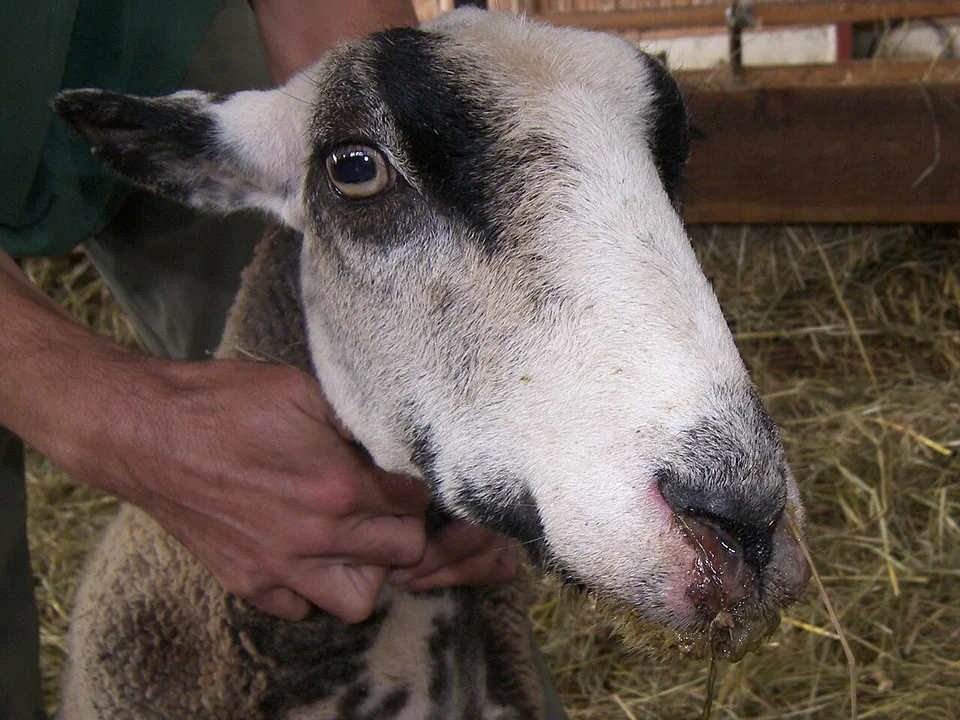
- Clear, watery discharge from the nose, sometimes with sneezing or snorting.
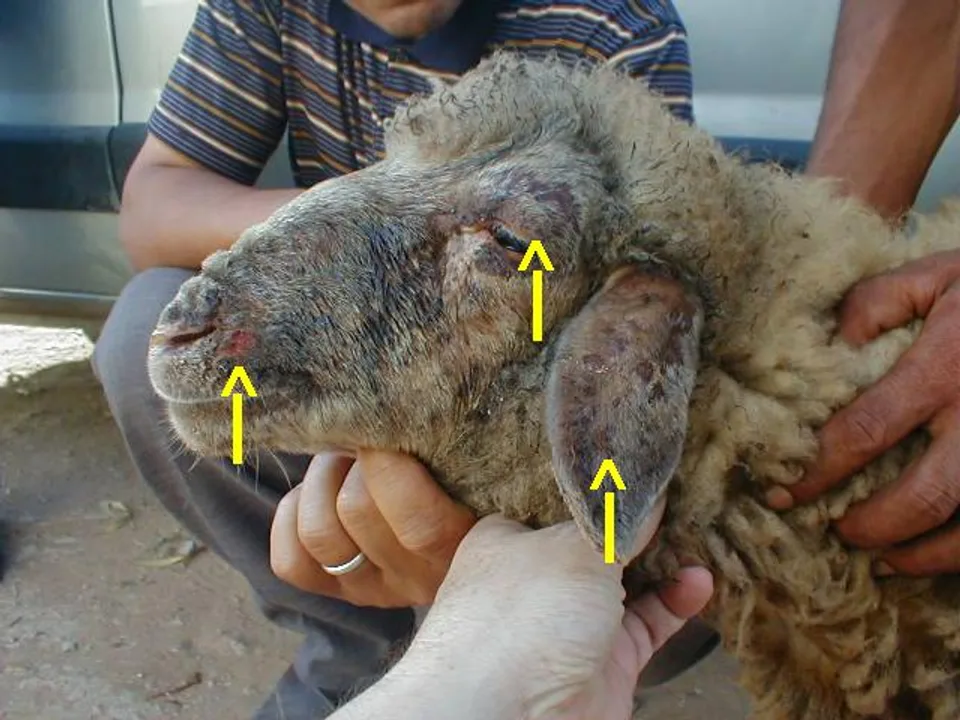
- Red, flat spots on skin with little or no wool: around the eyes, lips, nostrils, ears, under the tail, on the udder or scrotum, and inside the thighs.
- Swollen lymph nodes, which are the small glands in front of the shoulder and below the ear. They feel like firm lumps under the skin.
- Within a day or two, the red spots rise into firm, raised lumps that you can feel by running your hand over the skin, including under the wool.
As it gets worse
- Lumps become hard and dark in the centre, then turn into thick black or brown scabs that may crack and attract flies.
- Nose discharge turns thick, yellow and sticky. It can crust around the nostrils and block breathing.
- Fast, laboured or noisy breathing and coughing, which are signs of pneumonia.
- Sores inside the mouth and on the tongue, causing drooling and refusal to eat.
- Rapid weight loss and weakness. Some animals cannot get up.
- Pregnant ewes may abort.
- Lambs may die suddenly, sometimes before many skin lumps are seen.
- Survivors are left with scars where scabs fell off, and the wool may break or come out in patches.
What to do right now
- Call your County Veterinary Officer or the nearest government veterinary office straight away. Report that you suspect sheep pox. This is required by law, and early reporting protects your neighbours' flocks too.
- Separate sick sheep from healthy ones at once. Keep them in a shaded, well-ventilated pen away from other sheep and goats, and use separate feeding and watering equipment for them.
- Stop all movement. Do not sell, buy, lend or take sheep or goats to market, grazing or watering points shared with other flocks until the vet advises you.
- Give sick animals clean, fresh water and soft, palatable feed such as green fodder or good hay. Sheep with sore mouths may eat only soft feed.
- Keep animals calm, dry and out of cold wind and hot sun, and handle them gently. Stress and chilling make pneumonia worse.
- Gently wipe crusted discharge from the nose and eyes with a clean, damp cloth so the animal can breathe and see. Burn or bury the cloths afterwards.
- Limit flies around the pens by removing wet bedding and dung regularly. Do not pick off scabs, because they are full of virus.
- Wear an overall and boots that stay on your farm. Handle healthy animals before sick ones, and wash hands and boots after every visit. Ask visitors and traders to stay away.
- Record each sick and dead animal with dates and signs. Do not give any drugs, sell animals, or slaughter sick sheep until a vet has examined the flock.
How it spreads
- Close contact between sick and healthy sheep, especially when they are crowded in a boma, pen, truck or market.
- Breathing in droplets from the nose, mouth and eye discharge of infected sheep, particularly at night in shared housing.
- Scabs that fall off sick animals contain large amounts of virus. They can remain infectious in pens, bedding, soil and wool for months, especially in shaded, dry places.
- Contaminated items such as feeding troughs, water points, shearing tools, ropes, vehicles, clothing and boots.
- Biting flies, such as stable flies, can carry the virus on their mouthparts from one animal to another.
- Buying new sheep or goats from markets or neighbours without a quarantine period. Animals may carry the virus before they show signs.
- Shared grazing, communal dips and watering points, and the movement of flocks in pastoral areas during drought or after the rains.
Could it be something else?
Orf (contagious ecthyma)
Orf mainly causes crusty, cauliflower-like sores on the lips, muzzle, gums and teats, mostly in young lambs. Fever is usually mild, sheep rarely die unless they cannot suckle, and lumps do not spread over the whole body as in sheep pox. Orf can infect people's hands, which helps tell it apart.
Peste des petits ruminants (PPR)
PPR causes fever, eye and nose discharge and pneumonia, like sheep pox. However, it also causes mouth erosions with a bad smell and severe diarrhoea, and it often hits goats harder than sheep. It does not cause raised skin lumps all over the body. PPR is also notifiable, so report it either way.
Bluetongue
Bluetongue causes fever, a swollen face and lips, mouth sores, sometimes a bluish tongue, and lameness with red bands above the hooves. It is spread by small biting midges in wet seasons. It does not produce the firm skin nodules and scabs typical of sheep pox.
Sheep scab (mange) or dermatophilosis (lumpy wool)
Mange causes intense itching, rubbing and wool loss, but no high fever or nose discharge. Dermatophilosis causes matted, crusty wool along the back after long wet spells. Sheep are usually still bright and eating, and there are no deep nodules or deaths in lambs.
How it is diagnosed
A vet will first examine the flock, looking at the pattern of skin lumps, fever, eye and nose discharge and breathing problems, and how many animals and which ages are affected. Because sheep pox is notifiable, the vet will take samples for laboratory confirmation. These usually include pieces of skin lumps, scabs, and blood taken during the fever stage. They are sent to a government laboratory such as the Central Veterinary Laboratories at Kabete. Tests such as PCR, which detects the virus's genetic material, can confirm the virus and tell it apart from orf, PPR and other diseases. If a sheep dies, a post-mortem (an examination of the body after death) may show pox lesions in the windpipe, lungs, stomach and intestines. To help the vet, note when the first animal fell sick, how many are sick and how many have died, and the ages and breeds involved. Also record any recent purchases, market visits or shared grazing, and the vaccination history of the flock. Keep any dead animal covered and away from dogs and scavengers until the vet says what to do. Do not open it yourself.
Treatment
There is no medicine that kills the sheep pox virus. Antibiotics do not cure the virus. Treatment aims to keep animals alive while their immune system fights the infection, and to control the bacterial infections that often follow. A vet may prescribe antibiotics, for example from the tetracycline or penicillin groups, to treat or prevent secondary pneumonia and infected skin sores. They may also prescribe anti-inflammatory drugs to ease fever and pain, and wound sprays or fly repellents to protect scabs. Only a vet should decide which drugs to use and how. Using antibiotics without a prescription, or stopping a course early, helps bacteria become resistant to drugs (antimicrobial resistance). This makes future infections harder to treat. Every drug has a withdrawal period, which is the time after treatment when meat and milk must not be eaten or sold. Follow the period the vet gives you exactly. Because the disease is notifiable, the veterinary authorities may put the farm and surrounding area under quarantine. They may also organise vaccination of healthy in-contact and neighbouring flocks (ring vaccination) and give instructions on disposing of carcasses and disinfecting pens. Recovery is slow. Skin lumps can take several weeks to heal, and very sick lambs may die despite good care.
Medicines must be prescribed and dosed by a vet. Always respect milk and meat withdrawal periods, and finish the full course of any antibiotic.
Prevention
- Vaccinate. Kenya produces a live sheep and goat pox vaccine (KEVEVAPI), which is available through agrovets and veterinary offices and protects against the capripox strains found in the region. Ask your vet when to vaccinate and how often to repeat it, which in many flocks is yearly. Include lambs at the recommended age and all new stock.
- Keep the vaccine cold and use it correctly. Live vaccines must stay in a cool box or fridge and be used soon after mixing. Vaccine that has been left in the sun may give no protection.
- Quarantine every new sheep or goat for at least three weeks before it joins your flock. Watch it for fever, eye and nose discharge and skin lumps, and vaccinate it if its history is unknown.
- Avoid markets, shared grazing, communal watering points and borrowing rams during an outbreak in your area. Follow any movement controls announced by the County Veterinary Officer.
- Keep pens clean, dry and well ventilated, and avoid overcrowding in bomas. After an outbreak, remove and burn or bury bedding, scabs and wool, then clean and disinfect pens and equipment as your vet advises.
- Control biting flies through good manure management, drainage of wet areas, and vet-approved fly control, especially during and after the long and short rains.
- Keep the flock strong with good feeding, clean water, regular deworming and tick control. Well-nourished animals cope better with disease and respond better to vaccination.
- Report any suspicious skin lumps early. Fast reporting allows ring vaccination and stops the virus spreading across a whole village or grazing area.
Impact on your farm
Sheep pox can be one of the most costly diseases a sheep farmer faces. In unvaccinated flocks, many lambs may die, wiping out a season's growth. Losses are often heavy in improved breeds such as Dorpers, which farmers have paid a lot for. Adults that survive lose weight, grow slowly and may abort, so the next lamb crop is smaller. Scars on the skin lower the value of hides and skins, and wool is damaged. During an outbreak, quarantine and movement restrictions can stop sales for weeks, just when a farmer may need cash for school fees or to buy feed. Whole markets may be closed. Spending rises on vet visits, treatment of secondary infections, labour for nursing and disinfection. In pastoral areas, where sheep are savings and security, an outbreak can quickly set a household back. Vaccination costs far less than these losses.
Outlook and recovery
The outlook depends mainly on the animal's age, breed and immunity. Many adult sheep of local breeds recover, though healing of skin lumps and scabs can take several weeks and leaves scars. Lambs, exotic and improved breeds, and animals that develop pneumonia or stop eating have a much poorer outlook, and many may die. Good nursing, shade, water, soft feed and prompt vet treatment of secondary infections improve the chances. Sheep that recover usually develop strong, long-lasting immunity to sheep pox. Vaccinating the rest of the flock early in an outbreak can limit how many animals fall sick.
Common questions
Can my goats and cattle catch sheep pox?
In East Africa, many sheep pox and goat pox strains can infect both sheep and goats, so treat goats on the same farm as at risk and include them in vaccination if your vet advises. Cattle get a related disease, lumpy skin disease, but sheep pox does not normally cause disease in cattle. Keep all species separate from sick sheep and follow your vet's guidance.
Can I vaccinate my healthy sheep when there is an outbreak?
Yes, vaccinating healthy and in-contact animals is often a key part of controlling an outbreak. The veterinary authorities may organise it in your area. Some animals may already be incubating the virus when vaccinated and still fall sick, so do not be discouraged if a few cases appear soon after. Always vaccinate under the guidance of a vet, and never vaccinate animals that are already sick unless the vet tells you to.
Can people catch sheep pox or get sick from eating the meat?
Sheep pox is not considered a disease of people. However, sick animals should never be slaughtered for sale. Moving carcasses, meat and skins can spread the virus to other flocks, and quarantine rules may forbid it. Any animal that has received drugs must also complete the withdrawal period before its meat or milk is used. Ask your County Veterinary Officer before slaughtering any animal from an affected flock.
Will a sheep that recovered get sheep pox again?
Sheep that recover usually have strong, long-lasting protection against the disease. Their scars remain, and they may have lost weight and condition, so give them good feeding to recover. New lambs and newly bought animals will not share that protection, so they still need vaccination.
How long will movement restrictions last on my farm?
This depends on the decision of the veterinary authorities. Restrictions usually stay until no new cases have appeared for a set period and the pens have been cleaned and disinfected. Movement restrictions mean you cannot sell, buy or move sheep and goats, or their skins, in or out of the quarantine area without permission. Breaking these rules is against the law and spreads the disease to other farmers. Stay in touch with your County Veterinary Officer for updates.
Are there home remedies or supplements that cure sheep pox?
No. Nothing given at home kills the virus. Good nursing really helps sheep survive: shade, clean water, soft feed, cleaning the nose and eyes, and keeping the animals calm. Any medicine, including for fever or secondary infection, should be prescribed by a vet. The most reliable protection is vaccinating your flock before the disease arrives.
A guide, not a diagnosis. This page is general information to help you recognise problems early. Always confirm with a vet or animal health worker before treating.