What it is
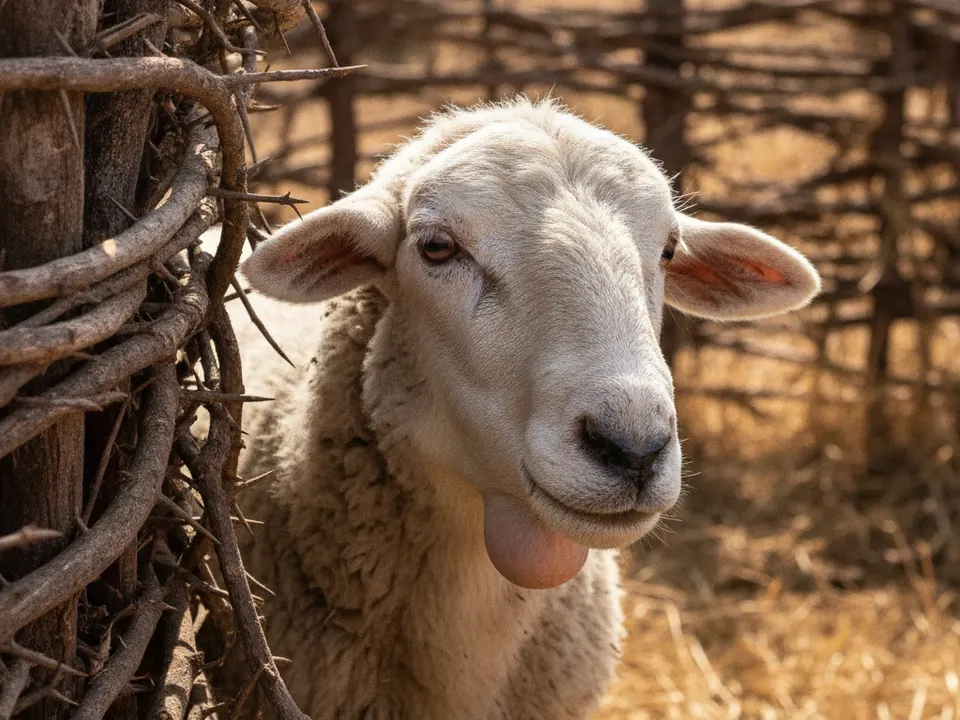
The disease is caused by Haemonchus contortus, a roundworm about two to three centimetres long that attaches to the lining of the abomasum, the true or fourth stomach. It pierces the stomach wall with a small tooth-like lancet and sucks blood. The female worm looks like a red and white twisted stripe, like an old barber's pole, because her blood-filled gut twists around her white egg tubes. Each worm takes only a little blood, but a sheep can carry thousands of worms, so the total blood loss can be very large and very fast. As blood drains away the sheep becomes anaemic, meaning it has too few red blood cells to carry oxygen, so it tires easily and breathes fast. The sheep also loses blood protein. When protein in the blood falls low, fluid leaks out of the blood vessels and collects under the jaw, causing the soft swelling called bottle jaw. Unlike many other worms, barber's pole worm does not usually cause diarrhoea, so a sheep can look clean at the back end while it is quietly bleeding to death inside. Female worms lay thousands of eggs every day, which pass out in the dung and contaminate the pasture very quickly.
Which animals are most at risk
All sheep can be affected, but lambs and weaners from weaning to about one year old are most at risk because they have not yet built immunity. Ewes in late pregnancy and early lactation are also highly vulnerable because their immunity drops around lambing. Thin, poorly fed sheep, and sheep with other diseases, suffer worse because they cannot replace lost blood and protein. Risk is highest during and soon after the long rains (around March to June) and short rains (around October to December), and in warm, humid areas such as the coast, Lake Victoria basin and highland areas with good rainfall. Free-range and communal grazing systems, and small overstocked paddocks grazed continuously, carry the highest risk. Zero-grazed sheep are at lower risk but can still be infected if cut grass is harvested close to the ground from wet, contaminated areas. Some breeds handle worms better than others: the indigenous Red Maasai sheep is well known for its resistance to Haemonchus, while Dorper, Merino and many exotic and crossbred sheep tend to be more susceptible. Goats grazing with sheep share the same worm and suffer just as badly.
Signs to look for
Early signs
- The inside of the lower eyelid is pale pink instead of bright red when you gently pull it down.
- The gums and inside of the lips look paler than usual.
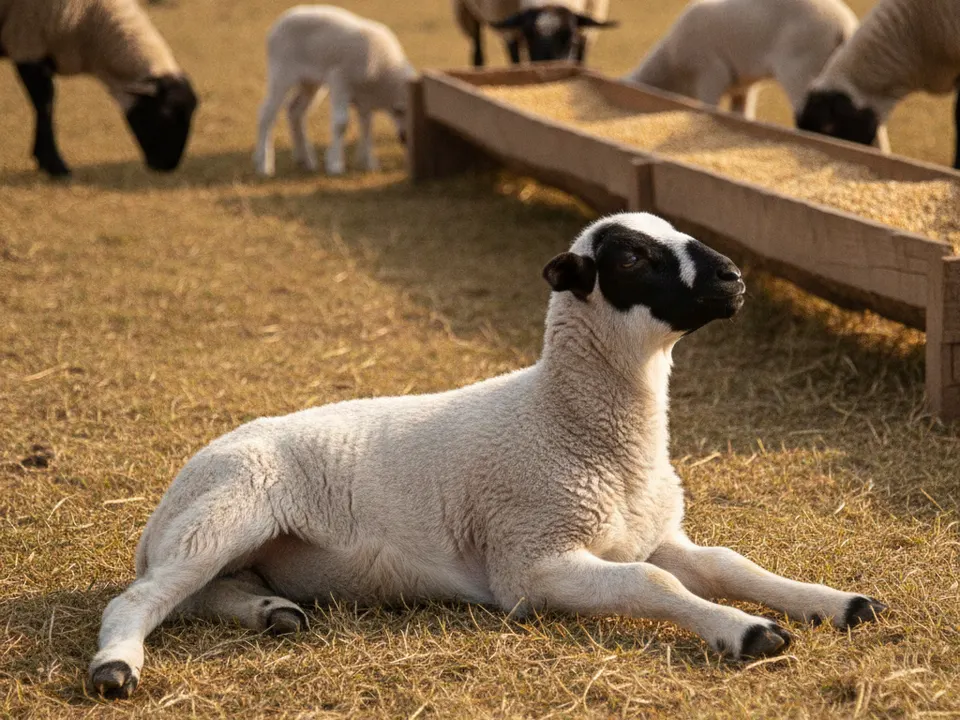
- The sheep tires quickly, lags behind the flock when walking to grazing or water, and may lie down more often.
- Slower growth and weight gain in lambs, or slight loss of body condition in adults, even though feed looks enough.
- The wool or hair may look dull, dry and rough, and the fleece may break or shed easily.
- Breathing becomes faster after a short walk or after being handled.
- Dung usually stays normal pellets, so the absence of diarrhoea does not rule out this worm.
As it gets worse
- The eyelids, gums and skin inside the ears are very pale, almost white.
- A soft, cool, fluid-filled swelling appears under the jaw (bottle jaw), often bigger in the evening after grazing with the head down and smaller in the morning.
- Severe weakness, staggering, reluctance to stand, or collapse when driven or handled.
- Rapid, laboured breathing and a fast heartbeat even at rest.
- Marked weight loss and a thin, bony back and hips.
- In very heavy infections, especially in lambs after the rains, sheep may die suddenly with few warning signs, sometimes several in a short period.
- Ewes may abort, produce weak lambs or have little milk.
What to do right now
- Check the eyelid colour of every sheep and goat in the flock, not just the sick ones, and write down which animals look pale, very pale or have bottle jaw.
- Move weak and very pale sheep slowly and calmly into a shaded, quiet pen near the homestead; do not chase, drive hard or wrestle them, because severely anaemic sheep can collapse and die from stress.
- Give clean, fresh water and good quality feed such as fresh-cut grass harvested higher up the stem, hay, and some protein-rich forage such as lucerne, desmodium or calliandra if available.
- Keep the sick sheep off the contaminated grazing area for now, and avoid grazing the rest of the flock on wet, short grass early in the morning while dew is still on it.
- Call your vet, animal health officer or a trusted agrovet with animal health staff the same day, and tell them the eyelid scores, how many animals are affected and which dewormer you last used.
- Do not give any dewormer or injection until you have spoken to a vet, because many worms in Kenya are already resistant to common dewormers and a wrong choice can waste money and time while the sheep keeps bleeding.
- If a sheep dies, keep the carcass cool and covered away from dogs, and ask the vet to do a post-mortem so the cause can be confirmed for the rest of the flock.
- Wash your hands after handling sheep and dung, and keep a simple notebook of dates, animals and treatments to help plan future worm control.
How it spreads
- Infected sheep and goats pass worm eggs in their dung onto pasture, around water points and in bomas, and each female worm can lay thousands of eggs a day.
- In warm, wet weather the eggs hatch and develop into infective larvae within about a week, which is why outbreaks follow the long and short rains.
- The infective larvae climb up wet grass blades in dew, mist and after rain, and sheep swallow them while grazing, especially when grazing short grass close to the ground.
- Swallowed larvae become egg-laying adults in roughly three weeks, so a heavily contaminated pasture can produce a crisis within a month of the rains starting.
- During the dry season some larvae rest inside the sheep's stomach wall in a sleeping stage, then wake up together when conditions improve, causing sudden heavy infections.
- Ewes around lambing and during early milking have lower immunity and shed many more eggs, which contaminates pasture just as young lambs start grazing.
- Buying sheep or goats from markets without quarantine and deworming brings in new worms, including worms already resistant to common dewormers.
- Shared communal grazing, overstocked paddocks and grazing the same small plot year-round build up large numbers of larvae on the grass.
Could it be something else?
Liver fluke (fasciolosis)
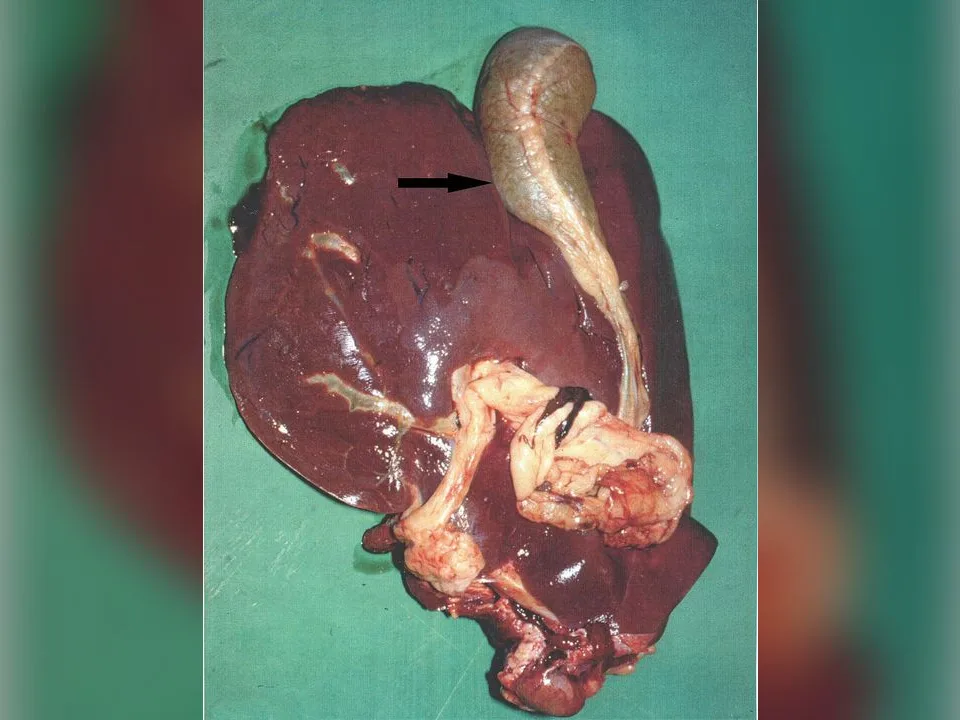
Liver fluke also causes pale eyelids, bottle jaw and weight loss, so the two are easily confused. Fluke is more common where sheep graze swampy areas, dams, irrigation channels or river banks where water snails live, and it often builds up more slowly. A vet can tell them apart with dung tests (fluke eggs need a different test) or at post-mortem, where fluke shows as flat leaf-shaped worms in a damaged liver rather than small red worms in the stomach. Both can occur together.
Scour worms (Trichostrongylus and other gut worms)
These worms damage the gut lining and mainly cause diarrhoea, a dirty back end and weight loss. Sheep may be thin and weak but the eyelids usually stay fairly red. Barber's pole worm typically causes pale eyelids without diarrhoea. Mixed infections are common, so a dung test helps.
Trypanosomosis (nagana) and tick-borne anaemia
Trypanosomosis, spread by tsetse flies, and tick-borne blood parasites such as anaplasmosis also cause pale eyelids and weakness. These are more likely in tsetse or heavily tick-infested areas and often come with fever, swollen lymph nodes, or yellowish eyelids. A vet confirms them with a blood smear rather than a dung test.
Poor nutrition or mineral deficiency (such as cobalt deficiency)
Underfed sheep or those lacking minerals such as cobalt and copper become thin, weak and may be mildly pale, but this develops slowly across the whole flock and does not follow the rains. Bottle jaw and sudden deaths are much less typical. Pale sheep that improve quickly after effective deworming point strongly to worms.
How it is diagnosed
A vet or animal health officer usually starts by checking eyelid colour, gums, body condition and the area under the jaw, and by asking about recent rains, grazing and the last deworming date and product. Many use the FAMACHA chart, a card developed in South Africa that compares eyelid colour to five shades from red (category 1, healthy) to white (category 5, severely anaemic). A blood sample can measure the packed cell volume (PCV), which shows exactly how anaemic the sheep is. Dung samples are examined under a microscope to count worm eggs per gram (a faecal egg count, often by the McMaster method), and a larval culture can confirm that the eggs are Haemonchus rather than other worms. If a sheep dies, a post-mortem is very useful: the carcass looks pale, the blood is watery, and many small red and white worms are seen moving in the stomach contents. To check whether your dewormer still works, the vet may do a faecal egg count reduction test, comparing egg counts before and about ten to fourteen days after treatment. You can help by recording which sheep are pale and when, the dewormer brand, batch and date last used, and how you calculated the dose. Collect fresh dung pellets straight from the rectum or immediately after passing into a clean labelled bag, keep it cool, and get it to the lab within a day. If a sheep dies, keep the body cool and covered and call the vet quickly so a post-mortem can be done.
Treatment
Treatment is with an anthelmintic (dewormer) chosen and prescribed by the vet. The main drug groups that act against barber's pole worm include benzimidazoles (for example albendazole and fenbendazole), imidazothiazoles (levamisole), macrocyclic lactones (for example ivermectin, doramectin and moxidectin), salicylanilides such as closantel, which is narrow-spectrum and mainly targets blood-sucking worms and liver fluke, and newer groups such as monepantel where available. Resistance of Haemonchus to benzimidazoles, levamisole and ivermectin has been reported in Kenya and the region, so the vet will choose a product based on local experience, your farm history and, ideally, a faecal egg count reduction test. Sometimes a combination of drug groups is advised. The dose must be based on accurate body weight: guessing weight is a leading cause of under-dosing, which fails to kill worms and speeds up resistance. The vet may recommend weighing sheep or using a weigh band, and will show you how to give an oral drench correctly over the back of the tongue. Often the vet will recommend treating only the pale animals (FAMACHA categories 4 and 5, and sometimes 3) rather than the whole flock, so that some worms that have never met the drug survive on the pasture; this is called keeping refugia and helps the drug keep working longer. Very weak sheep may also need supportive care such as iron or vitamin B12 injections, good feeding with protein, rest and shelter, and in rare valuable cases a blood transfusion. Antibiotics do not kill worms and are not a treatment for haemonchosis. After effective treatment the worms die within days, but rebuilding lost blood takes several weeks, so sheep stay weak for a while and must be handled gently. Every dewormer has a meat withdrawal period, and many have a milk withdrawal period, during which the animal must not be slaughtered or its milk used; some, such as closantel and long-acting products, have long withdrawal times. Follow the vet's and label's instructions exactly and record the date.
Medicines must be prescribed and dosed by a vet. Always respect milk and meat withdrawal periods, and finish the full course of any antibiotic.
Prevention
- Check eyelid colour with a FAMACHA chart every one to two weeks during and after the rains, and monthly in the dry season, and treat only the sheep that are pale; ask your County livestock or veterinary office about FAMACHA training, as charts should be used by trained people.
- Use the Five Point Check when you handle sheep: eyes for paleness, jaw for swelling, back for body condition, tail area for diarrhoea, and nose for discharge, so you catch worm problems early.
- Work with your vet to use faecal egg counts before and after deworming at least once a year, to find out which dewormers still work on your farm.
- Weigh sheep or use a weigh band before deworming, dose for the correct weight as instructed, use a calibrated drench gun, and never mix your own diluted products or buy unlabelled dewormers of doubtful quality.
- Avoid deworming the whole flock too often; frequent blanket treatment is the fastest way to create resistant worms that no dewormer can kill.
- Rotate grazing so paddocks rest for several weeks before sheep return, graze sheep after cattle or with cattle, which do not carry this worm, and avoid overgrazing to the ground, because most larvae live in the bottom few centimetres of grass.
- In zero-grazing, cut fodder higher up the stem, avoid cutting from wet, dung-contaminated areas around homesteads and water points, feed in raised troughs or racks off the floor, and remove dung regularly.
- Quarantine all newly bought sheep and goats for at least two to three weeks, have the vet advise on an effective quarantine drench, and keep them off clean pasture until their dung is checked.
- Feed well, especially ewes in late pregnancy and lactation and weaned lambs, because well-fed sheep with enough protein and minerals resist worms better and recover lost blood faster.
- Choose or cross with worm-tolerant breeds such as the Red Maasai where suitable, and cull sheep that repeatedly become pale despite good management, while keeping those that rarely need treatment as breeding stock.
Risk to people
Barber's pole worm does not infect people, so handling infected sheep or eating properly cooked meat from them does not give you this worm. The main human health concern is drug residues: meat and milk from sheep treated with dewormers must not be used until the withdrawal period on the label or advised by the vet has passed. Some dewormers, such as closantel and long-acting injections, have long withdrawal times. Always record treatment dates, keep dewormers locked away from children, and wash your hands after drenching and handling dung.
Impact on your farm
Barber's pole worm is one of the biggest causes of sheep losses on Kenyan smallholder and pastoral farms. Deaths of lambs, weaners and ewes after the rains can wipe out a season's profit and breeding stock in a few weeks. Even sheep that survive grow slowly, take longer to reach market weight, fetch lower prices at the market because they look thin and pale, and produce poorer wool and less milk for their lambs. Ewes may abort or produce weak lambs, cutting the next generation. Farmers spend money on repeated dewormers, and when those dewormers no longer work because of resistance, the money is wasted and the flock remains at risk. Labour, vet fees and replacement stock add further cost. Good worm control, on the other hand, is one of the cheapest and most effective ways to improve sheep productivity.
Outlook and recovery
Outlook depends mainly on how pale the sheep is when treatment starts and whether the dewormer used still works on your farm. Sheep with mild to moderate paleness that receive an effective dewormer, rest and good feed usually recover well over several weeks as they rebuild blood. Sheep with white eyelids, large bottle jaw, collapse or very rapid breathing are in danger and may die even with treatment, especially if stressed by handling or long walks. Lambs and thin ewes are more fragile. If the worms on your farm are resistant, sheep may not improve after deworming, which is why a follow-up eyelid check and egg count are important. Without changes to grazing and worm management the problem usually returns with the next rains, but farms that use FAMACHA, targeted treatment, rested pasture and good nutrition can greatly reduce losses.
Common questions
I dewormed my sheep, but they are still pale and some died after the rains. Why?
There are several common reasons. The worms on your farm may be resistant to the dewormer you used, which is now widespread in Kenya for some of the older drug groups. The dose may have been too low because the weight was guessed, the product may have been of poor quality or expired, or the drench may have spilled. Sheep also go straight back onto heavily contaminated pasture after deworming and pick up new larvae. Finally, even after the worms die, a sheep needs several weeks to rebuild its blood, so it can stay weak for a while. Ask your vet for a faecal egg count before and after treatment to find out whether your dewormer is still working.
How often should I deworm my sheep?
There is no single calendar that suits every farm, and deworming the whole flock every month is one of the main causes of resistance. A better approach is to check eyelid colour every one to two weeks in the rainy season and monthly in the dry season, and to treat only sheep that are pale, plus any with bottle jaw or poor condition. Your vet may also advise strategic treatment of high-risk groups such as weaners and ewes near lambing, timed around the rains. Plan this with your vet based on your area, grazing system and egg count results.
Can I use the same dewormer for my sheep, goats and cattle?
Many dewormers are labelled for more than one species, but the correct dose, product and withdrawal time differ between species. Goats, for example, break down some dewormers faster than sheep, so a sheep dose may be too low for a goat. Sheep and goats share the same barber's pole worm, so worms resistant in goats will also be resistant in sheep grazing with them. Always read the label and ask your vet which product and dose to use for each species.
Bottle jaw means my sheep has liver fluke, doesn't it?
Not always. Bottle jaw happens whenever a sheep loses too much blood protein, and both barber's pole worm and liver fluke can cause it. Barber's pole worm is often the more common cause after the rains in many parts of Kenya, while fluke is more likely where sheep graze swampy areas or around dams. Many dewormers kill only one of these, so ask your vet to test the dung for both before choosing a product.
Do herbal or traditional dewormers work against barber's pole worm?
Some plants and tanniferous forages, meaning forages rich in natural compounds called tannins, have been studied for their effect on worms and may help reduce worm burdens as part of good management. However, results vary widely and most traditional remedies have not been proven to reliably kill Haemonchus in a severely sick sheep. A very pale sheep with bottle jaw needs a proven, effective dewormer prescribed by a vet straight away. Good nutrition, rested pasture and resistant breeds are the most reliable natural ways to reduce the problem over time.
Is it safe to eat the meat of a sheep that had worms?
The barber's pole worm does not infect people, so meat from a sheep that had this worm is not a direct risk once properly inspected and cooked. However, very anaemic sheep produce poor quality, watery meat, and if the sheep was recently dewormed, you must wait until the withdrawal period has passed before slaughter. Never slaughter a sick sheep for sale without veterinary or meat inspection, and do not sell meat or milk from animals still within a dewormer withdrawal period.
A guide, not a diagnosis. This page is general information to help you recognise problems early. Always confirm with a vet or animal health worker before treating.